Fr Joseph Cardoso SJ urges everyone to emulate Francis in working towards a just society
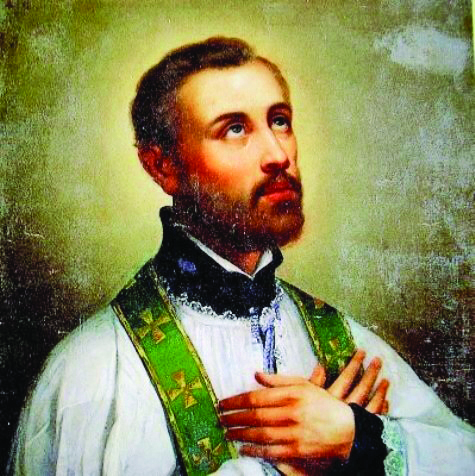
Being imbued with Christ’s (who worked for a righteous society, denounced evil, and showed His love to those on the B periphery of the Jewish society) love, Francis Xavier set forth to the Indies. He had briefs that had appointed Francis Papal legate with the fullest powers throughout the countries of the East. Francis submissively placed himself at the disposal of the Bishop in Goa, who, in turn, was so pleased with “the simplicity and sincerity of Francis that he asked him to proceed outright with whatever his heart and conscience dictated (Marangoly, 2008). His missionary activities lasted only ten years but, in those years, he became a true “disciple” of Christ with the “mission” to promote an inclusive/synodal Church, which he accomplished through his virtuous and self-sacrificing life. The sheer magnitude of the enterprise of serving people that he undertook for the love of Christ – is hard to imagine and captures the admiration of men and women of all walks of life.

In retrospective, the life, ministry, and pastoral zeal of Francis Xavier echo the synodal processes that were envisaged (communion, participation, and mission) and are implemented through the Synodal final document. It outlines a vision for a more inclusive, and participatory Church. It emphasises a ‘synodal conversion through spiritual, relational, procedural, institutional, and missionary transformation. It calls for a profound shift in the Church’s culture and structures, moving towards a more collaborative and listening approach. It stresses the importance of listening to all the members of the Church (inclusivity and participation), particularly those on the margins, and fostering a sense of belonging. The process highlights the need for open dialogue, prayerful discernment, and shared decision-making. It recognizes the importance of ecumenical and interreligious relations in the synodal journey. It connects synodality with caring for creation and recognizing the interconnectedness of all things.
The document also emphasizes the need for ongoing formation to equip all members of the Church to live out synodality. It is in this regard Pope Leo states, “We are a missionary Church, a Church that builds bridges and encourages dialogue, a Church ever open to welcoming. like this Square with its open arms, all those who are in need of our charity, our presence, our readiness to dialogue and our love.” While the Episcopalis Communio asserts that “the Synod Assembly itself must be followed by the implementation phase, so as to initiate the reception of the Synod’s conclusions in all the local Churches (no. 7)”
Various incidents and personal experiences of Francis Xavier affirms that he was geared towards a participative, communicative, and mission-oriented Church, a Church where everyone could feel oneness in Christ with others. Francis began his missionary activities. with humility to uphold moral reforms and faith. In using the psychological insight of a Jesuit and the sympathy of his charity, he began to establish a synodal Church and grant justice to the people. In seeing the precarious situation, “Xavier’s heart was torn between the gross and systematic profligacy of the European rulers and the shocking idolatry of the native populations (Correia-Afonso, 1922). He bore witness to Christ by attending to the spiritual needs of the people, showed his concern for the wavered Christians, and brought them back to Christ. He upheld social justice by patiently listening to people’s problems, disputes, and administered justice to the needy. He possessed “in his mind a clear distinction between right and wrong and ran no risk of compromising with evil (Correia-Afonso, 1922). Francis used his moral authority for the protection of the natives from the oppression and bad example of the Europeans, “who were leading lives that were a betrayal of Christ and Christianity (Marangoly, 2008), He bore witness to Christ by writing to Joao III, the King of Portugal, against immorality, social injustice. deprivation of the poor, and laxity of faith. In fostering a synodal Church, Francis bore witness to Jesus, where “his day would be given to active works of charity, missionary tasks, care of the sick and the suffering; to preaching, baptizing. and the administration of the mission (Correia-Afonso, 1922). Francis served everyone without any discrimination, where he saved Christian brethren, who suffered under the Portuguese rule. He rescued those who faced hardships and whose things were often stolen by the local ruler’s soldiers. He made provisions for those who had deserted by small boats. “The aim of his mission was to extend Christ’s kingdom. Through his communication and interaction with the people, he tried to build bridges of love (Hilary, 2012). Moreover, he became aware of the dynamics of society and worked towards a synodal society. Nothing deterred him in reaching out to the least, lost, and the last of the society. “He helped the poor Paravas who were affected by the wars among the kings of the south and tried to work for peace with the help of the governor (Hilary, 2012).” His readiness to feel at ease in the bizarre cultural environment, to make himself familiar not only with the languages but also with the manners and conditions of existence in the far East is commendable. There were moments when, “Francis fought to suppress social injustice in the villages… oftentimes he had to become a police officer himself and severely punish those who violated his instructions (Marangoly, 2008).
Besides the regular missionary work in establishing synodal Churches in Asia, Francis provided education to the people. He considered education as a weapon to work for a just society and to increase one’s knowledge. Xavier promoted the “cause of education… his practice of teaching the catechism to the children gave rise to the Parish schools, which was a great boon to the populations at a time when there was no popular primary education (Correia-Afonso, 1922). In his letter to Mancias in June 1544, Francis states, “I beg of you to give your first attention to the education of the children.” Francis was filled with “great zeal to proclaim the message of Jesus and even at the last moment was ready to go to the unknown world in the East (Hilary, 2012). At Sancian island, “He peacefully surrendered his soul into the hands of His creator by saying, In te, Domine, speravi, non confundar in aeternum, in you O Lord, have I hoped, let me never be confounded (Schurhammer IV, 1973). His arduous work of building a synodal Church continues even today.

The Society of Jesus has taken a major initiative to support the Catholic Church’s synodal process to build capacities across the Church in the discernment processes. Ignite the Way, a ten days colloquium (23 November – 3 December), enabled ninety-seven participants, comprising Jesuits, laity, religious sisters-brothers, and Diocesan priests to become facilitators in Discernment in Common. The trained facilitators will promote synodal transformation, who in turn will train others in ‘Discernment in Common’ at the regional level, both within the Society of Jesus, and in the wider Church. Personally, I have found it inspiring to be part of this global initiative, and I feel it is a real privilege. This on-going project will contribute, in however humble a way, as it offers the Church some ways of discerning in common. It will help dioceses, congregations, parishes, and even lay-led organizations who want to build a different culture, a culture of discernment. In a world where public discourse is so divided, I am convinced that the Church and the way of the Gospel, with its humble listening, has so much to offer.
Thus, in a world of consumerism, individualism, and technological advancement, we are urged to emulate Francis in making the Church a synodal Church, where everyone feels welcome, cared, and given importance. Francis inspires us to work towards a just society by recognizing injustice around us, understand it, and thereby “raise our voices against social exclusion and economic injustice (Evangelii Gaudium, 53) Like St. Francis Xavier, who was imbued with a restless desire to gain souls for God, we are called to bear witness to Christ and make Christ present to others through decisions and choices for a synodal Church. On labouring for the betterment of the society will entail problems, hardships, and challenges but during those moments, like St. Francis Xavier without fear, we ought to move forward with courage and determination.
(Fr. Joseph Cardozo SJ works for Synodal Church, Jesuit Curia, Rome-Italy)