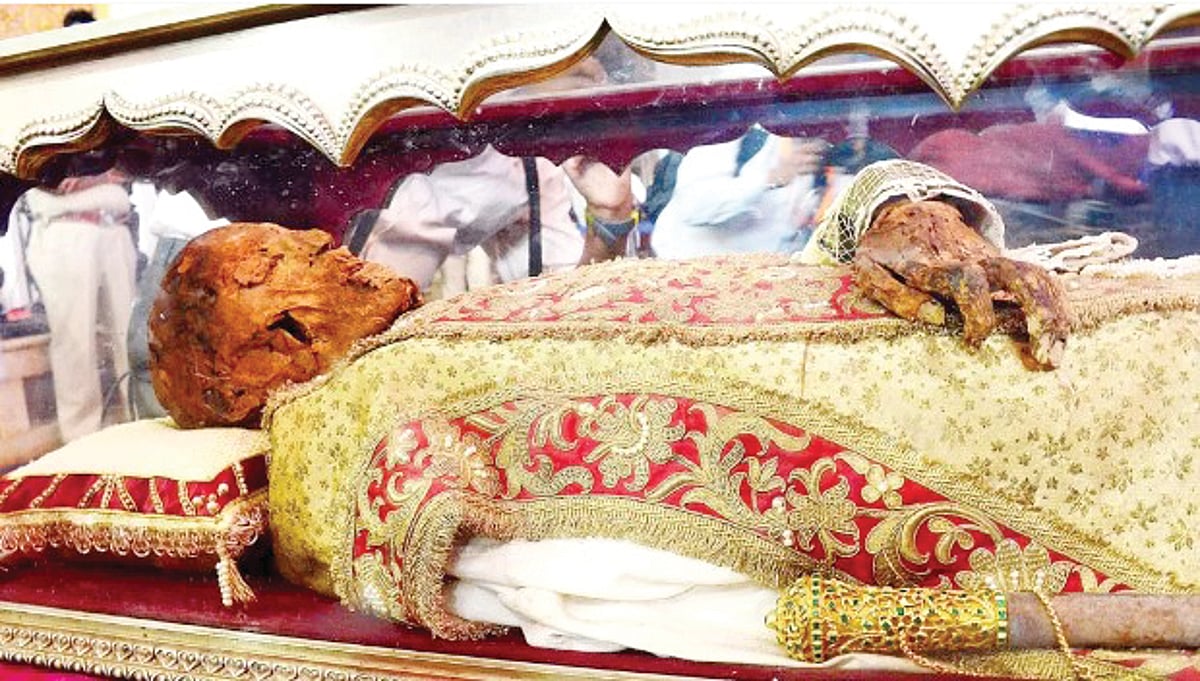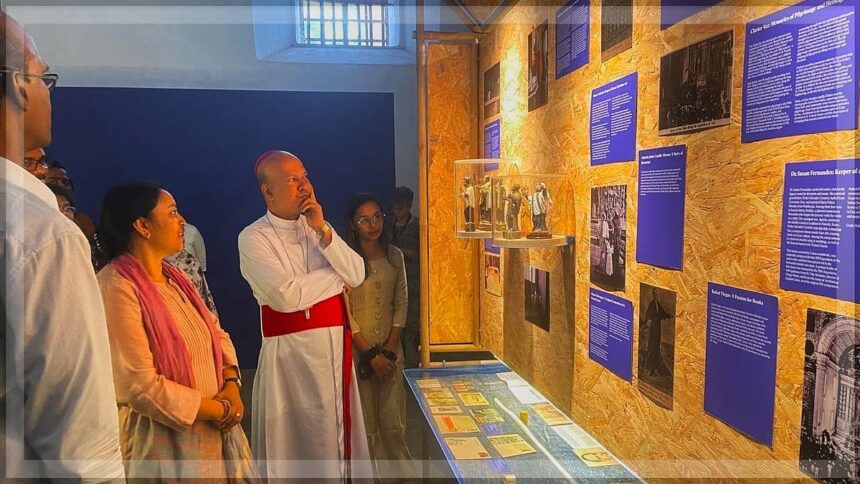
This outreach exhibition curated by Akshay Mahajan and Lina Vincent along with Christina Dedhia, with design support from Goa based studios, explores the profound cultural and spiritual heritage associated with the Exposition of St. Francis Xavier. By examining the reverence for the saint’s relics throughout the years, the exhibition highlights the shared memory and enduring importance of this tradition within the Goan community. Through a thoughtfully curated array of artifacts, archival documents, and personal narratives, it illustrates how the relics of St. Francis Xavier continue to evoke devotion, strengthen communal ties, and enhance Goa’s sacred environment.
The showcased items and stories have been generously provided by individuals from Goa and beyond, reflecting a diverse array of styles, aesthetics, and popular influences in print media over the years. The collection features medals, souvenir cards, postcards, stamps, statuettes, newspaper articles, illustrations, photographic memories, and other commemorative pieces that hold significant value for the families and individuals who contributed them.

Goa has developed a diverse cultural landscape throughout the centuries, resulting in a wealth of historical narratives. Its strategic location facilitated the emergence of various powers, notably the Portuguese, who established the Estado da India in Goa. These exchanges fostered a unique artistic and architectural style known as ‘Indo-Portuguese’, which harmoniously combined local artistic traditions with Portuguese influences and vice versa.
In 1553, the exhumation of Xavier’s body in Goa, preserved in an uncorrupted condition, attracted numerous pilgrims and led to the production of devotional artifacts that merged European craftsmanship with local Indian artistry. These objects represent the intersection of Catholic religious imagery and indigenous skills, reflecting the spiritual and cultural interactions that defined the Indo-Portuguese colonial period.