AMITA KANEKAR
The vision of the present government of Goa for Panjim, the so-called capital of Goa, is seriously limited. As the Mayor put it recently, there is nothing to offer tourists in Panjim but the casinos. The Town and Country Planning Minister was even more blunt: Panjim would be dead without the casinos. Yes, for this govern ment, Panjim is nothing but a location for casinos. And unlimited casinos, not just the 8-10 that already crowd the city today. Drawings of a proposed redevelopment project for Junta House show a casino. The gigantic Convention Centre complex (which includes a five-star hotel) coming up in Patto, on Tourism Department land, is going to be run not by the Tourism Department but by a casino company, and will obviously contain a casino. Everybody knows of the ne farious plan to “replace” a 70-seater casino boat on the River Mandovi with a mon strous 2,000-seater, a move stymied for the moment by the High Court. This is just the start.

Given the spate of ‘redevelopments’ of old buildings into hotels all over Panjim, there could be many more. Like the long row of Gov ernment Quarters buildings in St Inez, which were bar ricaded from public view a few days ago by high metal sheets. Behind the sheets, demolition has apparent ly begun. These buildings, approximately 60 years old, have stood there, on a quiet and very green road, flanked by magnificent old trees, since my childhood. Many of the trees are gone, thanks to concretisation all around and the all-impor tant road widening, which has wiped out trees all over Goa. Many other old low-rise buildings nearby have also been replaced by towering new structures, all granite and glass, looking more like Bombay or Delhi than Goa. And now the Quarters have also vanished behind metal sheets.
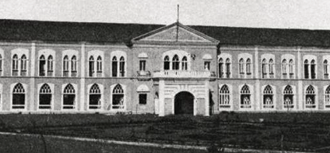
These Government Quar ters are one of seven gov ernment building projects that were reported in the press to have been given by the Goa government for “re development” to the Nation al Buildings Construction Corporation. Others include Junta House, Circuit House at Altinho, and the Government Garage, all of which are to be demolished and rebuilt. Why? The reason given is that these structures are old and also dangerous. Now, “old” is hardly a justi fication for demolition. Most of these buildings were built in the 1960s and ’70s. Jun ta House, the tallest Goan building of its time and a proud icon of the capital city, is only 63 years old, less than half the age of some other Panjim buildings. So how did it become so “dangerous” that it requires demolition? Simple: lack of maintenance. Everybody knows that build ings require regular upkeep and repairs. Why was this not done? And if these build ings were so neglected as to make them “dangerous” now, could it be that their demoli tion was already planned in advance? The answer is all around Panjim.
Most govern ment buildings can be found in the same precise condi tion: peeling paint, mossy patches, cracks in walls, damp ceilings, exposed steel, broken tiles – you name it. Wholesale neglect. Who would be surprised if, one by one, they are all declared dangerous and disappear be hind metal sheets? No one. This is not even the whole horrible story. On one hand, government buildings are being encouraged to crum ble; and, on the other, gov ernment departments have moved out to private prem ises. So the government – i.e. we, the people of Goa – pays hefty rents to private par ties, while public buildings lie empty and become in creasingly dilapidated until they “have to be” demol ished.
An example is the De partment of Archives, which was moved from its, again, not-so-old and convenient ly located premises close to the Panjim bus stand to a godforsaken location on Kadamba Plateau. Visitors – both scholars and the many lay people needing old re cords – now need private vehicles or expensive au to-rickshaws or taxis to get there, as there is hardly any public transport available. There is also hardly any res taurant or tea shop nearby. And for all this inconven ience, Goans must pay rent of over Rs 13 lakh a month, according to the lease deed signed in 2023. The empty Panjim premises, mean while, sits neglected and is surely deteriorating. The Archives is not the only such department. So, good buildings (built with our money) are allowed to crumble, our money goes as rent to private parties, and then more of our mon ey (thousands of crores) is spent to build new build ings. What is this if not cold-blooded robbery of the public exchequer? And what is planned to come up? Mostly hotel-cum-conven tion complexes in monstrous towers: glass-fronted, fully air-conditioned, complete with lavish restaurants, spas, swimming pools, and “enter tainment” facilities. All for the benefit of construction, hotel and casino corporates, and also tourists. What do Goans get out of this? Noth ing but sleaze, crime and corruption (standard casino culture), not to mention in creased pollution (from mas sive demolition debris, first of all), heat from increased air conditioning and concre tisation, worsening traffic congestion, and disastrous water shortages.
All of this in an era of global warming, scorching summers and dry ing monsoons. The borewells demanded by all these tow ers will soon pull seawater into the water table, possibly the final nail in the coffin of Panjim. For the government, even this is fine because all that matters is profit, even if it kills the goose that lays the golden eggs. We need a different vision, one that puts locals first. This does not mean abandon ing tourism. Goa has been celebrated, right from the Portuguese era (read Gra ham Greene in the 1950s), for its natural beauty, herit age architecture, peace and tranquillity. How is it that all this is no longer worth look ing at? And if tourism only means casinos, if beaches, rivers, green hills, lush fields, heritage architecture, and a wealth of religious sites all mean nothing to tourists, how do other Indian states – none of which have casinos, except Sikkim – manage to attract them? It is not actually tourists who demand casinos. It is our Goan ruling class, and their Delhi masters, who are “addicted” to casinos, and for very obvious reasons. (Amita Kanekar is an architectural historian and novelist.)