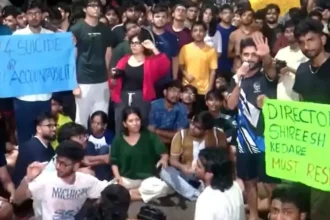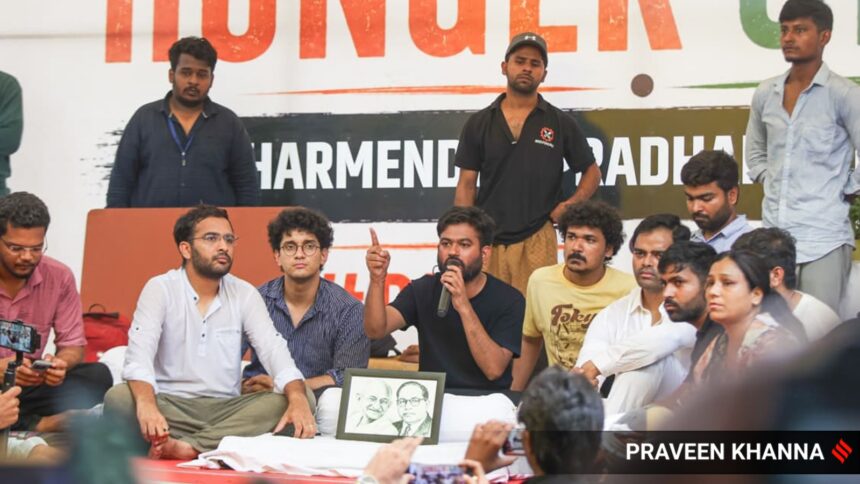
The Cockroach Janta Party (CJP) on Saturday called off its month-long protest at Delhi’s Jantar Mantar after the Centre accepted its key demands, including the resignation of Education Minister Dharmendra Pradhan. The development has sparked comparisons between CJP founder Abhijeet Dipke and Aam Aadmi Party (AAP) chief Arvind Kejriwal, raising questions over whether the youth leader can translate a protest movement into long-term political success.
The parallels are difficult to ignore. Like Kejriwal, who emerged as a national figure during the 2011 India Against Corruption movement led by Anna Hazare, Dipke has used public anger over the 2026 NEET paper leak controversy to transform the Cockroach Janta Party from an online satirical platform into a nationwide youth movement.

The campaign culminated in a major political breakthrough when sustained protests and public pressure were followed by Dharmendra Pradhan’s resignation, a victory supporters describe as the movement’s defining moment. Dipke is also familiar with Kejriwal’s political methods, having volunteered with AAP’s social media and meme teams between 2020 and 2023.
Despite the similarities, the two leaders differ in significant ways. Kejriwal entered politics as a former Indian Revenue Service officer with administrative experience and policy credentials, while Dipke has built his appeal through Gen-Z humour, satire and digital mobilisation. He has also consciously kept the CJP independent of senior activists, rejecting attempts to associate the movement with Anna Hazare and presenting it as a youth-led campaign.
Political observers say Dipke has demonstrated an ability to mobilise students and shape the national conversation. However, they argue that replicating Kejriwal’s electoral success will require more than viral campaigns. The CJP is yet to register as a political party or announce electoral plans, making its transition from a protest movement to an organised political force the next major challenge.