Dolcy D’Cruz
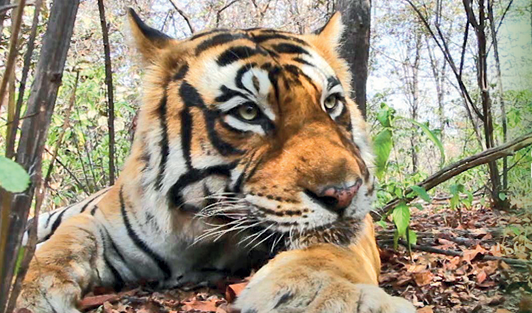
Every tiger matters, not just for the survival of an endangered species, but for the future of entire ecosystems. That message lies at the heart of ‘Looking for Sultan’, the award-winning wildlife documentary that will be screened in Goa as part of this year’s International Tiger Day celebrations. Presented by the VM Salgaocar Trust and Sunaparanta Goa Centre for the Arts in association with Riverbank Studios, the film will be screened on Friday, July 31, at 6 pm at the ESG Auditorium, Panjim. The event is free and open to the public on a first-come, first served basis. The screening also honours the memory of celebrated wildlife conservationist, photographer and filmmaker Aditya “Dicky” Singh, whose work significantly contributed to tiger conservation efforts across India. Directed by National Award-winning wildlife filmmakers Doel Trivedy and Gautam Pandey, ‘Looking for Sultan’ follows the mysterious disappearance of Sultan, one of Ranthambore Tiger Reserve’s most iconic tigers.

Having documented the tiger since he was a cub, Gautam and his father, renowned wildlife filmmaker Mike Pandey, embark on a journey to uncover what happened to the young male. Their search evolves into a much larger story about habitat loss, human-wildlife conflict and the uncertain future of India’s tigers as they venture beyond protected forests in search of territory. For Gautam, conservation filmmaking has always been about creating meaningful impact rather than simply documenting wildlife. “We’ve been working on several films since the last 25 years. One of our goals was to get a conservation film onto the mainstream broadcast. An all-out conservation film being on air is a bit of a rarity. We had a long-running series on Doordarshan called ‘Earth Matters’. It became a real source of information for several generations interested in the environment,” says Gautam. “Policy change is one way we try to address and influence policy makers. Of course, getting general public support through awareness and reaching new audiences is the other way. Which definitely works, by the end of it, creating policy change and impact. Because now things are so lopsided that we need drastic policy change and measures to turn things around. In Goa, if we really want to save our rivers, then there needs to be an absolute ban and control on single-use plastic and waste disposal.
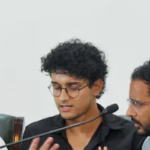
There can be no leaks in that Doel Trivedy policy. If we want that change, you have to be convincing and really go for it. A beach cleanup is great, but it’s not going to solve the problem anymore. That beach will be full of trash again in one week. Nature holds a mirror to our face and it says, this is all you,” says Gautam, who has been living in Goa for a decade The idea behind ‘Looking for Sultan’ was to use one of India’s most charismatic animals to introduce audiences to broader environmental issues. Tigers naturally draw viewers, making them powerful ambassadors for conversations about conservation. “Animals like tigers and snow leopards was appealing for a broadcaster They are very majestic to watch on TV. Tigers, of course, have always been the number one charismatic character from the animal kingdom. There’s a great draw and appeal. Piggybacking on these two species, we spoke about all the issues around them, especially in India. If you only pick a single perspective, it’s an incomplete story. As documentary filmmakers, when people are viewing something, they will view it as the truth. There’s a responsibility that comes to talking about the things that are not included in that frame that we are showing,” he explains. Gautam and his father have been connected to Ranthambore and filming there over decades. He says, “We had been following Sultan since he was born.
Tigers have unique stripe patterns, almost like fingerprints, so you Gautam Pandey can identify individuals. Sometimes, they’ll have a distinguishing mark, maybe a scratched ear.” He explains that Sultan was frequently seen because he occupied a tourism zone where safari vehicles regularly monitored tiger movement. “Tiger tourism is a two-edged sword. It helps monitor animals and allows forest departments to respond quickly if an injured tiger is spotted. You can’t afford to lose healthy tigers. At the same time, there are wild tigers that may never be seen because they avoid people completely. These tigers are unfortunately or fortunately, are born in not core area of the forest, but the tourism core areas.” The documentary also explores how dispersing male tigers naturally move beyond forest boundaries in search of territory and mates, a behaviour that increasingly brings them into conflict with human settlements. “Conservation is an ongoing challenge. India is not an easy country, especially managing a forest which has several villages around it.
Villages are getting developed, towns are coming up, land gets sold, next will be villas, you can draw parallels to Goa. Goa has tigers, which it may not like to accept all the time. There are 100 percent resident tigers in Goa. Recently, Omkar the Elephant, showed as well that borders mean nothing to wildlife and anything can change. It’s their right to move freely.” An important part of screening the film is having an interaction with directors, especially if it’s a newer audience. Gautam and Doel give these films freely to anyone who is ready to organise a public screening as they believe films that are meant for change are meant to be viewed by a wider audience. “Interactions with a newer audience, which may not be totally literate with environmental issues, or may not connect all the dots yet, is very important drawing a parallel between Goa and Ranthambore. They see both the places and the challenges. They are always having a longer conversation and that’s why we raise the same issues in the film again and again,” says Gautam. Closer to home, their National Geographic series ‘Snakes SOS: Goa’s Wildest’ used dramatic snake rescues to quietly educate viewers about reptiles and reduce fear through accurate information. The impact became visible over multiple seasons. “People initially called saying they had spotted ‘a snake’ or assumed every snake was a cobra.
By the fifth season, viewers were identifying rat snakes correctly. We saw genuine behaviour change,” he informs. Both filmmakers are now engaged with new conservation stories. Doel is directing a feature documentary examining climate change, farming and seed sovereignty in Assam and Nagaland, while Gautam continues filming snow leopards in the Himalayas and documenting high-altitude tigers in Bhutan. “We try to film tigers at the highest altitude that they’ve been seen in the world, which is above 12,000 feet. Tigers and snow leopards, both the species share the same territory and walk the same path,” he says. He is also experimenting with immersive art installations that combine film, projection mapping and ancient Himalayan petroglyphs to create new ways for audiences to experience environmental storytelling.