ALBERTINA ALMEIDA
We have a right to live. We have a right to breathe. We have a right to grow. We have a right to have the ground be neath our feet protected. We have a right to die, and to be returned to the soil with dig nity, enriching the world we nurtured. Yet miners, timber contrac tors, real estate developers, corridor builders, coal trans porters, and beautification planners, in league with mu nicipal and panchayat author ities and forest officers and officials deny us these rights. They choke our breath, stunt our growth, fracture our en vironments, and disable our ability to age with grace. They even deny us a decent memo rial, though they profit from our destruction. Across Goa and India, our voices, spoken through hu mans, have been repeatedly ignored. And even now, as you read this, many of us are being cut, poisoned, destabilised, or mercilessly fractured into bits in the name of translocation.

In Goa, when the sacred banyan tree at Porvorim, Kapreshwar temple was cut without community consent, villagers cried out for us. Their grief was dismissed as “political drama”. Along Pana ji’s Smart City works, our old avenue trees on 18 June Road, Campal, and Mala–Fontainhas were cut or mutilated, even as residents pleaded for herit age and shade, and explained that we are healthy and that we have not been assessed by competent experts as being unhealthy and fit to be cut. On the Miramar–Caranzalem promenade, we were felled for road widening, though citizens reminded authorities that we were part of the coast line’s very being and breath. Along the Vasco-Mormugao coal corridor, we suffocat ed slowly. Our leaves black ened, our bark corroded, our growth stunted. Residents complained for years, but our voices, through them, were dismissed as exaggeration. In the mining belts of Sanguem, Quepem, and Dharbandora, we died from dust and dest abilised soil while villagers spoke of drying wells and dy ing fruit trees. Under the Goa Preservation of Trees Act, 1984, ordinary humans struggle for months to cut one dangerous tree, but mine owners and developers obtain bulk permissions to cut dozens or even hundreds of us at once. Public objections are often not recorded.
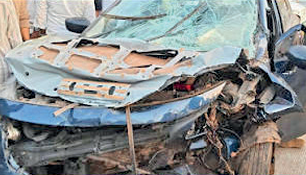
Our voic es are systematically silenced. Developers invoke “emer gency cutting” by claiming we are leaning or dangerous; authorities rarely verify. We are cut before our guardians can speak. As a matter of fact, the trees that may be actually dangerous fail to get listed as such. Remember the tree that fell on an ex-Minister Chan drakant Babu Kavlekar’s car outside the Chief Minister’s residence? In Calangute and Candolim, coastal trees continue to be cut for seasonal tourism structures, despite erosion worsening each year. In Ver na and Cortalim, trees along industrial roads are being felled for “visibility” and “traffic flow”, even though we have stood there for decades without obstructing anyone. In Margao, trees near the railway station and along the Rawanfond stretch are being removed for “beautification”, though citizens have repeat edly said that beauty lies in shade, not cement. They won’t remove structures that prevent visibility even though those structures came way af ter the roads that were built, despite Supreme Court direc tions to that effect, but they remove us! Sacred groves in Gaodon grim were disturbed, though tribal communities venerated us as ancestors. Forest-edge trees in Verlem and Netravali were cut for resorts, despite local protests. In Panjim, many of us died slowly—our roots cement-choked, our branches mutilated, our trunks wound ed by construction.
Com plaints were filed, but our suffering was dismissed as “maintenance issues”. Along the Saligao-Mapusa road, our roots were damaged by road works; we fell during mon soons and were blamed for “danger”, though neglect was the real cause. Can the powers that be not develop around us without slaughtering us or choking us as living beings? Can it not be said like the movement of persons with disabilities, that there should be nothing about us, without us? Are not the Forest Department and Ag riculture Department of Goa supposed to be our guardians, instead of being facilitators for our cutting or our eutha nasia without assessing the basis? These are ongoing pat terns of silencing, lest some one say they are isolated incidents. Our voices are overridden by the euphe mism called “national in terest” under which powers that be shelter corporate interests and by implication their personal interests. Oh, and now they talk about translocating us, without con sidering our specific realities. They cut our friends into five pieces because they couldn’t carry us as one whole, and they call it translocation, and almost all attempts of trans location of trees have failed.
Is any assessment done about this? As it is, we are uprooted without assessment. Why de ceive us further that we still have hope through transloca tion after mercilessly fractur ing our limbs and our being. They prune us because our branches are leaning, and re tain our trunk, but they do not cover the wounds. We are soaked and infected, and de stroyed in this process. We suffocate. We want to speak. But we cannot. And even those among us who are still untouched by coal dust, or industrial pollution or choking of our roots, are gagged. Because the truth will expose them. We must become persons in law’s eyes, so that we can be seen, heard, and protected. We must not be reduced to obstacles that disrupt traffic or fall on ve hicles. Such accidents occur only when we are already root-dead or dying. We are revered by many. Some of us live in sacred groves. Tribal communities venerate us; we are Gods to them.
Many humans have stood by us, enabling us to live, grow, and be honoured. Courts have listened to these humans and issued strict or ders on when trees may be cut, recognising that casual applications cannot decide our fate. Governments know their legitimacy trembles when they disregard us. Sometimes a single tree has sparked a movement, carry ing the weight of accumulated discontent. They say we should all be cut because one among us is dangerous or came crashing down. We ask: are humans prohibited from driving be cause one human skidded off the road? Even when humans cause accidents, no blanket prohibition is imposed. The same logic applies to us. The same difference or lack of it. Why, then, are we selective ly projected as threats, when so much of what sustains the world, that is, ts breath, its shade, its soil, its water, comes from us? They draw plans of action for Climate Change, but the elimination of trees and its consequences and what needs to be done to prevent this does not figure in any status reports that should be drawn up before these Plans are made. We speak differently. But we speak. And it is time the law learns to listen.
In Ecuador, New Zealand and Columbia, forests and specific ecosys tems have been granted legal personhood. But Goa’s specific ecosystems like mangroves do not enjoy legal personhood. Regional Plans and Outline De velopment Plans seem to have no place for us, because they are not plans evolved around our living heritage, and her itage that has the potential to sustain us. Although we nur ture biodiversity, we are only recognized under the Biodi versity Act, it appears, for what corporates must pay if we are slashed, not to protect us, or to consider our presence, when any projects, particularly me ga-projects are being envi sioned. That we hold the soil is not understood, and when there is disintegration of the hill because any one of us or some of us have been merci lessly uprooted, the planners’ notes fail to register this. We have some protection under the Trees Act. But it is not suffi cient, and implemented largely in the breach. It must be possible for us to be recognised as legal per sons, who can be represent ed in courts through Court appointed human guardians, community custodians, or designated ecological trus tees. And we must have the right to reproduce, seed, sprout, and coexist with our offspring without forced re placement or monoculture substitution. (Albertina Almeida is a lawyer and human rights activist)