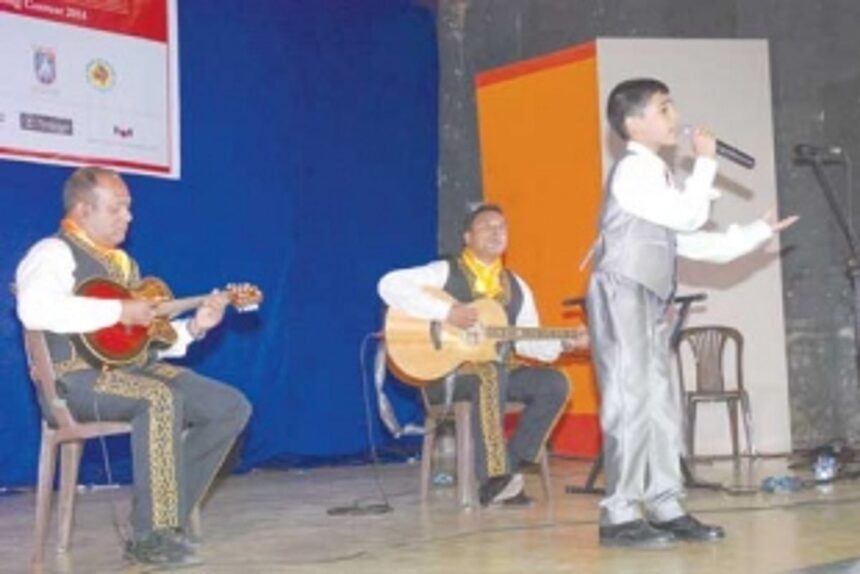
The 16th edition of Vem Cantar just wrapped up another
astounding season. What began as a small initiative by the Heritage Cell of the
Rosary College of Commerce & Arts, Navelim which later joined hands with
the Fundação Oriente, to promote the Portuguese language, has today become a
landmark competition. “When Fundação Oriente and Rosary College got together to
promote this event, they probably did not realise what a great affair it would
turn out to be,” affirms Delfim Correia da Silva, Director, Instituto Camões.
“It has been the singularly most important event to promote the Portuguese
language as it involves everybody from the participants, to the families,
neighbours, friends, colleges, schools and teachers. It’s like the carnival in
Brazil,” he summarises.
Encouraged by the response of the youth as well as the
seniors over the past few years, Eduardo Kol de Carvalho, Delegado Director,
Fundação Oriente, expresses hope that the competition will continue to grow.
“I’ve noticed that in the past five years since I have been here, the repertory
of music has been updated and people have also become more professional in the
way they perform. While the workshops we have been conducting have helped in
this direction, the response and talent that is coming up is wonderful. Of late
we have had a lot of seniors (over 50 years) participating and we do hope that
their number continues to increase,” he reiterates.

Closely connected with ‘Vem Cantar’ since 2008 conducting
workshops for the finalists along with Sonia Sirsat (voice) and Franz Schubert
Cotta (music), Delfim C Da Silva (phonetics, linguistics and stage
presentation), is amazed at how quickly Goans have adapted to a wide variety of
new genres of music/songs and performed them with equal verve.
“The important thing to know is that Portuguese is not
restricted to Portugal but is spoken in Brazil, Africa and other places as
well. Songs from these regions give the language a more vibrant and interesting
mix. To perform in Portuguese one must necessarily feel the language from the
heart,” states Da Silva. To bring a fresher perspective and newer repertory of
music and songs, Da Silva has been introducing his students to different genres
from Africa and Brazil through video clips, YouTube recordings, CDs and the
like. “Nowadays we are in a global village and students share new songs on the
social media in a big way. Today younger students like to sing contemporary
popular songs with much more rhythm, especially those from Brazil,” says Da
Silva, who finds this a refreshing change from the old traditional songs and
dress codes of the past. “The old renditions of ‘mama eu quero’ ABC de coracao,
or Mae querida’ or Fados have now given way to the more popular ‘Vai Ter
Balanga’ ‘Solta-se beijo’ among others.” What is even more encouraging is that
even senior participants are keen to perform contemporary songs.
In its bid to promote the Portuguese music and songs, Vem
Cantar has turned out to be the best teacher of the language!