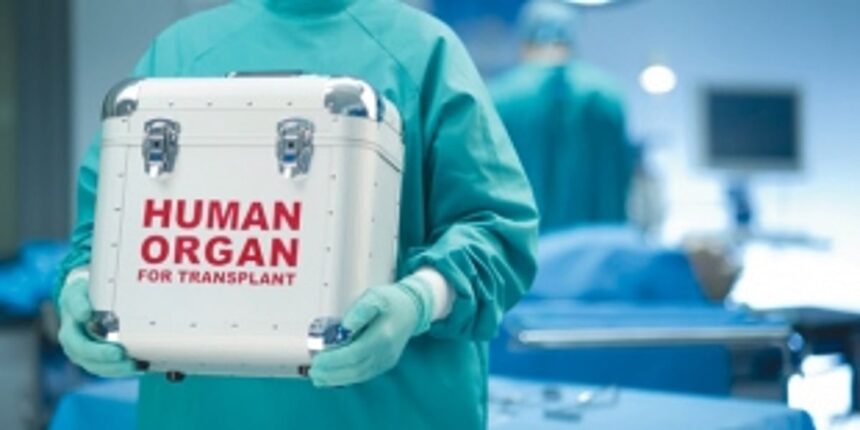
Organ donation is when a person allows an organ of theirs to be removed, legally, either by consent
while the donor is
alive, or after death with the consent of the next of kin. Dr Amol Mahaldar, Coordinator of the Organ
Donation Cell of the Indian
Medical Association’s (IMA) Goa State Branch, has been
travelling with doctors across the state to highlight the importance of organ
donation with the rising number of road accidents in the state.
The basic question about organ donation is, ‘How does it
work?’ Answering this,
Dr Amol Mahaldar says, “There are two types of organ donations. For living organ
donation, the donor has to be related to the patient and no transaction of
money or material is allowed. Each pair is scrutinised by State Authorisation
Committee. For after death organ donation, the declaration by a state
recognised panel of four doctors and the consent from the patient’s family is
required. After death organ donation happens only after brain death diagnosis of the patient; they are usually victims of head trauma (vehicle accident) or
Intracerebral hemorrhage (brain stroke).”

The age group for living organ donors is 18-60 years, with the upper age limit relaxable for fit volunteers. For
deceased organ donors, there are no limits and there have been donors as young
as 1-day old up to 86 years.
To
become an organ donor for one’s own
family member or
relative, one has to meet with
the
patient’s doctor and undergo certain tests. Later, an interview with the 16-member State Authorisation Committee, chaired by the Health
Secretary, will be held. Goans
are slowly gaining awareness of organ donation and IMA is conducting a number of activities to spread word about how the process works. “Those
interested in organ donation can register themselves on imagoa.in/donor-registration/. The site is live and has all the required information,”
explains Dr Amol.
He further
informs, “Only Goa Medical College, Bambolim, conducts living
related kidney transplants. Nine transplants have taken place since March 2016. Manipal
Hospital’s application is pending since June 2016.”
Speaking about the current status of organ donation in Goa,
Dr Amol says that besides kidney transplants, eye donation is also happening but very infrequently, at Rotary Eye
Bank located at GMC. Goa
unfortunately does not have a facility for other organ transplants.
BOX
Facts to reflect on
l The number of
patients suffering from kidney failure is
increasing every year in our state, mainly due to diabetes. In
Canacona alone, there are almost 100 patients on dialysis.
l The only hope for
living beyond a few years for these patients is Kidney Transplant and that was
possible for a lucky few in the state.
l There have been
less than four transplants a year when hundreds are awaiting their second shot
at life. A major reason is the shortage of fit and willing living donors in the
family.
l There are more than
350 fatal head injuries every year in Goa.
l If made possible in
Goa, we could easily give 30-50 brain death victims the possibility to live on
through organ donation. The Goa Medical College is yet to declare a single
Brain Death, let alone conduct organ donation despite declaring the same almost
three years ago.
l Recently, there has
been a lot of effort on the part of both civil society and professional
organisations to promote the cause of organ donation in Goa.
Last Assembly also supported this effort by moving a private members bill, but no
change in ground so far.
l The efforts of IMA
Goa State and cooperation by the relevant authorities has made possible the
setting up of Brain Death Declaration Panel in the state and the first such
case was identified in Manipal Hospital Goa.
l The experienced
Spanish Organisation has offered a helping hand with a travel grant and open
offer to collaborate in future.
l On his visit to Goa,
the director of the apex national body NOTTO urged the Goa government to
expedite the process. He also appealed to the Chief Minister to provide strong
leadership while at the same time allaying the CMs fears of illegalities by
emphasising the complete control of government machinery over the process.