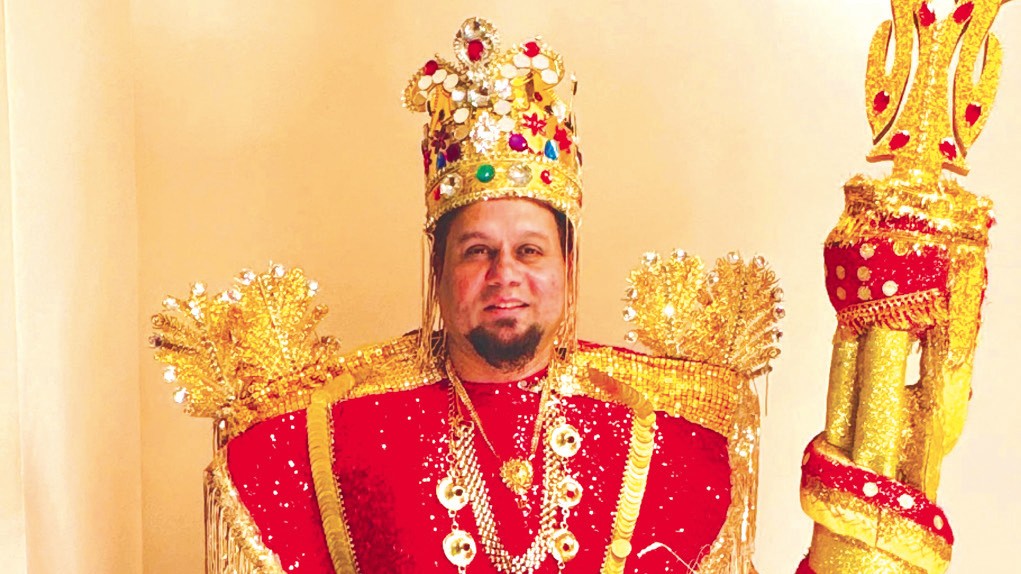
The flamboyant floats, songs and dances are the major features of the Carnival festival, which is restricted to only four days. But during that particular period of time, back in the villages, especially in Salcete taluka, there’s another lively activity, which catches the eyes of any viewer.
What are ‘Zomnivhele fell’ (folk plays)?

‘Zomnivhele fell’ (folk plays) is a name which is synonymous with the Carnival festivities in Goa. They are presented not on stage, but on a flat surface. Presentation of three folk plays of 30-45 minutes duration each is the uniqueness of this age-old traditional art passed on by our ancestors. The themes of the folk plays could range from family, social, religious issues haunting the society today. And apart from enactment by the artistes, the rest of the delivery and message is done through renditions.
‘Zomivhele fell’ has only one opening song and thereafter carries several ‘cantos’ rendered by the artistes in the folk play, which make the viewing interesting.
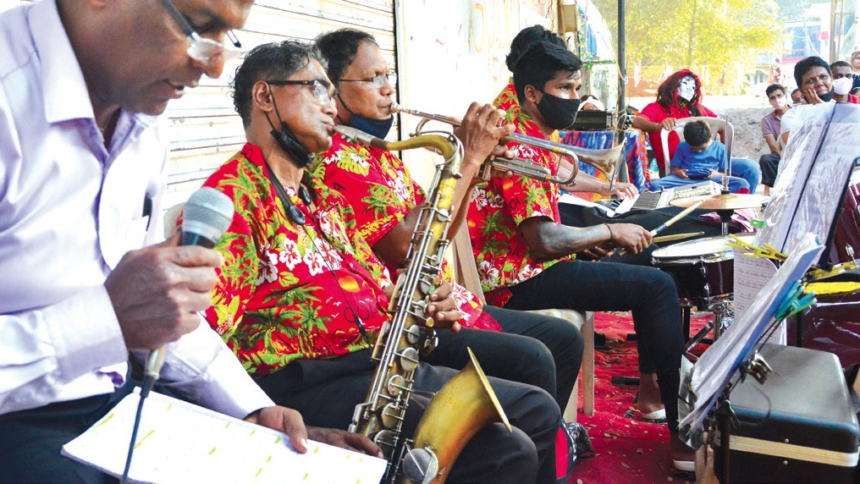
As most of the ‘zomnivhele fell’ originates from the Salcete taluka, the ‘saxtti’ dialect is mostly used in such folk plays, thus amusing and entertaining the gathered audience. Before the commencement of the folk plays at a particular venue, an announcement made from a vehicle automatically draws crowds. Earlier, for the ‘zomnivhele fell,’ the brass band comprised the blowing instruments and the drums. But today, the electronic instruments such as the keyboard and the bass guitar also find its place in those folk plays.
The presentation of ‘zomnivhele fell’ by a good number of directors receives bookings for their shows in the villages across Goa well in advance via contractors. And each director will have a maximum five shows each day at different places and venues.
The end of TAG’s annual competition
After organizing the annual competition for 13 years for participants of ‘zomnivhele fell’ at Kala Academy, Azad Maidan and other places like Porvorim and Curchorem, this year, the Tiatr Academy of Goa (TAG) has decided to hold mere presentation of the folk plays and reward all the participants.
This wise decision was taken by the officials of TAG this year to avoid controversy over the distribution of prizes to the declared winners. Last year, there was a row over the same issue, with some of the directors accusing and abusing the unfair judgment made by the judges, who were appointed by the concerned.
The legacy continues with folk play directors
Among the directors of ‘zomnivhele fell’, Curtorim-based Luis Azavedo is one of the seasoned, who has come penned and staged his folk plays since 2013. Luis has 36 folk plays under his sleeve and as there are teachers and students’ involvement in his folk plays this year, he intends to stage his plays only during the evening session. The other directors will be staging their plays at different venues from morning, noon till late in the evening, with five shows booked each day.
Another folk play director, Luis Xavier Mascarenhas, popularly known as Xavier de Maina, has also geared up with three folk plays and his entire family, including wife and three children, would form part of his troupe to entertain the ‘khell’-crazy lovers.
Xavier de Maina’s association with folk plays dates back to 1985 and since then it has been ‘never turning back’. He has penned 75 folk plays. In 1983, he penned his first tiatr ‘Rinnkari’, followed by ‘Roma’ and ‘Ghatki’. Till date, he has penned and staged 7 tiatrs on the Konkani stage.
“The folk plays staged during Carnival provides a good platform for the amateurs to showcase their talents and later hop on the tiatr stage. ‘Zomnivhele fell’ builds their confidence and they march towards stardom,” Xavier de Maina shared.
“The flavor of tiatr is slowly creeping in the folk plays and that should be avoided as ‘zomnivhele fell’ has a different aroma of its own, with less of dialogues and more of the story delivered through ‘cantos’. Such an essence has to be maintained at all costs,” cocludes Xavier de Maina.