The pandemic has crippled the economy to a great extent. The good news though is that it is slowly limping back to life, felt most of the industrialists in the State. They are hoping that people have enough money in their pocket to spend in the market so that the wheels of the economy keep rotating.
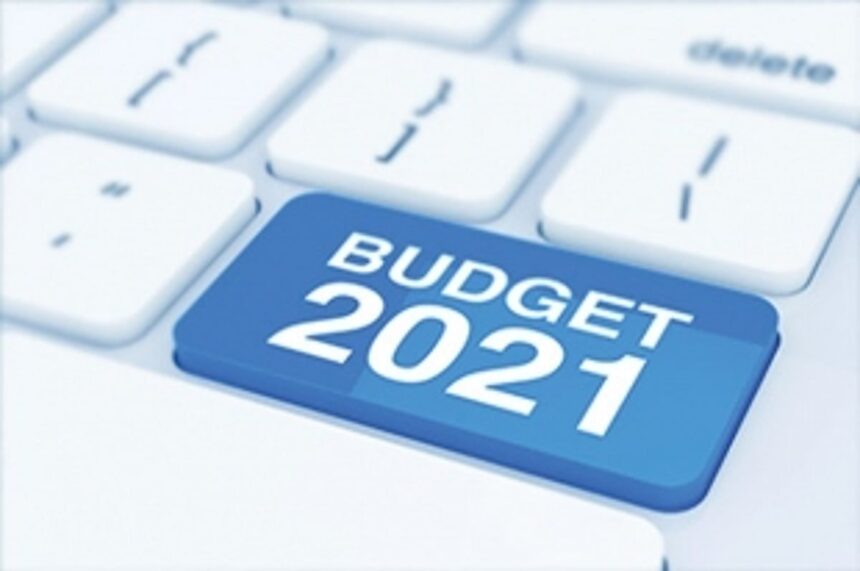
Blaise Costabir, chairman, CII Goa State believes that the GDP contracted by 15.7 per cent during April-September 2020, the worst in recent history. “In this context, we are all looking forward to the Union Budget 2021-22 to aid the recovery on one hand, while ensuring macroeconomic stability on the other. Finance Minister, Minister of Finance and Corporate Affairs, has noted that this would be a budget not seen in the last 100 years and has urged industry to provide ideas and inputs. CII suggests that the budget proposals focus on growth, even if it means that fiscal consolidation is postponed for another year, with the caveat that the government expenditure is increased in moderation and targeted towards areas that have a high multiplier, so that the additional borrowing can pay for itself through higher growth over the medium term,” said Costabir.
He further added that CII recommendations emphasize the key aspects of – fiscal management for growth and debt sustainability, reviving the demand cycle, making Indian financial sector future ready, exports, trade policy, employment and livelihood, innovation to improve productivity and competitiveness, amongst others. Other concerns at hand, consumption, private investments and exports must increase to bring about significant change. The re-emergence of inflation, which has spiked beyond RBI’s comfort level, is a macro-economic concern.
Former president of the Goa Chambers of Commerce and Industries (GCCI) and a noted Chartered Accountant Sandip Bhandare felt that the ‘never seen before’ budget would need to do a fine balancing act to keep the fiscal deficit low as well as provide relief to the adversely impacted sectors. Rather than big bang reforms, thrust should be given to simplification and relaxations of the existing laws to ease the working cash flows of the taxpayers.
“This could be done by allowing certain amounts as tax credits and reducing the tax rates for certain taxpayers. It is important that the expenditure on creating, improving infrastructure be high so that there will be increased consumption as well as employment, which can consequently spur the virtuous cycle of GDP improvement,” said Bhandare.
President of GCCI Manoj Caculo spoke on similar lines and felt that the government must create demand by putting money in people’s pockets. Spending on infrastructure, MNREGA, etc will create more rolling of cash. He is also expecting that services and retail sector needs push by special incentives.
“People have to be incentivised to spend on travel within the country to boost tourism and allied businesses. Non essential imports specifically from trade deficit countries like China should be restricted to encourage MSME sector. More funds allocation to the health sector is needed besides reduction on tax for hospitalisation expenses and health insurance for all needs to be implemented.
Using the manufacturing sector to cross subsidise agricultural sector and domestic users for power has to be stopped else we cannot expect to be competitive to take on the world. Lastly, more money has to be provided to states to spend on local specific needs to help recover from a year of huge financial stress,” said Caculo.
Dr Joy Chowdhury, Assistant Professor, Economics, area chairperson – general management and economics at Goa Institute of Management believes that focus on stimulating demand side of the economy is necessary to recover from the economic slowdown. Job creation through energising the SMEs should be one of the major focuses of Union budget. “I expect some relief for the common people through the enhancement of upper limit of 80C in income tax. Share of healthcare spending on GDP needs to be increased for the improvement of HDI ranking,” said Chowdhury.
Chairman, Taxation Committee of GCCI and noted Chartered Accountant Parimal Kulkarni said, “The new normal needs strong handholding of the MSME sectors which is the backbone of the economy. If India has to become atmanirbhar in true sense, the budget should set out a road map for growth of business which will in-turn help growth in tax. Need for setting up study groups to understand impact of taxes in each sector, clarity in tax compliances, unblocking blocked credits, extending time for availing credit, restraint in using penal provisions to name a few.”
President of the Goa State Industries Association Damodar Kochkar believes that post COVID-19, MSME’s are really struggling to survive . “Most of the relief schemes announced earlier by the Centre could benefit hardly 5-10% of MSME’s due to stringent conditions. I expect very strong supporting measures to be taken in this budget or else our strong MSME base will slowly perish. What MSMEs need is a very strong affordable financial support, on time payments for their supplies to government and other big industries. And good share of market by way of fare deals,” said Kochkar.
IT sector too has some expectations from this budget. President of the Goa Technology Association, Mangirish Salelkar expects the government to consider introducing measures which prioritise the IT-BPM industry’s ability to increase its global market share.
“The e-commerce sector has played a key role in hastening the economic recovery and the government should consider introducing measures to improve ease of doing business that will help boost this recovery. There has to be funds allocated to encourage setting up of more finishing schools for engineering graduates,” said Salelkar.
Manguirish Pai Raiker, chairman, State Council of Assocham feels that COVID has resulted in disruption of sales of MSMEs leading to loss of revenue and reduction in demand. The problems of the MSMEs are further compounded by the high taxes and numerous compliances. Indian MSMEs are also lacking collateral, due to which they are unable to get timely and adequate finance. Information asymmetry in this sector results in inadequate bank finance.
He suggested that (a) Subsidies to MSMEs for technology improvement, energy efficiency, quality improvement and digitalisation. (b) Reduction in tax on MSME firms working as proprietorship/partnerships as they should not be required to pay tax at a higher rate than the corporate. (c) Non-payment to MSME within 45 days attracts interest at three times the bank rate. This should also be automated and made mandatory for goods and services provided to government agencies for timely recovery. (d) Reduction in stamp duty due to the economic slowdown. (e) Allowing claiming of input tax credit of GST on construction of immovable properties for MSMEs. (f) Conversion of GST payment on cash basis and not accrual basis due to working capital issues of MSME. Exemption of MSMEs from reverse charge mechanism of GST. (g) The rate of annual guarantee fee under CGTMSE should be lower than the existing rate for the benefit of MSMEs. (h) Use of better technology and designs, greater R&D and competitive manufacturing would significantly help in promoting MSME exports and strengthen the value chains of MSMEs while making them more structurally competent to add to their efficiency and make India a manufacturing hub and leading exporter in the coming times.
In health sector, Rohini Gonsalves, founder and director, Sevarat Healthcare and Nursing Pvt Ltd said, “With practically every industry, every business and every person having suffered due to COVID-19, every possible measure should be taken to repair the economic damages in this Budget. Focus has to be on employment generation by encouraging manufacturing. Financial recourse should be provided for those salaried employees who lost jobs due to pandemic. Government spending on infrastructure will create jobs. The MSMEs need immediate relief and also impetus to get back on track. According to me health infrastructure and access to healthcare till the last mile has to be our immediate priority.”