Vivek Menezes
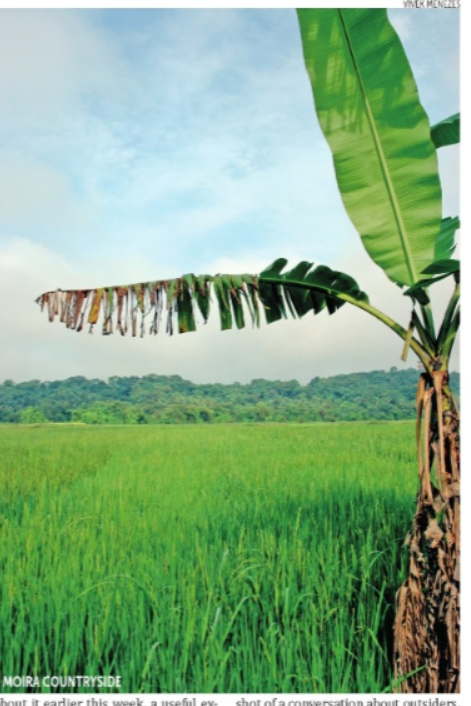
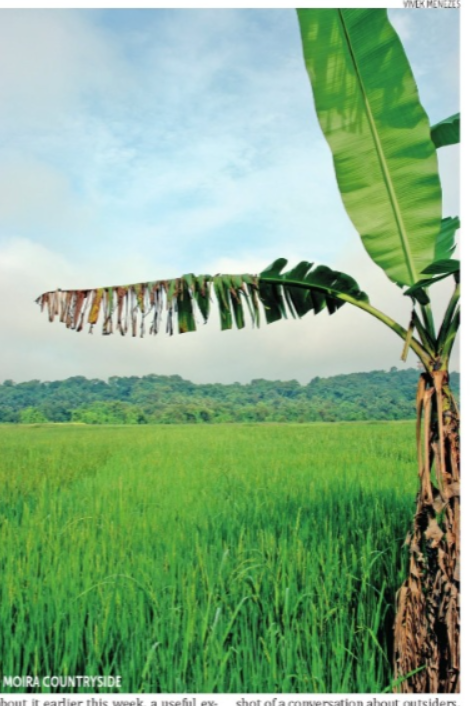
I miss the authoritative voice of the late, great historian Teotonio R. de Souza at this fraught juncture for his beloved Moira (the Konkani name also means “destiny” in Greek), an ancient cluster of Bardez villages that has unexpectedly become some of the most desirable real estate in the world.

My dear friend and mentor — he was the visionary founder of the Xavier Centre of Historical Research in Porvorim, before leaving the Jesuits for married life and an august Lisbon-based academic career — would have waded right into the raging angst, controversy and soul-searching that has erupted after an opulent new villa in his native village went on sale for 105 crores (later amended to “price upon request”). It converts to over 11 million dollars. You can buy entire Caribbean islands for less.
That number makes jaws drop even in Delhi and Mumbai, where 50-crore apartments are sold out even before they hit the market,” wrote Karanjeet Kaur in an online publication earlier this week, “but in a state like Goa, despite the unbelievable escalation in land prices, it beggars belief. I’ve tossed that number around in my head a few times, but I still cannot grapple with it.” She quoted a financial newspaper comparing “Goa to the Cotswolds with its ‘winding rivers and grand homes with balconies built for conversation, not content’. It noted that the auction houses are courting global buyers who prefer their wealth low-key and their neighbours ‘unobtrusive’.” It eventually attributed the price to Moira — and neighbouring Aldona’s — wealthiest residents that include pharma baron Hari Bhartia, actor Kalki Koechlin, and designers like Abu Jani and Sandeep Khosla.”
Kaur has been doing stellar journalistic work from Goa since 2021, especially in a compelling series exploring “the new and the old of Goan culture”. Better than anyone else, she writes about and from the huge — and now hugely impactful — recent wave of privileged upper-class “domestic” migrants, who unironically (and in an extraordinarily tone-deaf manner) call themselves “settlers”. It is fascinating stuff, filled with revealing insights, like from author and columnist Santosh Desai, who says when he moved here (in 2020!), “many taxi drivers didn’t quite know where the village was. Assagao had already become the headquarters of expat north Goa, cast as ‘GG III’ and overrun with restaurants. Moira was still sleepy and green… Desai said that the Moira-Aldona settlers viewed themselves as a little more conscious, a little more respectful of the local environment. Moira shuns the overtly materialistic energy that Assagao has come to represent. But the ultimate paradox is that even this haven ever existed, it begins to disappear the moment you talk about it.”
All this is vivid reminder about Hartman de Souza’s blunt Moira-flavoured 2011 pasting of Tarun Tejpal (still available online), following an exchange about mining and corruption in a national daily? As so many will easily recall, the brilliant environmentalist, theatre activist, teacher and writer — his 2015 Eat Dust: Mining and Greed in Goa essential reading — said he was told “I mean, look at Moira man, it’s a dying Goan village” with “an emphasis on dying” and the implication being, one suspects, that the Tejpals of the world can and will breathe life into it. “I wonder if he remembers and can parse what I said to him in reply.”
Hartman died in 2023, and Karanjeet Kaur had not heard about this resonant back-and-forth about before I told her about it earlier this week, a useful example of the many ways in which the rapidly burgeoning “settler” ranks occupy alternate universes of meaning from “natives” in Goa, which is breeding all manner of tensions for which less privileged migrants and disenfranchised Goans are made to suffer.
Prior to relocating in 2021, when her husband started a new job here involved with waste management organisations, Kaur told me “my only exposure to Goa had been on holidays along the coastline. [But now] I parachuted into these intensely important conversations about the state’s beauty and what it could offer — but about what was being extracted from it. That also sparked a curiosity to understand my immediate milieu better [and] during that research, I met so many interesting Goans, and witnessed firsthand the fabled generosity and warmth of the people. However, as a ‘settler’ you’re always within ear-shot of a conversation about outsiders, who belongs and who doesn’t. I like to think that our journey was a little different from those of other people who moved here during the pandemic, but I also began to realise that we were part of a force that was changing Goa — for better and for worse — and so individual differences didn’t really matter. The reports I’ve done have all stemmed from an attempt to understand this inflection point in Goa better, and to examine our own role in this flux.”
Kaur says “I feel that these two tracks — the warmth and the antipathy — move in parallel, and both are entirely understandable. A few months ago, while reporting a story in Miramar, a person asked me where I was from. I said, I live in Salvador do Mundo, as I have for the last four years. But he responded with a very firm, ‘No, you are not from Goa, you’re not Goan. Where are you really from?’ She was not wrong; I am not Goan. But that exchange is still stuck in my mind because of how jarring it was — and it made the whole outsider debate a little more personal. I realised that this line of questioning isn’t always hostile, because land is so closely enmeshed with the Goan sense of identity. That said, it’s also stayed with me because this does not happen often. No one is obliged to spare my feelings, but most people do. Warmth and kindness is the default position of most people. There are all kinds of ‘settlers’, and I know exactly the kind of people that are hated within Goa. It’s a strain of obscenely wealthy, brash, and exclusionist people, who make no attempt to integrate with the community. For a lot of such people, Goa is a temporary backdrop, not really a place they call home. This lot is hated by other ‘settlers’ too.”
(Vivek Menezes is a writer and co-founder of the Goa Arts and Literature Festival)