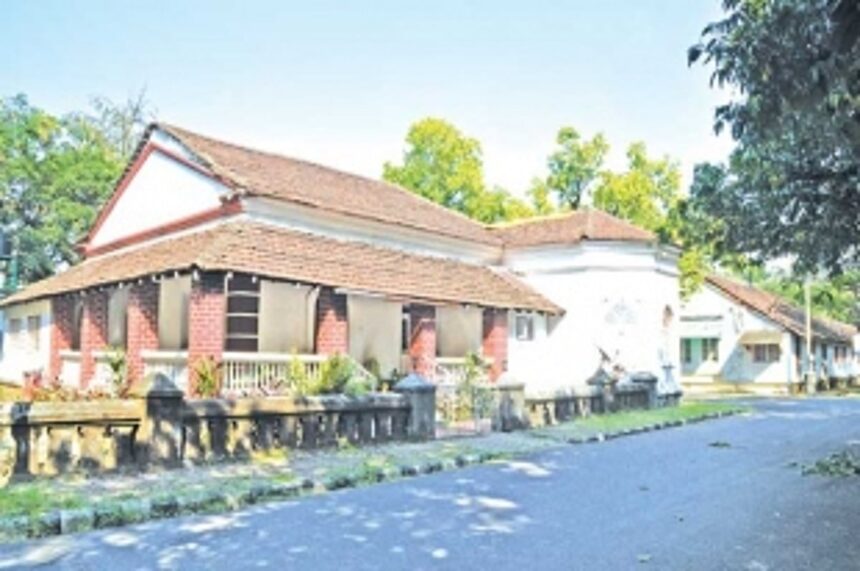
PANJIM: The old mansions may be a reminder of an age long gone but the emotions it evokes are still strong. Families may be living in different parts of the country or the globe but many still maintain a connection with their home in Goa and these mansions are an important part of that connect.
These mansions or bungalows or villas from the Portuguese era are unique to the state and make for a very important aspect of the culture of the state. These distinct homes have housed families for generations thus also making them a subject to be coveted by subsequent generations resulting in several lawsuits.
For several families the pride of owning a house of such style is one that fills them with great joy but it is also tinged with reality that it is an extremely expensive love affair.
Lorna Colaco who owns a 150 year old mansion in Margao said the house gave them great joy.
She said “It is a beautiful experience to live in such an old house but like everything it has to be maintained and that is quite a proposition. I don’t know the finer detail of the expenditure since that aspect is handled by my husband who is presently not in the country”.
To offset the expenditure she and her husband run a bed and breakfast which helps in paying those bills. Unlike other operations however guests staying at the facility have to be referred since they will be staying with the Colaco’s.
An agent who is involved in the reality business and has been involved in the sale of a bungalow in the past said that expenditures to maintain could in certain situation be quite astronomic.
He said “It is not unusual for families to spend anywhere between Rs 2 to 5 lakh a year maintaining the house. Before the monsoon one has to either work on the tiled roof which has to be replaced or one has to do it after the monsoons. Then of course there are the window panes which have to be replaced if the glass work breaks due to whatever reason and finally the electricity bills which can be quite exorbitant if the family is using all the rooms instead of shutting some up.”
Another owner of a mansion which has now been converted to a tavern said the cost incurred could be controlled if care was taken continuously. His house which is over 100 years has not given him much grief. He said this was due to the use of cement in restoration on construction work by the families.
Earlier in Portuguese times he said the builders had used chunna which allowed the stones to breathe which was not happening now with cement being used. This had long term problems which increased costs. His house which was now converted to a tavern was doing well and he felt it was important for other owners of mansions to explore routes to generate funds since it was an important aspect of the state’s unique identity.
Another broker based in Campal said she had a couple of mansions for sale but the price being quoted was very high. She said “It is not unusual for these properties to command prices in the Rs 7 to 11 crore price range since the property around the house would be around 1 to 1500 sq mtrs. The monies demanded are quite high and it is a certain kind of individual who would like to purchase such a property. Someone who likes history and appreciates the architecture would be the ideal person to buy such a place”.
She went to say that such sales took place every year since there were usually way too many families who had a legal right over a property making it convenient to sell it and share the monies and purchase separate houses.
There was however exceptions to this trend with quite a few people not really aware of how to pay the increasing cost of maintenance. In some instances, she said the pride prevented people from trying to do something radical that could help manage the expenses.
Jack Sukhija of Panjim Inn who has turned his residence into a profitable venture said the main areas in Panjim were Campal and Fontainhas where such structures were present. He said “It is expensive to maintain given the amount of wood work. Termites are a serious problem and here in Fontainhas if you dig a little you will hit water which adds to the problem. Seepage is a problem”.
He said people had options which were opening up. These houses were unique which were getting rare with the passage of time and the place could be converted to boutique hotels, cafes or event spaces which could pay for the maintenance. There were he said sale of these properties taking place and it was usually done as a last resort since it was an expensive proposition.
There was a demand for the government to provide assistance to these owners to maintain these residences. That is a subject that evokes much discussion and passion. Visitors and residents will hope that these structures are around for another 500 years to provide everyone a glimpse into the past.