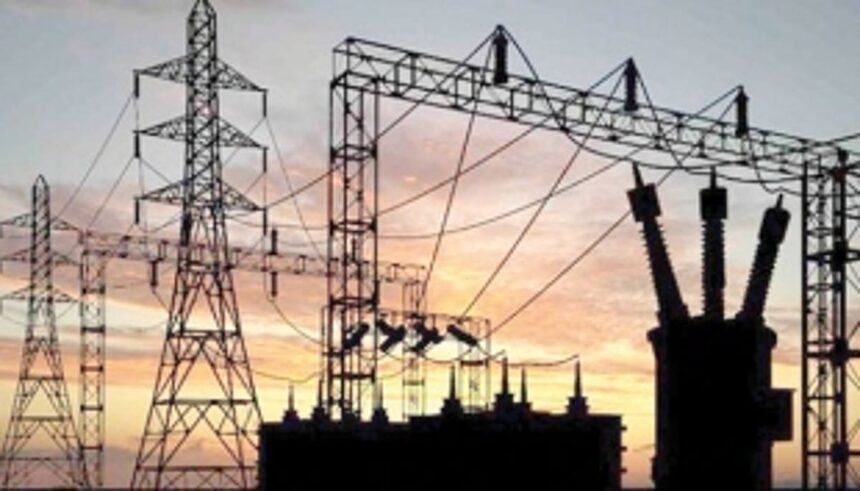
For any growth, in any field, power is one of the most essential elements. Without electricity, there will be a stage, when the entire wheel of growth will come to a standstill. In India, the power sector is most diversified and the sources are from resources like coal, gas, hydro, solar, wind, nuclear etc. With the growth in the GDP (which is now hovering around 6.8 per cent and is likely to grow further), the demand for power is bound to scale up if manufacturing sector expands and for which we need to prepare ourselves which is more sustainable source of energy. But the debate is, whether actually India is a power surplus country or not?
Recently, Goa witnessed a retreat of regulators and policymakers in the energy sector. With the emerging growth and positive sentiments the growth in GDP is likely to scale up and so will be the demand for power and growth is directly proportional to the demand in power.
According to Ravi Arya, president, Hindustan Power Projects believes that power scenario in the country is about 310 Gega Watt and as per the Central Electricity Authority report last financial year the power sector has grown with the annual increase of 5.6 per cent and there is only 2 per cent deficit left in meeting the peak demand.
“This figure shows that we are a power surplus state, but the fact is far from it. Per capita consumption of power in India is around 1000 Kilo watt but when we compare this consumption with China it is about one third. Average world-over consumption of per capita power is about 2500 kilo watt. So we are standing nowhere. In power exchange there is 8-1000 Mega watt of power which is not credited on a daily basis. Power plants are performing at a PLF of 50% which a developing country cannot afford,” said Mr Arya.
In tier-II and tier-III cities and towns most of the demands are unmet and there are several power cuts which is very common. “A study says that around 80,000 Mega Watt of power is generated through diesel sets and the cost of that power is Rs 15 per unit and polluting the environment too. The untied power 50-60000 mega watt is already available in the market at Rs 5 per unit. Hence, cheap power should replace the costly power but it has not happened. The problem is the link between the generation and delivery points. The last mile connectivity needs to strengthened. We have to make the distribution companies financially viable,” added Mr Arya.
According the Head of Corporate Strategy and Business Development of Jindal Steel and Power Limited Kapil Mantri, “We expect India’s GDP to grow at 7-8 per cent for next few years. In last few years the growth in GDP has happened more from service sector because of that the demand for power has not grown in relation to the GDP. That is precisely the reason why we have capacity and so may call it as power surplus. But with the manufacturing sector picks up then we expect the demand of power to scale up which will be good for the stranded power capacity today.”
Mr Mantri added that India is ready for more power capacity requirement primarily because we have around 25 Giga Watt of capacity which is lying idle. Apart from that we have a huge demand and plans for capacity addition of 100 Giga Watts in renewable energy which should help. “As the coal production is increasing and if the government is able to meet the one billion tonne of target by 2020 then we can as a country can afford to have more power plants. As of now we are looking at 7-8 per cent increase in demand for power in an annual basis. The thermal power investment is going to slow down as private sectors is not pitching in,” added Mr Mantri.
When asked about India being a power surplus, Debashis Banerjee, CEO of Reliance Energy told Herald, “With the affordability of the power being taken by the utilities, whatever power can be absorbed by the utilities then it is not power surplus because power is there but the generation is not happening. The utilities are having high losses of 35 per cent, high loan books and they would prefer to go for load shedding of 6 hours. It is dichotomy whether we are a power surplus country or the whether the power is there and we are unable to use it. This way we may call it power surplus.”
Also, India ranks third, and follows USA and China, among 40 countries with renewable energy focus and stress is more likely to now grow in this sector than the conventional power generation sector which is unlikely to be sustainable, both by means of resources or environment.