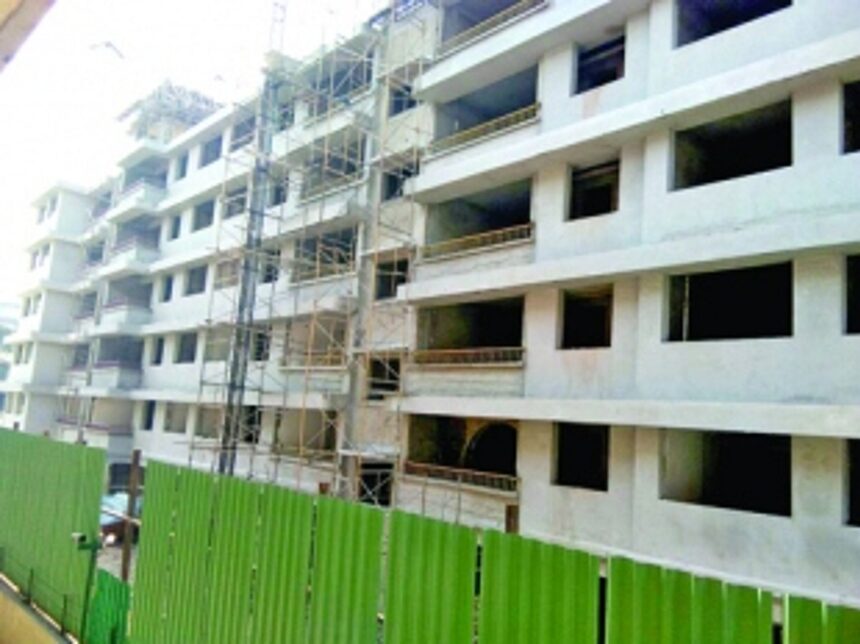
Demonetization has had an effect on various sectors of the economy. Depending on who one speaks to the response is one of absolute support for the historic decision or a more guarded reaction by people who like to temper the statement by saying, operationally it could have been handled better.
The realty sector in the State has been in a slump for a couple of years and this move, according to reactions has not helped matters.
Sunil Fernandes is a manager in a local company and just married. He is looking to buy a two bedroom flat outside Panjim and has shortlisted an apartment. He has the 15% required with the rest being provided by a bank loan.
Sunil said “I cannot withdraw the required amount because it is way above the limit set by the government. I am stuck and everyone else is stuck too. Thankfully the bank and the builder are aware of the situation and I suppose something will emerge after December 30.”
Like him there are several others in the State whose dreams of owning a home is now ‘on hold’ till the situation improves.
The builders in the State of which there are many are stuck at different levels of frustration. There is Desh Prabhudesai, President, Credai Goa chapter who speaking of the policy decision believed it was a very good decision.
Mr Prabhudesai said “I support the PM’s strong stance but the after effects should have been monitored. We thought only about people with black money not the after effects. At Credai we welcome this move by the PM and I have to state that our industry has been moving towards a more organised way for almost 5 to 10 years. Now banks give 85% of home loans and everything is above board.”
He went on to say that on a day-to-day basis, operationally it was tough because cash could not be paid to labourers on sites. He said “We cannot give cheques to minor labourers and contractors are also having problems. It is affecting the industry.”
Sacheen Pai Raikar, Architect who has worked with several local builders said the restrictions placed on withdrawing money had affected the continuous progress of several projects. Mr Pai Raikar said “I know of contractors who have 12-15 workers stuck in villages in Bihar, Jharkhand who left for Diwali and now cannot come back due to a paucity of funds. Right now work is moving but the true picture will be known after December 30.” With limits on withdrawals placed at Rs 50,000, this was a 7 day cycle.
Surabhi Arora, Senior Associate Director, Colliers said the general feedback from the market was that it would be hit by 50%. She said “There is a pause in the market and nothing was happening. Everyone is in the wait and watch mode. Everyone believes, land rates will fall, we are waiting and watching and perhaps after December 30 we will know.”
Some businesses she said were under stress and would sell assets thus ensuring business would happen in the secondary sector. There would be distress sales, she said. Transaction volumes will go down all over and business in the residential sector would continue to be bad. People were delaying their decisions with no one willing to take loans. With regards to Goa, she believed there would be a drop anywhere between 5%-7% in prices and one had to remember the returns on investment which was not great.
Perhaps one of the big cats in the realty sector could have the final say. Peter Vaz of Models Group believed there was some disruption at the workers level. Peter said “We have been straight with our clients, perhaps from the buyers side there is a problem. We are above board in our transactions. Our customers are those in need of a flat and our flats cost anywhere between Rs 45 lakh and Rs 2 crore. We cater to the needy. It is the greedy that will face problems.” Like others he wished, the execution was better of the entire process.
Perhaps it is also a matter of perception that black money or unaccounted cash caroused through the veins of this animal. The real estate sector will definitely be affected by the demonetisation exercise, as it has traditionally seen a very high involvement of black money and cash transactions. However, almost all such incidences have been in the secondary sales market, where cash components have traditionally been a veritable ‘must’. In other words, the resale properties segment will take a big hit. However, short-term pain is inevitable when we look for any eventual long-term cure for the disease. There has for long been a strident demand to bring transparency in the sector so that the it becomes more organized, and cash dealings must necessarily be the first symptom of the disease to be dealt with. Time will tell us if that happens in the long run.