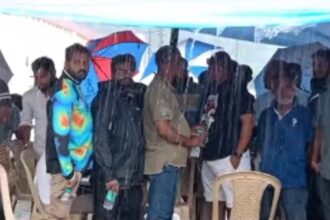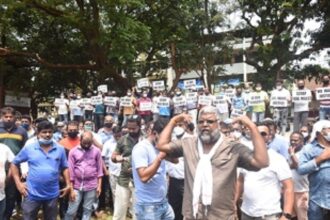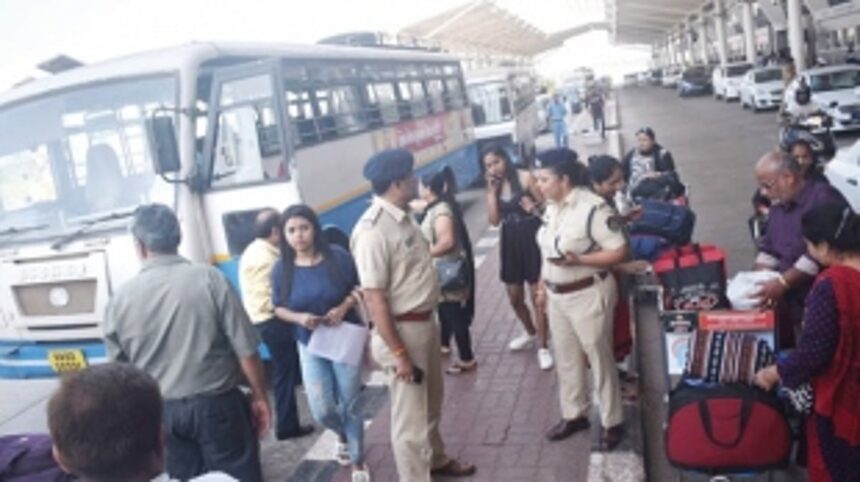
It was December 27th and a prominent business owner had foreign guests who expressed their interest in visiting certain night spots in the State. He checked the fare card provided to him by the Varca Tourist Taxi Association which stated a fare of Rs 8500 for the distance. Not keen on creating a kerfuffle in front of his guests he quietly paid. He later calculated and realised he had paid Rs 75/km for a total distance of 120 km. That makes the taxi service the most expensive in the country.
The taxi drivers have resisted all attempts by the government to work as per a digital meter which would mean rates that would be more in tune with rates charged in other parts of the country.
However, there is also Goa Inc, companies that have set up base in the State. They have had to also deal with the shenanigans of the taxi drivers as they go about conducting their business.
One man who has seen it all is Kirit Maganlal, Founder and CEO of Magsons who was emphatic when he said the brand known as Goa was destroyed and this move by the taxi was adding fuel to the fire. Mr Maganlal said “It should be struck down with an iron hand, the taxi drivers are not the only stakeholders. In all other parts of India, it works so smoothly expect in Goa. Politicians should stop playing games with the livelihood of stakeholders. My people came and stayed in South Goa and I could not send my car. They manhandled the driver and the hotelier said he could not do anything.”
Blaise Costabir, propreitor/partner, GMI Zarhak Moulders Pvt Ltd said this impression that taxi service was only meant for tourism was not true. Everyone, he felt could use the taxi. Mr Costabir said “These taxi drivers are misguided deliberately or act out of ignorance about this app. It can increase their business. Anyone in need of a taxi can just use the app and hail a cab. The person nearest will respond and earn his livelihood. This also however means that one should be willing to work long hours to earn a decent amount. This is something these guys just don’t seem to be interested in. They want to take one customer, rip him off and spend the rest of the day sleeping or playing cards. It does not work like that. Their behavior is unpardonable. They are considered a vote bank and each taxi driver guarantees at least four or five votes for the politician. This cannot continue because Goa is earning a very bad name nationally and internationally. Uber will ensure there is continuous work for all taxi drivers. The local population is also irritated they cannot use taxis’ because it is so expensive.”
If that was the sentiment expressed by local businessmen then those expressed by members of the hospitality industry were not very different.
Vikram Antao, GM, Radisson Blu felt it had a very negative impact and portrayed Goa in a very poor light. Mr Antao said “the State is being held ransom by a small segment and we are giving in to this pressure. There is no governance, no fixed rates. World over transport in getting cheaper, in Goa it seems to be the other way round. Tourism in the State is so big and yet this happens. We had events over three days and it was a big problem. Big hotels cope with coaches but a majority of tourists stay in smaller hotels. During the recent strike, private cars were charging exorbitant rates. Taxis are a business and have to be governed by the law. Here everything thing is done as per the mood of the taxi driver. This has gone too far.”
Responding by email, Siddharth Savkur, GM of Alila Diwa Goa in a statement said “It is very unfortunate that a popular tourist destination like Goa, visited by travellers from around the world, had to suffer taxi strikes during peak season every couple of years. This year, the local administration really stepped up to handle the situation very well in terms of police presence, alternate transport arrangements and clear communication to all stakeholders. The TTAG also supported these efforts with assistance at the airports. Due to these initiatives, we were able to use our cars and coaches safely so that inconvenience to our guests was minimised. However, it was still a blot on Goa’s image in the eyes of the tourists. When we have large guest movement to and from the airport, we use our own fleet of cars and coaches supplemented by the local taxis and hired coaches. I think it is important to consider solutions like Uber but without isolating the local taxis. There is an opportunity to enable both to work together for mutual benefit, not to mention the convenience of locals and travellers. Uber, or any other taxi app, can only succeed if they have a fleet of taxis which can only be achieved by working with the locals. As I see it, this is a win-win situation for everyone.”
Sandeep Bhandare, president, GCCI, said the strike had affected confidence of tourists and business travellers were affected too. He said “This is the third time this has happened. Thankfully the govt employed the Kadamba buses in a way so as to reduce the effects. Limits on speed have to be in place and this discussion on speed governors makes no sense. Such frequent strikes cannot happen.
Athreya Sawant, president, CII Goa chapter said business faced big problems because of the taxis. There was he said no clarity on pricing. Mr Sawant said “We in the industry need a proper transportation system. We need busses through the day and night at least once an hour. The people should be given an opportunity to decide which mode of transport he or she should use. It is the basic requirement. This taxi problem defies all logic.”
Goa has over a period of time become a desired destination for MICE. Marriages and conferences are being held in five star properties with regularity and for some hotels it provides as much as 40-50% of the business generated at that venue. Wedding planners dot the landscape in Goa. Lyndon Alves of Sunset Gateways said for weddings big hotels did not use taxis but buses to transfer guests. Lyndon said “On several occasions guests have to stay in two different hotels. Now taxi drivers are objecting to the use of buses. It is ping pong. I have been here for twenty five years and it is big problem as a wedding planner. Corporate, I know are scared to take coaches. The taxi driver does not listen to rational arguments and in time will destroy everything.”
Lester Rodrigues of Events Bazaar Group said he only hired buses for the entire group and never entertained taxis. He said “They are being misguided and tourists coming to the State are suffering.”
Perhaps the final word should go to Savio Messias, president, TTAG who said earlier hotels would offer packages which included pick-up from the airport which had now been discontinued because of the problems. He said, “There is one five star property which still does it but is going at a loss because the rates are eye watering. It’s just does not make any sense. Rs 6000 for two transfers, is ridiculous. Taxi drivers barge into hotels and create problems. This is affecting our image without a doubt. The taxi drivers don’t seem to understand the damage that is being wrought by this. This has to be sorted sooner rather than later.”