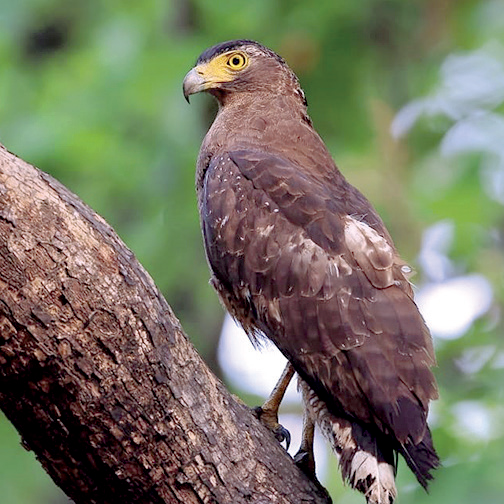
Birds are beautiful creatures with their myriad colours and patterns and their calls that make them so amazing to watch. At the ongoing Goa Bird Festival, the day begins at dawn for birdwatching as participants enjoy the guided bird walks at the Cotigao Wildlife Sanctuary, geared with cameras and binoculars.
The three-day festival, concluding today, January 19, had informational workshops and sessions besides the daily walks. On the first day the sessions included, ‘Birds’ eye View’ by Indrajit Ghorpade and ‘Preliminary findings from the Assessment of population of White Bellied Sea Eagles Along Goa Coast’ by Dr Madhura Niphadkar-Bandekar. The second day had four sessions including a session by Dhananjai Mohan, ‘Breeding Biology of Red neck Falcon and Raptor Migration’ by Nirav Bhatt, ‘Livelihood security through bird tourism in Goa’ and ‘Threatened Birds of Goa’ with the release of a book by Dr Pronoy Baidya, on 56 globally threatened birds. The festival will conclude today with experience sharing and the valedictory function.

As this is the eighth edition of the Bird festival, it’s is aptly held in the month of January. Goa Bird Conservation Network was founded in 2011 and has been closely associated with the Forest Department in organising this festival. Asian Waterfowl Count happens in January across Asia as winter migrant birds travel from November until February. Most of the states in India now have bird festivals at this time of the year.
White-bellied sea eagle project
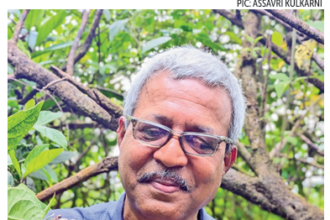
Dr Madhura Niphadkar Bandekar spoke on the white-bellied sea eagle project run by the Goa Bird Conservation Network. “Our project is doing very well. I did a presentation on the outcomes of the project. It was based on the preliminary findings of the project which is on since September. It is funded by a CSR initiative of a company. It started off as a citizen science initiative. We did sensitization workshops for 41 panchayats across the coast of Goa because the white-bellied sea eagle is a coastal bird,” informs Dr Madhura.
The Google form is still active and anybody, birdwatchers or even tourists, can add information through the form. Once the information is added, it is verified on ground and then they do their own surveys where they actually search for nests. The farthest one they have found is 11 kilometers away from the coast at Ella, Old Goa.
When raptors captures
the attention
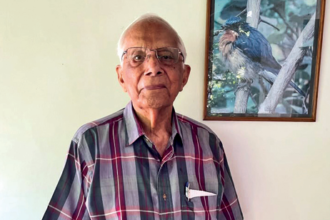
Noted photographer with 25 years of bird watching, Nirav Bhatt had a presentation on two aspects, study of what he has been doing and his presentation on study on red neck falcons and the raptor migration study. “Supposedly, the session had the largest number of more than 100 participants as per the department. The principal CCF was there and there was a good interaction regarding conservation,” says Nirav.
The community of birdwatching has grown in India over the years and Nirav can see the interest in youngsters even in Goa. “Many new people have started birdwatching especially because of photography. They share their work on social media and also learn more about the birds. They can also refer to apps on birdwatching now. I carry my camera and my binoculars when I’m out but mobile phone works quite well too,” adds Nirav.
eBird
eBird is a platform where anyone who is going out for birdwatching, can make their own checklists as you can note whatever you see. It also has a nice mechanism where it provides information on what birds can be seen in that area, predefined by filters. You can even upload your own sightings to the app, which is then reviewed and if that is accepted with or based on evidence, then it will be made public. That is one mechanism where you have to do your efforts and then you can share your data with the community.
Merlin Bird ID
This app is an aiding tool where if you upload the photograph of a bird and it gives you information about the bird and what exact species it is. In this app, there is sound identification too. If you listen to a call of some bird, you can upload it in the app and Merlin will tell you which bird it is with accuracy. It can identify almost 50 percent of the birds.