Raksha Bandhan is one of India’s sweetest and simplest festivals. The
relationship between a brother and sister is acknowledged on this day- a
brother protecting his sister. And we all know the age-old tradition- tying of
the Rakhi. But, is that all? Does the symbolic term ‘protection’ only come into
force amongst siblings?
If you open your mind and think in a broad sense, it’s not about
the brother -sister relationship, there are thousands of people around us
daily, strangers and known ones whom we ought to help, protect, love and care,
but often end up neglecting.
According to some, this day should be seen as a celebration of
humanity. “It’s the same tradition every year. Keeping the celebratory day
aside and looking at the other 364 days, the ones who promise to protect us end
up hurting other girls/ women out there. And it isn’t just men, even women, we
are all so caught up in our own worldly desires, that we forget to care for the
others,” says Vibha Nagvekar, Ponda, counsellor.
Protection is toxic. At least that is
what Aishwarya Guha, Anjuna based writer, painter and social activist believes
in. “I don’t believe in brothers protecting sisters, the idea of protection
itself is toxic, instead we all should promote self-awareness. For instance, a
woman should correct another woman or a man bullying someone else should be
corrected by his friend,” she explains. The first Rakhis in mythology were
powerful protective threads that invoked safekeeping and nurture without a
subtext of gender roles. In contemporary India however, the festival has become
yet another vehicle of patriarchal constructs, reinforcing and re-iterating
toxic gender roles.
Aishwarya also explains that lately
the trends are changing. There are commercial advertisementsthat show Raksha
Bandhan as love based on all stereotypes. Family doesn’t have to be together to
be a family. The advertisement shows the child tying a Rakhi to her nanny out of
respect and love for taking care and protecting her.

Likewise, Lina Vincent who mostly
orients her work towards gender and environment activism shares that in a time
of conflict, migration, and disharmony, Raksha Bandhan should not only be among
brothers and sisters, but for the whole of humanity towards protecting each
other. “We must in fact look upon the environment too and vow to protect it,”
she says. She gives an example of The Gram Art Project in Nagpur. It is
involving women in the making of Rakhis that carry seeds within them, at once
reminding one of the role of women as nurturers and the necessity of
safeguarding indigenous seeds.
Love for family, love for caretakers,
love for environment, this is what Raksha Bandhan should be all about.
In our Goa itself we have the
#MetooBro movement headed by Goa-based artist PriyalWoodpecker.
While everyone is aware of the common
MeToo movement, the #MetooBro movement had come around last year. It opens up
conversations about people sharing and talking about what they have faced. “The
idea behind a “me too” rakhi is about questioning the duplicity of in
protecting sisters. How the protectors at home, so effortlessly become the
abusers on the streets,” says Priyal.
The questionshe brings forth is, “If
we love our brothers so much, why shy away from speaking about things that make
us uncomfortable?”
Advocate Albertina Almeida, who also
deals with women’s sexual harassment at workplaces shares that as a student,
she was into recognising people as brothers and to her it was about tying a
soul band; but now she finds it centred on ‘protection’. “In the name of
protection and integration, the Government is committing dreadful acts like
moving to abrogate Article 370, and deploying troops in Kashmir, creating an
atmosphere of terror,” she says.
Protection is misunderstood by many
today. But we have to learn celebrate humanity in little ways of showing
kindness and helping, it is a form of protection too.
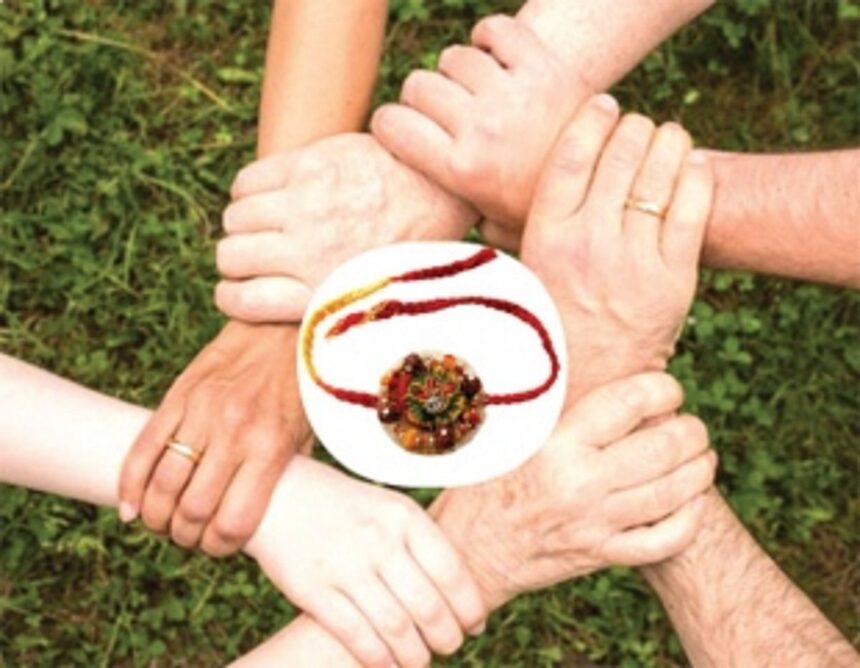
For the MeToo movement, each Rakhi is
accompanied by a letter, addressed to the dear brother, asking of them,
consideration of their own thought and action. Each of the Rakhis is handmade
from tetra packs and jeans, up-cycled in the process.
There are several women from Anjuna
village who have made the Metoo Bro Rakhis, each Rakhi as unique as the abuse
itself. These Rakhis redefine what ‘Raksha’ and ‘Bandhan’ truly mean in terms
of liberating us all from a world run by blind patriarchy and age-old
traditions that are used to perpetuate inequality and violence against women.
So, let’s make everyone around us feel loved in the
universe of humanity, this Raksha Bandhan and every day of the year.