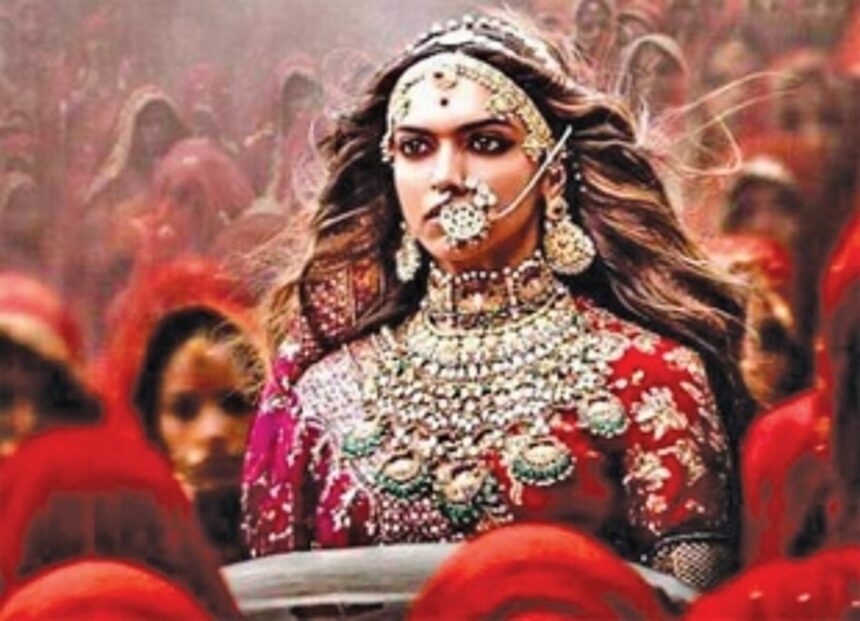
Epic poem ‘Padmavat’ by Malik Muhammad Jayasi was brought to the big screen by director
Sanjay Leela Bhansali. His film, finally christened ‘Padmaavat’, narrates the
story of Padmavati, a Rajput queen who, along with the women of her kingdom,
committed ‘jauhar’ (self-immolation) to protect themselves from Sultan Alauddin
Khilji and his army. The film begins with the disclaimer that they are not
glorifying ‘Jauhar’ but merely depicting it as part of the plot. Since the
film’s release, it has received critical acclaim and audience praise, but also
criticism, some of it expressed through open letters, like the one by actress
Swara Bhaskar.
Meenacshi Martins was a member of the Central Board of Film
Certification when ‘Padmaavat’ was in discussion and being an actor herself,
she identifies with the creativity of the filmmaker. “As far as I am concerned,
the film is based on a historical poetic narration of a particular era and how
the women of that era reacted to a traumatic situation. The same happened years
later in Punjab during the partition, where women were running into rivers and
wells. Swara Bhaskar is a political entity and has written the letter in her
political capacity, while a film writer has his own creativity and his freedom
of expression and the film has been vindicated by the Central Board of Film
Certification. There is no scene in the film that is debatable and makes this
whole open letters debate questionable,” says Meenacshi.
She further adds, “I have known Sanjay Leela Bhansali for the
last 27 years since our days at the Film and Television Institute of India in
the 1990s. The only line he has crossed in the film might be that of grandeur
and magnificence. I know him as a person and he is not someone who will cross
certain boundaries. Even the actors carry a huge burden on their shoulders and
no one would jeopardise their credibility and career for a role.”
Tallulah D’Costa, an assistant accountant from Moira, watched
the film soon after its release to know what the hype was all about. “I didn’t
feel offended after watching the film as it was a portrayal of history on the
big screen. It is very clear that Allaudin Khilji wanted to see Padmavati and
after the attack on her kingdom, she wanted to do something and create history.
This might have happened in real life, where the queen asked the women of the
kingdom to commit ‘jauhar’. As women, they made a choice between living enslaved
as victims or committing ‘jauhar’. They couldn’t fight against the army men and
this was their way of fighting back. I didn’t find anything wrong with the
creativity in the film,” says Tallulah.
Mandita Phal Dessai from Cuncolim was eager to know what caused
a huge controversy before the release of the film and whether it was worth all
the cuts. “I had expected a lot from the film and it beautifully showcased the
cultural prosperity of the Rajput community. I had nothing to oppose as a woman
watching the film as far as the story of the film is concerned. However, I
think the last part of the film, the ‘jauhar’ of the women, should not have
been glorified and it cuts into the important aspect of history. I read the
open letters by Swara Bhaskar and the writers of ‘Ram Leela’, Siddharth-Garima,
and I feel that each one can have their own views. Interestingly, I also
happened to meet a person from the Rajput community after watching the film and
he was adamant that the film should not have been released and screened in
theatres. He had not even seen the film and was still opposing it,” says
Mandira.
Sabina
Martins, founder member, ‘Bailancho Saad’, has been through the open letters
and feels that there is nothing offensive when it comes to good cinema. “Many
women followed the tradition of ‘Sati’ in history; it is the act of committing
suicide when you are most vulnerable, something I would not advocate. The fight
against the odds should be on what strategies to use to fight back. I have
heard discussions on the film and no one was offended by the film, in fact,
they appreciated the actors’ performances as well as the director for his skill
of storytelling. Very few would look at the story from another perspective and
most people have been exposed to this practice for the first time, that too
through this film,” says explains.