Dolcy D’Cruz
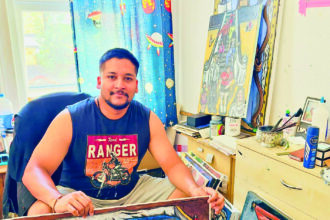
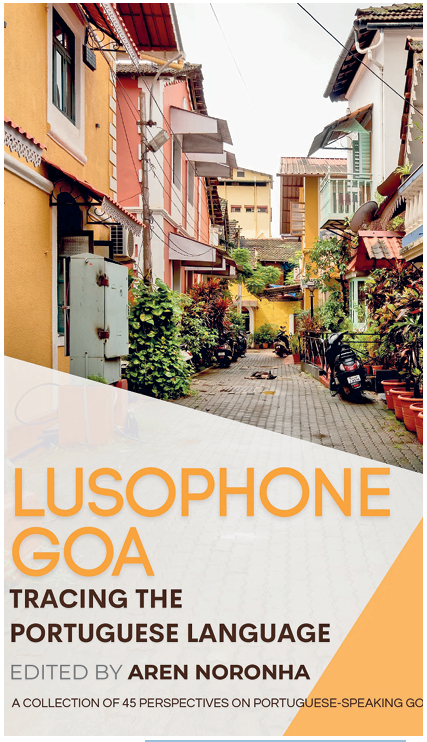
Goa was once the foremost hub of the Portuguese language in Asia, having been a central administrative and cultural base for the Portuguese Empire in the East since 1510. For centuries, Portuguese dominated Goa’s official, commercial, and literary life. Yet in the decades following decolonisation, the language’s influence and visibility have dramatically declined. There are critical questions being raised about the language’s place in contemporary Goan identity, its relevance in education and public life, and the impact of its decline on those who once spoke it. The anthology ‘Lusophone Goa: Tracing the Portuguese Language’ aims to explore these questions through personal essays and narratives that document the lived experiences of Goans and the diaspora. Edited by Aren Noronha, the book collects 45 chapters that reflect on how Portuguese has changed since 1961, how it survives today, and what it means for Goan identity and cultural memory. Saligao-based Aren Noronha is second year student pursuing a master’s degree in Portuguese and Lusophone Studies at Goa University. With a bachelor’s degree in Mass Communication, he is deeply interested in global history, Indo-Portuguese and intercultural studies, and media. Interestingly, Aren is not from a Portuguese-speaking family, but studied it as an optional language in school, higher secondary, and now at the Master’s level. “My grandparents spoke Brazilian Portuguese as they lived in Brazil for a decade. At the same time, I kept hearing stories and people’s histories around it from that era. As my interest grew in the Portuguese language in the former colonies as a student, I had a growing curiosity about the questions behind the language in Goa. In February 2025, I sent out a request to a large number of people with a connection to the language, explaining the project and asking if they would like to share their experiences. Many responded positively; my professors were also most supportive. By the time we finished, the book contained 45 chapters spanning 294 pages,” says Aren. Based on the narratives collected, contributors describe the impact of the decline of Portuguese on Goan identity, at an individual as well as collective level. “Some mention, the trauma and troubles of the transition from Portuguese to English. Goans have been called, on the other hand, “citizens of the world” too, as described by Dr (Fr) Eufemanio Miranda. Former broadcaster and earlier professor in Macau, Athos Fernandes, talks about the Uniqueness of Portuguese spoken in Daman. Dr Délio Mendonça argues that the language no longer belongs only to Portugal, but to all its former colonies, an interesting perspective,” says Aren. Her further adds, “As expat chartered accountant António Fonseca notes, the total number of these individuals fluent in Portuguese never crossed 10 percent of Goa. Luís F Figueiredo, who spent a lot of time in Latin America, says when he joined Loyola (Margao) in 1962, mentions how he struggled with the changeover to then unfamiliar English, and needed private tuitions in Hindi. Australia based musician Dilip Chico recalls his family reading the Portuguese O Heraldo at home and writing letters (post-cards and ‘inland letters’) in Portuguese to relatives in Bombay or elsewhere regularly, all supervised and corrected, by his grandmother.” Drawing comparisons with places like Macau and Timor Leste, where Portuguese has been preserved or revitalized, the book considers whether Goa can similarly leverage its Lusophone heritage for education, diplomacy, and economic opportunity. As a master’s student, Aren feels Goa might be on the right track. He explains, “We have had Portuguese as an option in high school, and now also have higher education in Portuguese and Portuguese Studies offered at the BA, MA, and PhD levels. But this needs support from both sides, from the people and the government. It can use improvements and revisions in how it’s taught in school. Plus, it needs an industry to service, be it doing business with foreign companies. India has a huge software industry. There’s already much demand for websites and such to be translated to Portuguese, and that’s a practical area of translation services that can be serviced immediately.” The anthology includes voices ranging from 18-year-old students to nonagenarians. What stood the most about the differences or similarities in how these generations relate to Portuguese for Aren? He says, “The younger generation are more hopeful about the opportunities for the language. The older generations look back on their childhood days fondly, and how Konkani and Portuguese interacted in those times. As a Goan student, I’m glad that many positive things are happening in Konkani research and literature too.” ‘Lusophone Goa: Tracing the Portuguese Language’ will be launched on February 5 at the Xavier Centre of Historical Research, Porvorim. The evening will begin at 5:30 pm with a guitar performance by Rui Lobo, followed by a conversation at 6 pm with Aren Noronha, Delfim Correa da Silva, director of Institute Camoes, Panjim, and Constancio Cecil de Melo, Portuguese educator, moderated by Professor Loraine Alberto. “I hope that Goans and speakers of other languages can read this and understand the rich Goan inheritance that the Portuguese language contains the stories, the histories, and more. I hope this book can serve as a way of both preserving and contemplating the past, the present, and potential for the future,” concludes Aren, who hopes to see this book about Portuguese in Goa as the beginning of a larger conversation depending on how others take the discussion forward.