The Sunday
that went by saw people flocking to the serene beach at Siridao, eager to be a
part of the first ever Ghumtache Fest. Finding
the location was rather easy as all they had to do was follow the distinct beat
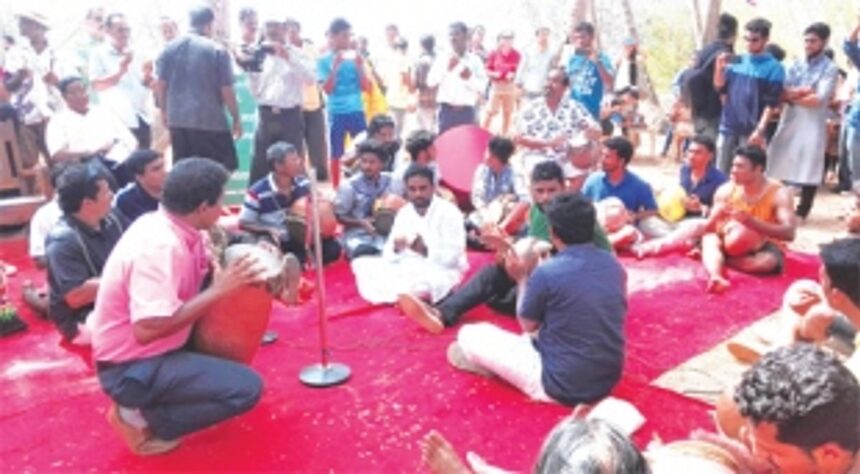
of the ghumott. And what a scene it
was, nestled amidst a coconut grove, facing the beach. A large crowd was
gathered around to witness a union of music, history and tradition, strung
together with the sounds of the ghumott.
The festival was a day-long celebration of the ghumott with live performances by the first girls’ ghumott group, musicians like Carlos
Gonsalves, Bondo, Seby F and John Fernandes and an artistic approach by Alexyz
and students of Goa College of Art.
The man
behind the plan to give the ghumott
that much needed status was Marius Fernandes. “The idea behind the festival was
to break barriers. We had to demolish the aspect of money while organising a
festival; we also wanted to show that girls, women and youngsters can organise
festivals. People at the grassroots are very important for such festivals. When
my son Ashley was working on a study on the ghumott,
he found it difficult to gather information. We had to go in search of people
who were involved in making the ghumott
and those who played it till date. It was important to bring them to the fore. We
want the ghumott to become a symbol
of Goa so that it is showcased in Goan homes and also taken to foreign lands as
a memento,” says Marius.

The family of Ramakant Shet is the only family in Usgao that
is still involved in the family tradition of making the ghumott since the last 150 years. Along with his sister Vijaya and
her husband Dattaram Krishna Mulekar, he has preserved the tradition of making ghumotts without using the monitor
lizard skin. “I was happy to see the variety of improvement in the music that
the youngsters brought to the stage using the ghumott. It is a great form of art and each person brought their
own style to the platform. However, I feel the traditional classical style of
music should be followed and taught to youngsters so that it is not lost the
future,” says Ramakant.
He also held live demonstrations to show how a ghumott is created. Many people bought ghumotts and those who didn’t get one,
placed orders. “Many people were surprised and amazed to see how the ghumott is assembled. We showed them
through live demonstration how the pot takes shape and then took them through
the various steps that go into making the ghumott.
Many people bought the ghumott and
got the opportunity to perform at the ghumott
circle at the festival itself,” adds Ramakant, who is excited about the revival
of the instrument.
As the festival was without any sponsors or chief guests, it
began right on time and all those present there took up the responsibility of
keeping the place litter- and plastic-free. Rajendra Kerkar, an environmental activist
who spoke on the future of the ghumott,
was impressed by the way the entire festival was organised. “It was a good attempt
by the organisers of the festival as the principles of the environment were
followed and this is very important. Also, they emphasised on the use of the
ghumott made using sheep skin and not the old traditional instruments that had
the skin of the monitor lizard. I spoke about how, since it is unlawful to use
the skin of monitor lizard post 1972, the future of this instrument should be
preserved by following the Wildlife Act of India and opting for the sheep
skin,” says Rajendra.