Serendipity Arts
Festival, held by the Serendipity Arts Foundation,
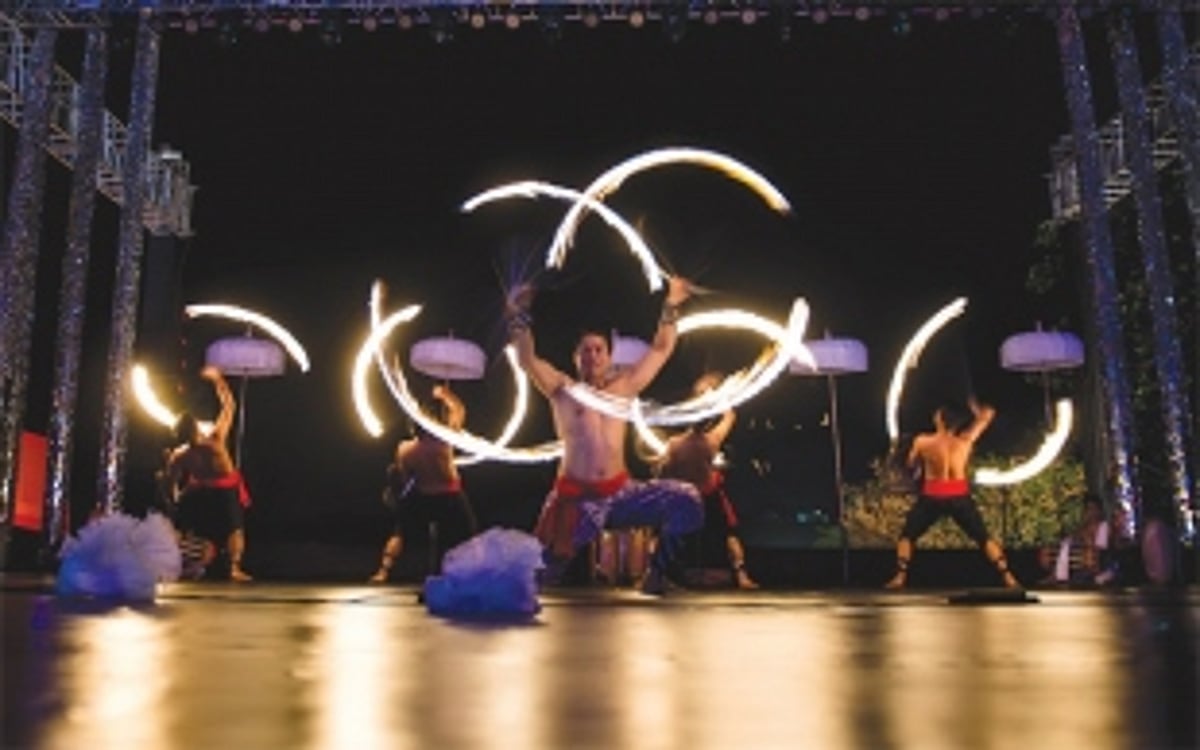
had quite a dreamy debut in Goa last year. The multidisciplinary arts festival
blew the minds of Goans with the sheer magnitude of the event that featured
artistes of high calibre across the fields of theatre, music, food and art.
Held across multiple venues in the capital city, the festival somehow seemed to
have something for everyone. Slated to commence on December 15, 2017 along the
banks of the Mandovi River, Serendipity Arts Festival 2017 is all set to bring
an array of cultural forms, diverse visual arts projects and exclusive theatre
productions from renowned artists. This year’s festival brings together a large
network of Indian and international artists across more than 70 genres and
mediums, with 40 of them exclusively commissioned for SAF17.
The
programming will be spread out across a mix of indoor and outdoor locations
along the beautiful city of Panjim. Audiences will get to engage with the arts
in beautiful, carefully designed, immersive and often unconventional settings.
Most venues will be within walking distance of each other and the festival will
provide transit/shuttle options. The festival will be held across venues such
as Adil Shah Palace, Captain of the Port Jetty, Bento Miguel, PWD Complex,
Children’s Park, Old GMC Complex, ESG, Kala Academy, DB Ground, Mandovi
Promenade and Santa Monica Jetty.
SAF17
will witness projects curated by eminent personalities like Lillete Dubey,
Ranjit Barot, Shubha Mudgal, Prashant Panjiar and many more and is aimed at
rebuilding and reviving India’s diverse and varied legacy of the arts.

GOAN ELEMENT AT SERENDIPITY
Mapping Mapusa Market by Orijit Sen
The
festival features ‘Mapping Mapusa Market’ – an installation by artist Orijit
Sen that originated from a project that the artist has been working on since
2013. The exploration involves the mix of visual documentation,
socio-historical mapping and graphic narration and delves in to the social
cultural and economic functions that the market performs for the people of Goa.
Orijit initiated Mapping Mapusa Market to bring together artists, designers,
writers, teachers, students and interested members of the public to explore and
document the complex life of the Mapusa Market in Goa from a variety of
perspectives. As a space that accommodates everything from locally grown
pumpkins and hand-crafted products to imported wines and Chinese electronics,
it bears a network of relationships with places both close by and far flung –
reflecting Goa’s unique history as well as its place in the modern word. The
project looks at how a historical market evolved and how it is coping with the
challenges of globalisation, consumerism and supermarket and mall culture.
Now You See It: The Invisible River of Konkani
Surrealism by Vivek Menezes
Experts
believe that for generations, a series of supremely talented artists from Goa
have substantially enriched the modern and contemporary art world. But even
with world-famous artists like FN Souza and Vasudeo Gaitonde, their profound
connections to ancestral roots and native culture is barely explored and
usually profoundly misunderstood. While manifold personal and cultural bonds
connect them to pioneering predecessors (Trindade, Chimulkar, Fonseca) and to
younger colleagues (Laxman Pai, Vamona Navelkar), as well as a sizeable, highly
impressive 21st century cohort, that “invisible river” has never been
adequately explored or defined. ‘Now You See It: The Invisible River of Konkani
Surrealism’ is an extended articulation of the links and interconnected
dialogues that distinguish Goa’s supremely accomplished artists across the
decades. It includes thirty artists spanning the generations from Laxman Pai
and Vamona Navelkar in their 90s to Vineeta Chendvankar and Bhsaji Ghanekar in
their 20s, whose works represent the entire gamut of mediums and individual
practices.
Culinary Arts, curated by Odette Mascarenhas and Manu
Chandra
Moving away
from the idea of food as sustenance alone, this year’s culinary arts curators
will take a closer look at food as an art form through curated dinners and
workshops, with a focus on local produce and regional flavours. The festival
will explore food and the experience of eating as something which is playful,
engaging and magical.