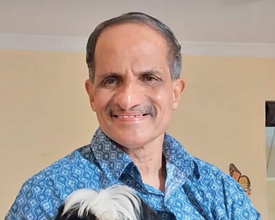
Benhail is an honorary wildlife warden and works with Goa Forest
Department’s wildlife rescue squad. Although trained as a mechanical engineer, but
he lives and breathes to rescue wild animals. He has been doing it for almost
two decades. From cobras, crocodiles, leopards, to scorpions, slender loris,
and monitors, he has rescued them all.
Louise on the other hand runs a wedding
planning company in Goa and is a second-generation wedding planner. She manages
large scale celebrity weddings and is usually found in the luxurious corridors
of five-star hotels. She used to work in a five-star hotel in Goa, where she
met Benhail, who changed her life forever.
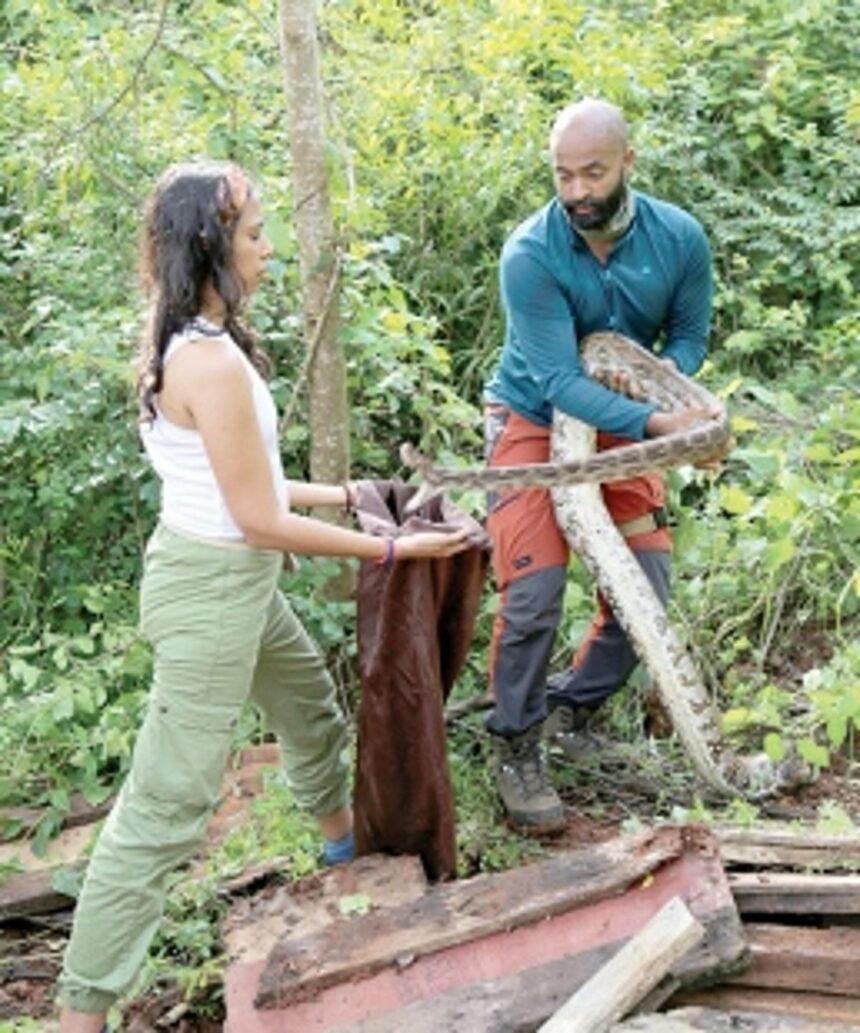
Benhail and Louise decided to work
together in her family’s business, and she eventually began accompanying him on
rescues and assisting him in any way she could. Today she is a wedding planner
and a snake rescuer too.
Speaking about his journey as wildlife
rescuer, Benhail says, “It all started in mid 1990s when I was very young. I
saw people around me were scared of snakes. When snake would enter their
premises, even if they didn’t want to kill the serpent, they would eventually
kill it as they didn’t know anything better. I would wonder why people killed
snakes when they weren’t causing any harm. The main reason was people believed
in things which were false. So, I decided to catch the snakes instead of
letting it get killed. But I didn’t know the right technique then as I was
small. Also, I couldn’t identify the snake, whether venomous or non-venomous as
neither I had books on snakes nor there was any internet connection in
1997-98.”
One day he caught a highly poisonous Russel’s Viper snake with bare
hands not knowing what was he catching and handed it over to Forest department.
The forest officials were surprised seeing him holding a viper.
“At that time there was only one officially designated snake
rescuer in Panjim. He needed to go all around as well. A forest officer was
surprised to see me holding a viper. He introduced me to the snakes one finds
in Goa. Then I started reading books about them and then gradually people in my
neighbourhood started calling me for rescuing a snake,” he says.
During schools or holidays, he used to move around with forest
department officials. Even while doing his engineering, he continued to
accompany forest officials on snake rescue calls.
“I joined the Goa Forest Department as a volunteer and in 2013,
they gave me a honorary Wildlife Warden position for helping them. This gave me
lot of rights,” Benhail adds.
For last 15 years now, he has been conducting awareness and
training sessions on snakes at public gatherings, educational institutions,
Fire department, Police stations and others.
Narrating her story, Louise says she never followed the
stereotyped image of a girl. “I believed in exploring my passion and doing what
I wanted. I never followed the norm like girl should not be very outgoing. We
both are very spirited and adventurous people. We also understand that you need
to work and fend for yourself. That’s where my family business comes in. We
have a successful family business. But the passion is adventure, wildlife,
travel. That’s what brings us together.”

But rescuing snakes from human settlements is easier said than
done. There is a fear factor. The house residents and the snake both are
equally scared and the former tends to get hostile with the serpent.
“The only problem with snakes and people is, the latter needs to
be rescued from their wrong perceptions about snakes. Nobody is born with the
fear. It is introduced in us during childhood. First thing people associate
with snakes is biting. People get so scared that either they run away from the
snake or kill it. We tell them don’t do either of them. Give a call to Forest
department or call me. We will come to catch the snake and educate you all,”
Benhail says.
According to him, only education will reduce the fear and
prevent killing of snakes. “There are a lot of myths about snakes like if you
accidentally harm it, the serpent will return to take revenge. It is easier to
deal with children who have a clean slate,” he says.
Louise adds that the panic situation on spotting a snake is also
fraught with risks. “If there is a venomous snake like a cobra, one can get
harmed if he or she goes too close. If there is a non-venomous snake, there is
nothing to worry about. But to understand these differences, having the right
knowledge is essential about snake species found in India. There can’t be bias
for one living being over other. There has to be equal empathy for all living
beings. That is what we are trying to show in our programme,” she says.
Louise also informs that contrary to common belief, snakes are
also very expressive creatures. “In one the calls, we rescued a huge python
stuck in a fishing net. After being freed, the python came near Ben and raised
hits head, as if to say thank you.”
The couple said that unplanned urbanisationalso poses huge threat
to wild animals as it is leading to shrinking of their habitat. This is causing
man-animal conflict situation. The chronic garbage disposal problem in cities
is also allowing poisonous serpents to flourish.
“In rural areas like in Sattari you will find more non-venomous
snakes as compared to urban centres.
“In cities, there are garbage heaps infested with rats. This
attracts venomous snakes like the cobra or Russel’s Viper which feed on rats.
These snakes can stay anywhere. There is absolute imbalance. These snakes are
entering houses and commercial structures,” he says.
The
couple hope that this documentary series on them will help generate more
awareness about snakes and their conservation.