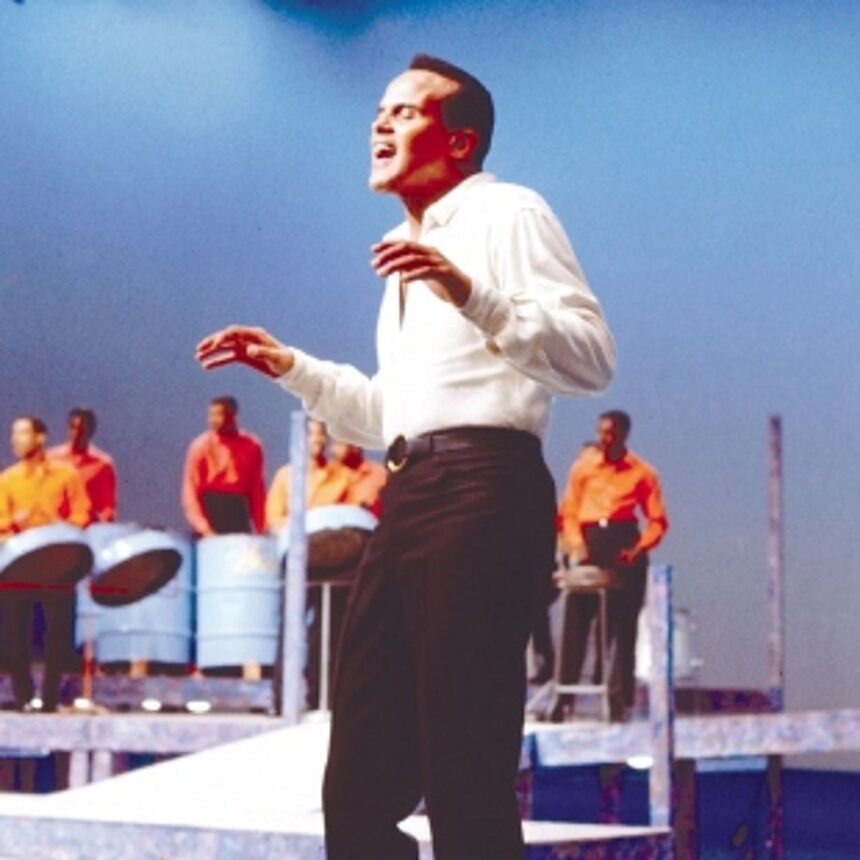
The first words of the song, ‘Banana Boat,’ ‘Day-O’ is enough to realize that a wonderful song is going to follow up. That was the power of Harry Belafonte’s great voice and his musical genius. For the younger crowd, the song, ‘Jump in the Line’ is the first indication that the party is about to start when the band starts with the Caribbean medley. Harry Belafonte, performed these songs in the 1950s and 60s and they travelled across the ocean to reach the Goan shore and is still being performed by bands here. The foot tapping yet meaning words of the great performer on the tip of the tongue for many Goan musicians and singers.
Known as the ‘King of Calypso’ early in his career, Harry Belafonte was the first Black person allowed to perform in many plush nightspots and also had racial breakthroughs in movies at a time when segregation prevailed in much of the United States. He is one of the few performers to have received an Emmy, Grammy, Oscar, and Tony (EGOT). He made his final screen appearance in Spike Lee’s ‘BlacKkKlansman’ in 2018.

Cassian Fernandes from the band, Alcatrazz, has been entertaining the crowd with his unique style. He shows the dance moves on the stage and even comes down among the crowd and urges them to dance without any reservations. His inspiration was none other than Harry Belafonte. “He revolutionized the dance and music scene right from the 1950s and we have been listening to songs like ‘Shake Senora’ right from our childhood. He was the first performer that I saw dance on the stage to the beats of his music and I adapted that style in my performance. In the 1980-85, I noticed that the singers would be standing in one place for their performance. Once I say Harry Belafonte’s videos, I found it very inspiring. I have been a part of the band since 2007 but I interact with the crowd and dance freely so that they don’t shy away and dance while enjoying the music. For weddings, we usually perform, ‘Jump in the Line (Shake Senora)’ with a version of Pitbull’s song in the middle. His other songs, like ‘Matilda’ and ‘Jamaica Farewell’ are performed as jam for retro sets for parties and conferences,” says Cassian. Formed in 1993, the band has been performing his songs since its inception.
Carlos Gonsalves of Talking Drums reminisces the time as a college student, he had to catch up of Harry Belafonte’s music. “His music was completely different. It sounded very easy but was tough to play. His songs like ‘Jamaica Farewell’ and ‘Matilda’ were already big hits and they were played by big bands with different sections of the music being played by the violin section or the brass section. He had different musical instruments. When I started with my first band, Deep Red in the 1990s, we were budding musicians and still very raw. His music and songs became a medley of Jamaican songs for us. We would listen to the cassettes and replay the song again and again to get it right. Now his songs are just a click away on YouTube,” explains Carlos, who will be performing at the Heritage Festival at Saligao on April 28 at 8 pm.
Sigmund de Souza was charmed by Harry Belafonte’s music and played his songs as part of his repertoire as a solo performer. “He was a fantastic singer and a great performer. However, more than his music and his acting, his life has been defined by his humanitarian activism off stage. He fought against racism till his death but his music will never die. The lyrics of his songs were simple but they appealed to the people. My earliest experience of listening to his songs were when I was in school. His songs were sung for picnics and since his songs were released in the 1950s, they were already popular in Goa by the 1970s. Everyone who was schooling in the 1970s will know that his music was everywhere,” says Sigmund.
He adds, “When I began my career as a solo artist in 1988, I used to play his music a lot. Many foreigners, especially English tourists would request his songs. His music continues to be a regular feature in my repertoire. When I heard about his demise, I played a medley as a tribute of his songs like ‘Jamaican Farewell’, ‘Coconut Woman’, ‘Banana Boat’ and ‘Matilda’, the same evening at a performance.”
Melcon Teixeira formed his band, Big Country Band in 1998 and since then Harry Belafonte’s songs have been a huge influence. “We used to do a lot of hotel shows in the beginning which was frequented by a lot of foreigners. We were the hotel band of Cidade de Goa. His voice was something unique and had a different charm to it. It was different feeling listening to him sing. We used to listen to cassettes to learn his songs. I remember sitting with the lead singer of the band ad writing the lyrics of the song, Jamaica Farewell by constantly pressing the play and stop button on the cassette player. ‘Banana Boat’ was another popular song at that time. I play ‘Island in the Sun’ on my violin and then the vocals would come in. The guests used to sing this part which is ‘Oh, Island in the Sun, Willed to me by my father’s hand, All my days I will sing in praise, Of your forest, waters, Your shining sand’. Till date, ‘Banana Boat’, ‘Jamaica Farewell’ and ‘Island in the Sun’ are still being played,” says Melcon, who plays the violin and guitar in the band.
Seby Pinto, founder of the band, Forefront, heard Harry Belafonte’s songs on the All India Radio before getting his hands on the cassettes. “We play Harry Belafonte’s songs as a Caribbean medley for parties and weddings. He was a great singer and I have been listening to his songs from a young age. He songs are now called retro but they can be played at any party. His voice was great and his compositions were excellent. His songs were played before the era of Rock and Roll and pop and reggae. We have been playing his songs right from the beginning of the band, which completed 32 years and we still do. No party in Goa is complete without a single song of Harry Belafonte. His songs are party oriented and its Caribbean flavor is unmissable,” says Seby.