Recently, Chinese smartphone manufacturer, Xiaomi somewhat disrupted the television
market by launching a few High Definition (HD) smart TVs at dirt cheap prices.
Soon thereafter, homegrown TV brand VU followed it up with launching their
versions of Android TVs at competitive prices, thereby further disappointing
users of brands such as Sony, Samsung, LG, etc who spend almost twice to get
their hands on high end television sets. As a result, smart TVs that were
considered to be somewhat out of the reach of the common man just became
affordable and accessible.
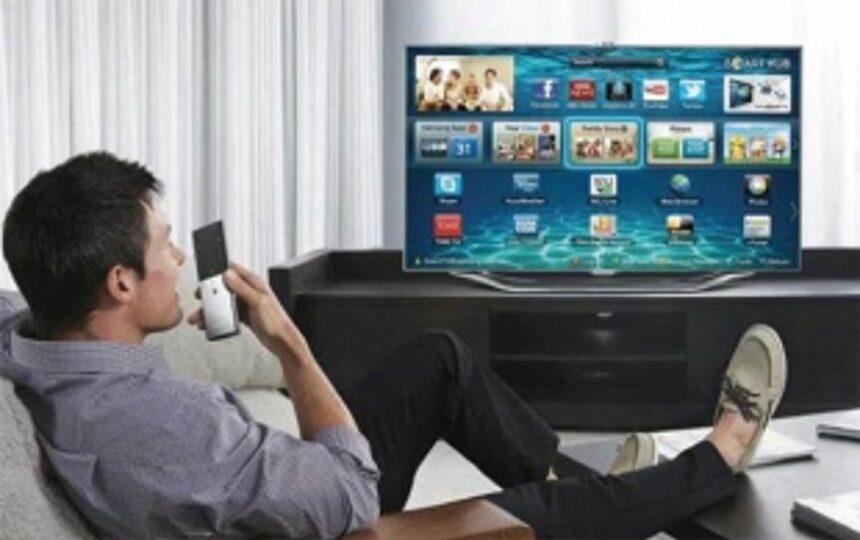
Business things aside, the times when all that our TV sets could
do was show us ‘regular’ TV stations are now over. Their ‘smart’ successors can
be used for streaming video and audio, playing games, browsing the internet,
downloading and using apps – all of that thanks to their internet connectivity.
The TV watching experience on the whole has undergone a serious change. Rishita
Mehta, a business consultant, says, “Online streaming services like Netflix and
Prime Video have dramatically altered the media consumption habits of
particularly young adults. This has also led to the popularity of online
content providers and Video on Demand platforms such as Alt Balaji, Netflix,
Prime Video, TVF, Voot, to name a few.”

In the last few years, the television segment has struggled with
trying to make new technologies mainstream. The recent most bust that many of
us remember would be the trend of 3D TVs. Typically the biggest challenge up
until now has been the lack of content, especially when we look back on why 3D
TVs failed. However, the use of 4K HDR trend is on the rise because we have a
far higher penetration of the content than we have of the TVs. This time
around, the price has been what’s holding the widespread adoption of 4K HDR TVs
and not content. However, with smart TVs becoming more accessible, all that is
about to change.
Those on a tight budget may not have pockets deep enough to
afford the premium of around Rs 10000 that smart TVs claim over their non-smart
counterparts. But the best part is that there are enough tools available in the
market to convert your existing HD TV into a smart TV. Anish Gaonkar, an IT
professional suggests an easy way of doing it – “Google’s Chromecast HDMI
dongle is a very affordable way to add some useful capabilities to a TV. It
doesn’t add any smart features to an HD TV by itself; but after you install the
Chromecast app on an iOS or Android device, you can send content from supported
streaming sources—Netflix, Prime Video, YouTube, Pandora, Google Play Music
& Movies, and a host of others—to an HD TV. You can also send content from
the Google Chrome browser on a Mac or Windows system to a Chromecast device, if
you’ve installed the free Google Cast plug-in.”
There’s another way of doing it. Another way of doing it is with
Amazon Fire Stick. Though the Amazon Fire TV stick resembles the older Google
Chromecast dongle, it is a capable media player. Amazon offers a wide range of
apps catalogue that includes Hotstar, YouTube, etc and also supports YouTube.
This essentially means you can download the app on the dongle, and stream these
services without needing to touch your mobile phone. The device comes with its
own remote that also supports voice commands. The remote understands Indian
accent very well and lets you search Hindi movies effortlessly.
Your
typical TV is not an idiot box anymore. Thanks to smart TVs the TV watching
experience has become so much more than just a TV watching experience. So
whether it is gaming, binge watching your favourite TV series, streaming videos
online or even surfing the web, your smart TV has got your back.