Fado, Azulejos, Mando and Mandolin. Each of this brings back riveting memories of a
cultural past, that lingers and thrives in the present. But the future needs to
be secured, for a Goa which had immersed itself into a special joint culture
called Indo – Portuguese.
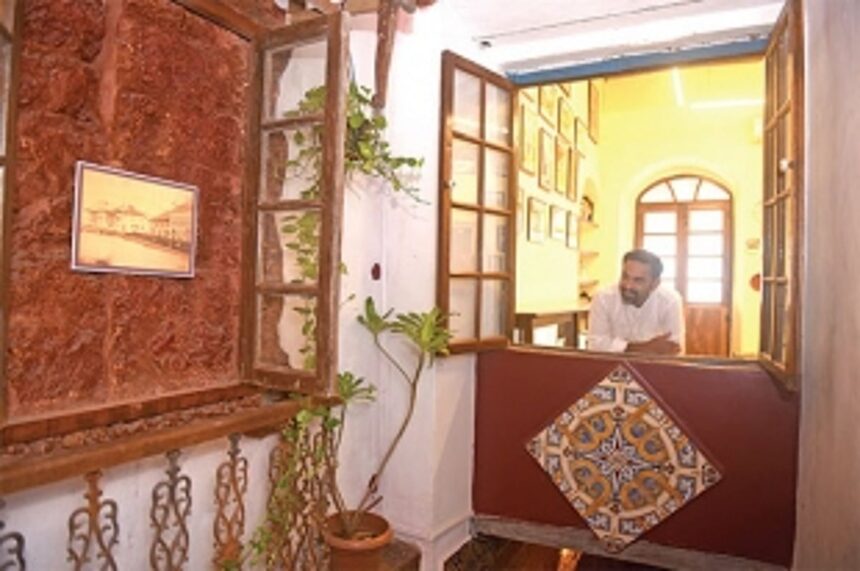
A broad staircase leading to Centre for
Indo-Portuguese Arts (CIPA) is mesmerising enough to make you understand the
grandeur of the world of Indo-Portuguese arts. The architecture of the 200 year
old home which now houses the centre leads to the world of Azulejos, Fado and
Mandos and the written word in Portuguese and Konkani. Centre for
Indo-Portuguese Arts or Centro de Artes Indo-Portuguesas (CIPA) in Panjim,
includes the musical arts, plastic arts, literary arts and culinary arts.
Besides showcasing these arts, CIPA will be also imparting the skills and
knowledge of these arts through various workshops and demonstrations.
The centre will give a unique experience
to create your own Azulejos through the guidance of Orlando de Noronha, learn
Fado and Mando through guitar classes by Oscar Rosario, one of India’s best
guitarists, Mandolin classes by Orlando and Fadista Sonia Shirsat.
Orlando De Noronha dons many hats, an
artist to bring back the art of Azulejos and a renowned mandolin player who have
brought fame for Goa by his international musical performances. He is the man
behind the centre, “I thought of starting this centre to preserve our rich
cultural Indo-Portuguese heritage which we are so proud of having and is slowly
getting lost. Azulejos de Goa was started exactly 20 years back. The centre has
different parts to it. We living here and being Goans are the ones who know it
best, Azulejos done by Goan artists will be part of it while lost
Indo-Portuguese cuisines can be tasted and learnt through workshops. The
literary arts is promoting books by Goan authors in Portuguese, Konkani and
English through Third Millennium, the only publishing house in Goa publishing
books in these three languages. Performing arts will include only live music and
exclusive music based on Fado and Mando evenings. Fado has been recognised as
traditional music and a part of our heritage by the Government of India,” says
Orlando, about the only centre that is doing this in Goa.
“There will be live demonstration of Azulejos tiles being made
by the participants themselves. You can make a name plaque for yourself, I will
give you the colours and paints and I can fire it up. We will be having music
sessions regularly. I will teach the mandolin for whoever is interested,” says
Orlando, sitting next to a section of customised crockery, managed by his
brother Ilidio.
Queijadinhas, Fofos de Bacalhau, Bolo sans Rival, Xarope de
brindão and Pasteis De Nata, as musical as they sound, they are also delicious
treats. The gastronomic experience is also an important part of the culture and
with the hopes to not just to satiate a hunger but to revive the lost cuisine,
CIPA will be roping in Portuguese cuisine experts from different parts of Goa.
Tina, Orlando’s wife, will be coordinating the culinary arts of
the centre, “I have prepared quite a big list of dishes and drinks that can be
tasted and learnt at the centre. I have identified a few interesting people who
will be preparing these dishes for us. The menu will keep changing on a rotational
basis. Since these are perishables, a fixed amount of dishes will not be
available at the centre. We plan to start serving and conducting cuisine
workshops by mid October – November,” says Tina, about enriching the culinary
experience in Panjim.
Oscar de Noronha is the eldest of the Noronha siblings and has
fond memories of the home which is now become the centre. “CIPA is a family
project of the Noronhas. It’s the brainchild of my brother Orlando who manages
it. It’s all about the Indo-Portuguese culture that we have inherited from the
society we live in and from our parents in particular. It’s significant that
we’ve been able to base it at the same place where our parents lived all their
life. So CIPA is also a very special tribute to them,” says Oscar.
Oscar says that working with his siblings, very especially on
the literary aspect of CIPA, is for him a labour of love. They have had the
publishing house, ‘Third Millennium’, right from their parents’ times. It’s the
only one in Goa publishing books in Portuguese, Konkani and English. This is
one way of highlighting Goa’s composite culture. By coming under the CIPA
umbrella, the exposure will be much greater.
He further adds, “I’m also linked with the spoken word, through
our monthly radio chat show in Portuguese. Renascença Goa features whoever is
connected with Goan culture, people of all ages and backgrounds. We’ve had 19
episodes already, and have been able to unravel many, little-known aspects of
our common life. We play music composed and performed by Goans and by
Portuguese artistes, to keep alive the common traits of our cultures through
Portuguese. Till date this programme was produced by Azulejos de Goa, but
henceforth it will be by CIPA.”
Sonia
Shirsat, Goa’s iconic Fadista is also a part of the live performances along
with Orlando de Noronha and Carlos Menezes, that will take place at CIPA. She
expresses her joy on Goa getting a centre exclusively for Indo-Portuguese arts,
“The centre will be a beautiful meeting point for both the cultures. We will
have Fado and Mando at the venue. It’s a place that will reflect our
Indo-Portuguese culture. The centre will not just showcase these skills but
will have workshops, seminars and demonstrations where these elements will be
taught and shared with future generations especially with people who want to
increase their knowledge. We will also have performances of students of Fado De
Goa at CIPA, and also feature visiting guest artists as we can attend, listen,
learn and exchange ideas,” says Sonia.