In Goa, Diwali is celebrated to mark the victory over evil
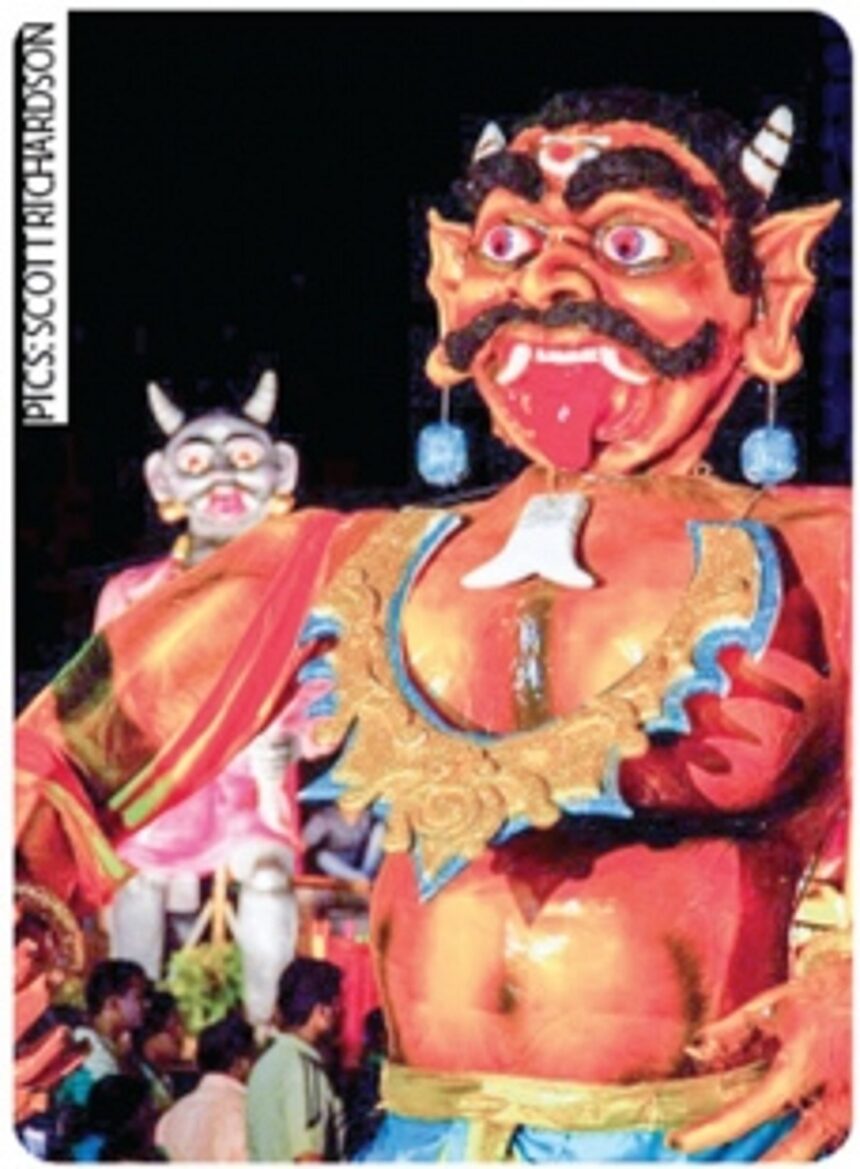
that occurred when Lord Krishna slew the demon Narakasur. The parades of giant
effigies of Narakasur that take place in the major cities of Goa during this
time form an eye-catching event for tourists as well as locals. The Narakasur
making competitions that utilise the creative faculties of the youth of Goa are
unique to our state. Youngsters and children are delighted to be a part of
these grand parades and give it their all to make the most menacing of Narakasurs;
these preparations usually start well in advance, about two months before.
A Narakasur tableau doesn’t only involve the effigy;
background themes, lighting, sound effects and music are an essential part of
the float. Over time, even technology has found its way into these parades as
the makers utilise various gadgets and mechanisms to give their float a more
menacing and creative look.
Apart from the technological and creative tweaks, which
enhance the parades, another surprising trend that has also been noted,
especially in the parades around Panjim city, is the choice of music: Trance!
“It’s surprising to note that to indulge themselves and probably increase their
merriment, youngsters today play their choice of music. That too trance!
Incidentally, it is witnessed only in Panjim,” says Prachi Desai, a resident of
Panjim.
Offering a different take is Raghav Naik (name changed), a
youngster from Panjim, who says, “This is not a festival; it is a competition
where people, irrespective of caste and creed, get together to make the
Narakasur effigy. Then on the day before Diwali, we all showcase our talent and
feel happy. It’s only fair that we play the music we love.”
As for the other parts of Goa, traditional music or
instrumental music with resonating beats are usually featured. A young lad from
Vasco, Rohan Bandekar, says, “The music we play for our parades is traditional
music which is usually used for Shigmo celebrations. Earlier when there were no
competitions in the ‘70s, there was probably just one effigy per village, and
those processions just required the beats of a metal drum. As the processions
became grander, the need for background music arose. So we simply incorporated
Shigmo music.”
Sarvesh Rege from Quepem explains, “It is part of our
tradition to organise Narakasur competitions; this happens only in our state.
This tradition has to be preserved and passed on to the coming generations. In
this way, not only with the coming generations get to exercise their creative
skills but they will also learn about the Hindu mythological event behind these
processions. ‘Ghanche katar ghan’ is the traditionally rhythmic sound used
during the Narakasur parades here.”