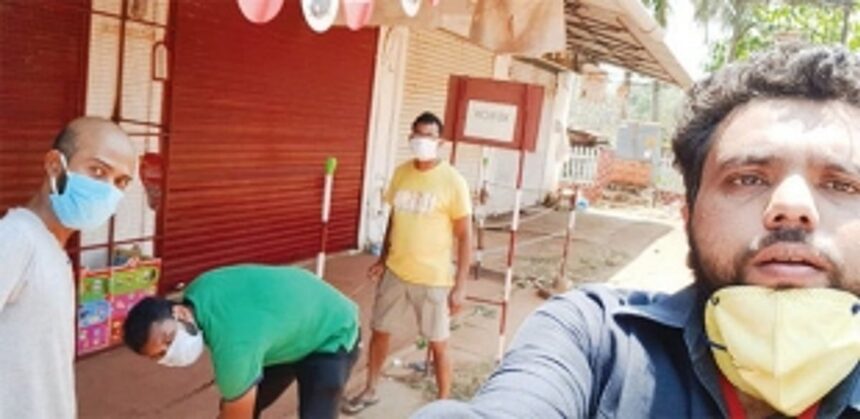
When
the Dias family in Camorlim village
needed two kilos of rawa (fine semolina) for their little child’s food, Alarico
Antao didn’t bat an eye. The teacher at Infant Jesus higher secondary school,
Colva, promptly gave his stock from home. Someone else
needed it more
So
did fellow villager Ashwinkumar Naik, who readily parted with the four packets
of milk he had at home when two elderly people needed it. “We are young we can
manage. They shouldn’t have to,” says the 29-yearold.

About
15km away, in Chinchinim, Rahul (name changed on request) felt the same way for
his neighbour when
their
lights fused. He gave them two spare bulbs he had at home. “Are they supposed
to sit in darkness during the
lockdown?”
asks the 31-year-old.
It
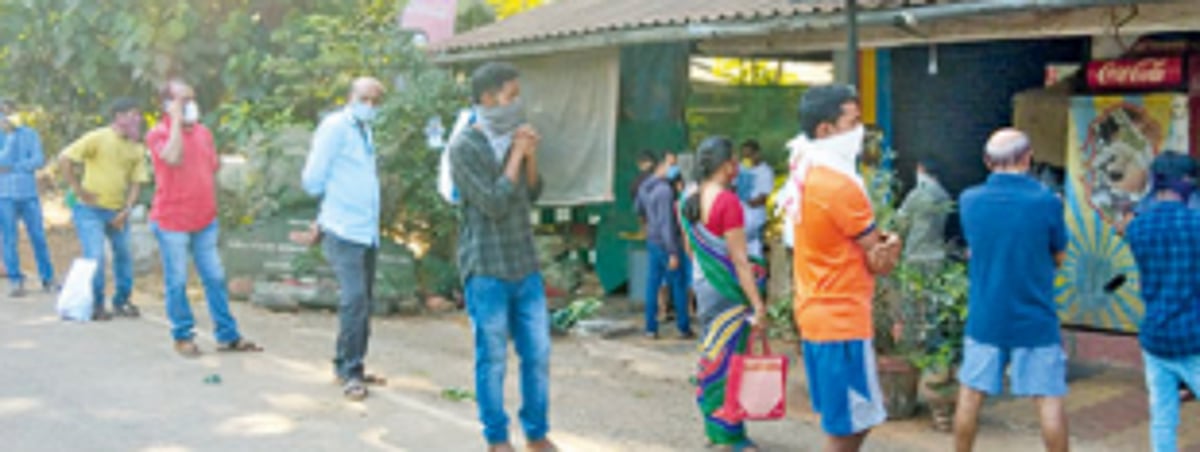
is little acts of kindness such as these that are making the lockdown bearable
for people in villages across Salcete.
And though over the last few days a few family-run grocery shops and government
horticulture outlets are
open, it is the young men and women of the villages who are the real saviours
for their people.
Take
Mathew Fernandes for instance. When some panchayat members of his village,
Loutolim, asked for volunteers to procure vegetables
and fruits from the wholesale market in Margao—almost 11km away—to be
distributed among villagers, he took on the responsibility alone.
“I
run a restaurant, so I know where to go to get the stuff,” he says shyly in
Konkani of what has become a full-day task, every alternate day, since March
27th.
Starting
early morning with his uncle in the latter’s rickshaw, the duo reach Gandhi
market where they hire coolies to load the requirement of 50-60 kilos of
onions, tomatoes, potatoes, etc. If the requirement is more, they take along
another rickshaw.
Once
back in Loutolim, the produce is quickly unloaded at his uncle’s home and with
the help of his wife, mother, the uncle, aunt and aunt’s sister each villager’s
specific order is packed.
“The
panchas give me the orders from their respective ward and once the parcels are
ready they (panchas) collect them from us and distribute personally to whoever
ordered,” the 31-year-old explains.
While
the system is being run on a noprofitno-loss basis,
Fernandes
says he has asked the panchas to inform the people that whatever is delivered
will be charged about Rs 10 extra. Is it for fuel for the rickshaw? “Henh! (No
ways!) It is to pay the coolies at the market who are taking advantage of this
whole lockdown
and are charging Rs 20 per bag.”
Tony
Vaz, one of the panchas, explains that this idea of the panchayat is to ensure
social distancing. On his way to distribute
pao
to his ward residents “since atta (whole wheat flour) is running out and many
people have stopped making chapattis”, he says if people are not going to follow
social distancing then it defeats the efforts being made to fight Covid-19.
His
words find echo in the village panchayat of Majorda-Utorda-Calata, where, in
ward 1, residents have formed a “committee” of eight youngsters and have
divided the vast spread of this ward into sections looked after by two
volunteers each. The ward has 900-plus voters.
“We
supply, at no extra cost, from the 150 kilos of rice, dal, sugar and oil that
we bought and we deliver at the doorstep. What is the point of this lockdown if
people are going to rush out of their homes to the few shops that are open,
that too only since
recently,
just to get basic amenities?” asks a committee member.
He
adds that he has received requests for masks and medicines too. “We are
supplying medicines, but masks, sorry. We can’t.”
Meanwhile,
many Church bodies have been active too. In Loutolim, the Parish priest Father
Ligorinho D Costa and his team has mobilized the delivery of some rations and essentials
within the community to tide over the tough days till the availability of
rations and household items were relatively streamlined.
Back
in Chinchinim, Rahul says he still offers whatever help he can but has toned
down his altruism when he started receiving requests for “exotic food items
like cocktail sausages”. “After a certain point, people forget that what is
being done through this volunteerism is a favour. The government’s
announcements don’t tally with ground reality and the legislator is nowhere to
be seen or heard. So we youngsters try to do what we can.”
He
suggests that the government rope in service providers, such as event
organisers who have their own association, and who have at their disposal
trucks and manpower to carry out distribution requirements.
“The
government also has to realise that household requirements and services such as
plumbing and electricity are also essential services and people should be able
to access them,” he says.
In
Carmona, a villager suggests that the government use its vast bureaucratic
manpower to service this current time of grave need by invoking the Essential
Services Maintenance Act (ESMA), used often by the government to stop strikes
by government employees.
“When
you get politicians and panchas to do what the government machinery should be
doing itself, there is favouritism, petty politics, and no accountability that
is also carried out,” says the retiree, wishing anonymity.
A
villager in Assolna offers a perspective. “Once upon a time, every villager had
a storeroom in his house that was stocked with
grain
and he was also growing his own vegetables. But now all our supplies come from
Karnataka and we stock up at the most for a week. If this Covid-19 had to
happen in the past, this lockdown would not have affected a single villager.”
As
we are on the verge of getting into the last phase of the lockdown, this is a
sobering thought that should remain with us. If Goa had remained as it is, with
enough grown and eaten from the produce of farms and orchards and village
ponds, there was no question of anyone remaining hungry.