On the last day of the year gone by, along with the year end festivities to welcome the
New Year, there was one more tradition observed by locals across Goa – the
burning of the Old Man. While there has been considerable debate over the
nature and purpose of this ritual, every year, you will find ‘Old Men’ across
the state, and for some, this has been followed by generations.
Such is the case in the Pimenta family at Curtorim where young
Ian Savio Pimenta, a lawyer by profession, has spent his last 23 years making
the ‘Old Man’. While a new name and a new accessory is given to the home made
effigy, this act has earned Ian fame in the neighbourhood.

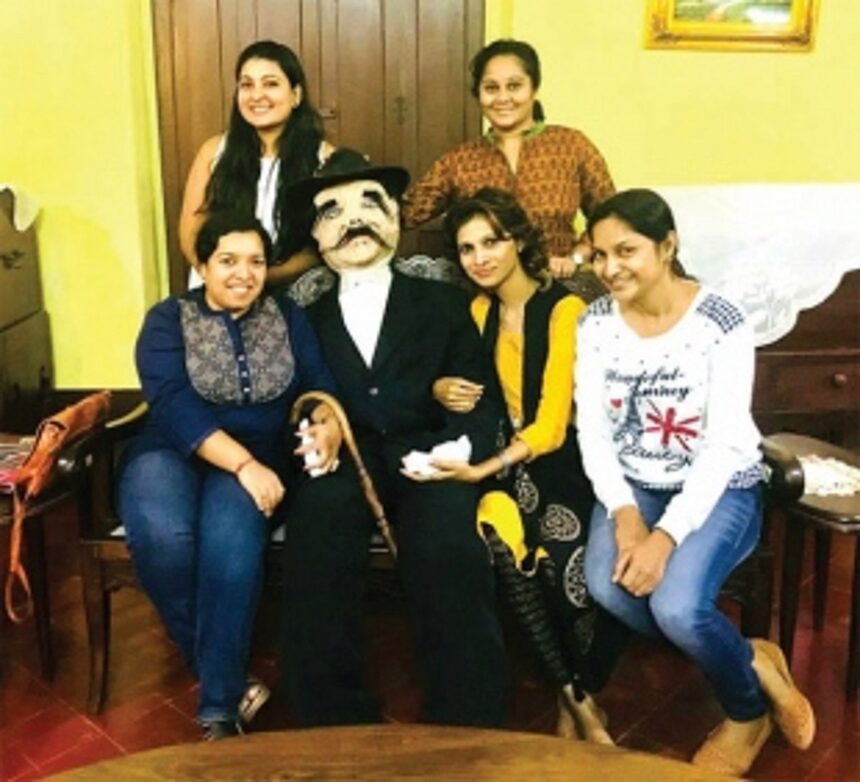
“On 31st, we took him for a round in the village and Margao by
car. He wore a seat belt so everywhere we halted, we had people coming and
clicking selfies and having a good laugh. We then visited near and dear ones
before finally giving him a tearful goodbye just before midnight. This year, we
named him Senhor Pedro Ladrao Forsu Diaz,” says Barbara Pimenta, Ian’s mother.
No cash donations are accepted for our Old Man, the family adds.
Describing how her son picked up this unique hobby, Barbara
reveals that it all started when Ian was three and was helping out his brother,
Terrence. The two were encouraged by their material grandfather, Vitorino de
Costa, who financed the buying of crackers, donation of clothes and shoes.
Then, from the age of seven, he took over and since then, he devotes two to
four days to the meticulous preparation of the Old Man. His late uncle,
Jawharlal Pimenta, encouraged him to continue by rewarding him with cash and
even his good neck-ties.
Ian, 27, only uses eco friendly stuffing that is neatly done for
the chest and trousers. He makes use of discarded clothes and old newspapers
and soft cardboard. The clothes are stitched and stuffed simultaneously, mostly
on an unused bed or mat and then the shoes and socks are placed. For the face,
they use materials from their collection. They make sure that no plastic is
used. Once the old man is complete, he is placed on a old rocking chair where
finishing touches are given.
“Ian has his own secrets while making the face. He takes care of
minute details as he wants the Old Man to look good and lifelike. We place him
in the entrance and it’s scary when we go to open the main door for a shadow
can be seen from the corner of the eye,” quips Barbara.
A lot of family, friends and people from various communities
visit the Old Man and Ian states that the smiles the Old Man evokes make him
really happy. He points out that it was the enthusiasm of his grandfather, who
simple loved the process of making the Old Man, that urged him to take up this
tradition; it is also a means of keeping his memory alive.
On New Year’s Eve, at around 11:50pm, the Old man is taken into
the compound and seated on a pile of rubble and set on fire – an event that is
watched on by friends and families as they bid adieu to the grand old year and
look forward to the promise of the year ahead.
This
is just one of the many instances of how families and friends get together to
create the traditional Old Man in time for the New Year.