As Archa Karande from Ribandar gets ready to
leave the house to travel to college, which is in Assagao, the thought of
getting stuck for hours on the Panjim-Porvorim road dreads her. Despite leaving
the house much earlier than required, in order to skip the traffic, the fear of
reaching late for class is still there. “Being caught in traffic gets very
frustrating as we are in a hurry to reach our destination in time. It’s also
mentally tiring. Cursing all the time, traffic worsens our mood and we just
lose all patience to pay attention in class after such a long journey,” Archa
complains.
Travelling on the Porvorim-Panjim road,
especially at the peak hours of the day, is no less than a nightmare. Especially
for those who travel every day, the jams are not just tiring, but frustrating
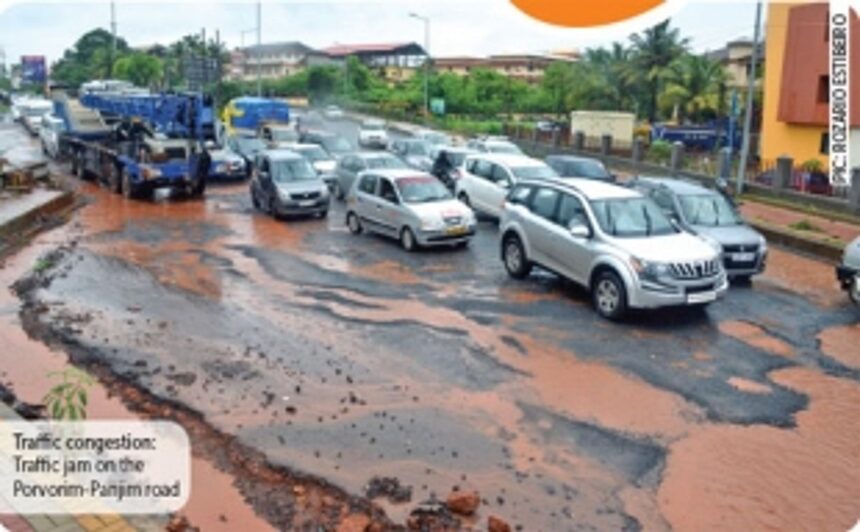
as well. And on Monday, the traffic jam just broke all its previous records, lasting
for hours. The heavy traffic caused due to an accident that took place on the
road early morning and the sudden rainfall added to people’s Monday blues,
causing quite a rage amongst the public. This particular stretch of road is a
very important one as it connects Mapusa and the whole of North Goa to the
capital city. A number of working people and students have to pass this road
every day, and the increasing traffic on this road is giving headaches to all
of them.
Actress Meenacshi Martins, who is a resident of
Porvorim, finds the traffic “horrible and disturbing”. The road from Porvorim to Panjim, she says,
was always a busy one, but now, the traffic has worsened. “On Monday, I had a
very important event to attend in Panjim. The situation on the road was so bad
that despite leaving much earlier from my house, I reached around 30 minutes
late. It was very embarrassing as I had to keep everyone waiting. Moreover,
traffic also gives way to road rage and fights as people are already frustrated
and impatient. That further leads to loss of time,” she expresses, hoping that
when the new overbridge comes, it would ease the traffic.
It’s the students and the working people who have
to travel on this road every morning and evening who are most affected. Amruta
Joshi from Corlim, who takes the road in question every day to travel to
college, states, “Being stuck in a traffic jam messes up your schedule. Once
your plans get delayed in the morning it is very likely that the rest of the
day would not go as planned. Even in the evening when we are going home, we are
already very tired after a whole day of lectures. Getting stuck in traffic at
such a time makes us even more exhausted and bored. That in turn makes studying
difficult.” Vailankani D’Silva from Mapusa shares a similar story: “I travel to
my workplace in Panjim by bus. Since it’s difficult for a bus to manoeuvre in
traffic, it takes even longer. So while the distance between Mapusa and Porvorim
is covered in hardly 15 minutes, it takes more than half an hour to get from Porvorim
to Panjim, which is actually a shorter distance. So even if I leave early from
my house, I still reach late due to the unpredictable traffic.”
Darryl Rodrigues, a musician from The Syndicate
Band Goa, says that he always makes it a point to leave his house a lot early,
as he dreads getting stuck in traffic on this road. “Leaving early seems like
the only way to reach in time,” he maintains. Traffic doesn’t only cause
frustration and delay, but also mental fatigue. “Driving or riding in traffic
is too tiring, especially before a show. Firstly, it’s the traffic. Then, we
are worried about making it to the destination in time. All this is not just
irritating, but very stressful,” he opines. He feels it’s the construction work
of the bridge that is responsible for the increasing traffic.
As she talks about spotting a greater number of
tourist vehicles on the road, Meenacshi suggests that the increasing tourist
activity, especially during the long weekends like the recent one, is one of
the main causes of traffic jams. “As I was stuck in traffic on Monday, I could
see a number of vehicles either with yellow number plates, or belonging to
neighbouring states. I know that such scenes are irritating for the tourists as
well, but it’s the local commuters who are the most affected by these. We are
working people and we can’t afford to lose so much time in traffic every day.
It’s uncalled for. Tourism is very important, no doubt, but who is going to
compensate for our lost time? Some alternative has to be found and implemented
to make this situation better,” she concludes