Today we celebrate World Health Day at a time when the right to health of millions is increasingly coming under threat. Around the world, diseases and disasters loom large as causes of death and disability. Conflicts around the world are devastating lives, causing death, pain, hunger and psychological distress. The burning of fossil fuels is simultaneously driving the climate crisis and taking away our right to breathe clean air, with indoor and outdoor air pollution claiming a life every five seconds.
In this day and age, around 140 countries recognize health as a human right in their constitution. Yet countries are not passing and putting into practice laws to ensure their populations are entitled to access health services. This underpins the fact that at least 4.5 billion people, more than half of the world’s population were not fully covered by essential health services in 2021.

To address these types of challenges, the theme for World Health Day 2024 is ‘My health, my right’. This year’s theme was chosen to champion the right of everyone, everywhere to have access to quality health services, education, and information, as well as safe drinking water, clean air, good nutrition, quality housing, decent working and environmental conditions, and freedom from discrimination.
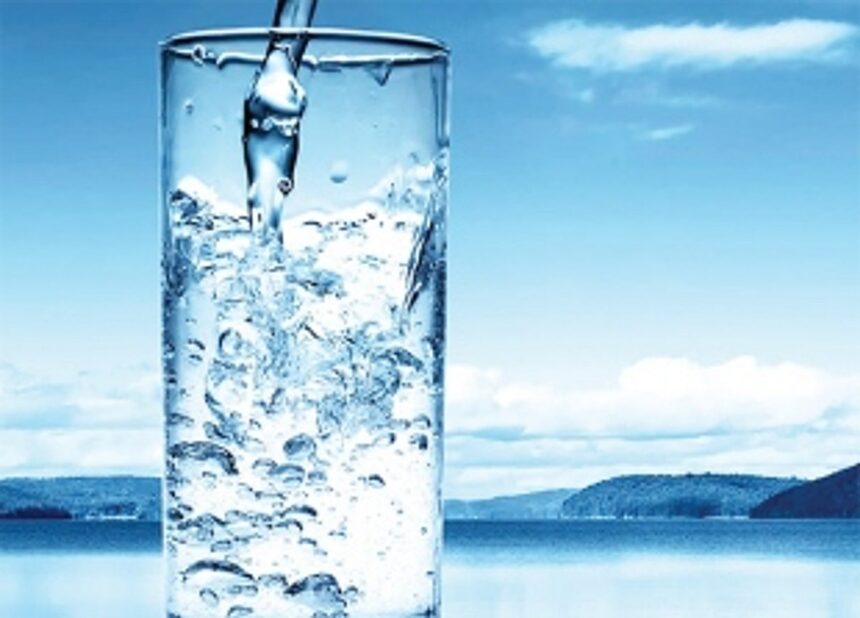
The importance of safe drinking water cannot be more emphasized in this day and age. Dr Sandesh Chodankar, a general physician based in Panjim, is emphatic when he says, “Water is life, and there is no life without water. 70 percent of earth is water and 30 percent is land. Water dominates our body and the same ratio applies to the human body. The body contains water. Certain organs require more water. The heart, brain, kidney requires more content of water, water is important to life. It is vital, it regulates body temperature. It carries all the nutrients required through the body. It is a solvent for everything. It helps in the removal of waste. It is also very important for joints, it provides lubrication. It protects the spinal cord and brain. There is a cushion of water. Water is required for kidney functioning. So all the more we should drink clean and safe water. Drinking four to five litres of water every day is important. Whatever water we use for personal hygiene has to be safe and the water used for bathing and cleaning vegetables has to be safe.”
He goes on to say that sanitation is important. Poor sanitation would result in impure water. Human waste material could contaminate water leading to diseases. Stagnant water would result in malaria and dengue. Dr Sandesh says if norms were not followed it could lead to water borne diseases like cholera, typhoid, diarrhoea, dysentery, hepatitis A, and the possibility of some parasitic infections. Water had chemical and biological impurities. He says, “Safe water should not have both. To make it safe it is important to boil it for five to seven minutes. Let it cool down and then have it. It is the safest and cheapest way. Other ways like filtration commercial systems can be used. RO systems are great. For large scale use, one could also use disinfectants like chlorine or bleaching powder. On an even bigger scale for services offered by the government, the filtration and disinfection is used to make water safe and don’t suffer from water borne diseases.”
Now with the state experiencing a heatwave, anything above 37 degrees is labeled as a heatwave and could lead to a heat stroke. In a heat stroke, Dr Sandesh explains, the body loses its capacity to cool down and the temperature of the body rises leading to a heatstroke. The patient can vomit, experience nausea, faint and even collapse. It can be avoided by not working in bright sunlight, taking adequate rest and re-hydrating the body by frequent intake of water and fluids. One should drink lemon water, butter milk etc. “It is important to hydrate oneself with more than five litres. It was important for senior citizens and children to avoid going out between 12 noon and 3 pm since it was very hot. If one went out, wear protective gear like a cap, hat, goggles and loose fitting clothes. Also, wear light colors since dark colors, especially black would absorb heat. It was also important to eat carefully.” Avoid a high protein diet like chicken, mutton and avoid strenuous activities in the gym. If one fainted it is important to immediately seek medical attention and hydrate the body by possibly taking cold water baths.
Another prominent urologist in Panjim, Dr Elphiston Fernandes is of the opinion that Goa is better off than other states in the country when it comes to water. He says, “Jaundice, hepatitis A and E are common in Goa. Cholera is also common and cases of food poisoning were due to contaminated water. In Goa, however, there are issues around stagnant water and this was due to the fact that Goa receives rain for five to 6 months.”
He further added, “Water would collect in home roofing with drainage pipes being ideal for mosquitoes. This has to be taken care of. Due to the public works taking place in Panjim, if it rains, there will be water everywhere which will stagnate and attract mosquitoes causing problems.”
He says drains and sewage has to be taken care of. It was important to ensure healthy drinking water is available for everyone. Water makes up 60 percent of the human body with the brain, lungs, skin and kidney needing water. The kidneys flushes all the excess water along with the toxins and maintain the balance in the body. Dr Elphiston recommends drinking at least two to three litres every day. “Goa has two good water treatment plants, one in the north and one in the south. The water coming through the tap is safe for consumption and if one uses a filter it, would be great. Sometimes just boiling the water is not enough,” he says.
Dr Madhumohan Prabhudesaai, the man instrumental in starting the Department of Urology in GMC, Goa, says water is important for a sedentary worker to consume 2.5 litres to 3 litres and for those with a heavy workload which involved a lot of sweating, it would mean drinking even more water. He says, “Good water is important and it has to be spaced out, it cannot be gulped. Water should be consumed in water form and the rest in juices and tea. Without water, a person could suffer from kidney stones, infections and dehydration.” He concludes by saying that anyone passing urine 4 to 5 times a day, meant his water intake was perfect.
Water is without a doubt the liquid of life and the most important requirement for its sustenance.