Starting today, the city of Panjim will be transformed
into a learning playground with live experiences,
immersive installations, workshops, talks, films and
panels on questions around space from multiple
perspectives. The Story of Space, a community-driven
initiative by a team that works tirelessly on the various
projects, with numerous collaborations making the
event possible, begins today. The follow-up to ‘The
Story of Light’ held two years ago, The Story of Space
has engaged researchers, artists and educators from
around the globe to create works with general or specific
learning outcomes for audiences that they would not
normally engage with. The festival presents and evaluates
about 73 interesting projects on the theme of space.
Some of the highlights of the festival include a
Mumbai based duo, Akash and Thomas, who go by the
name ‘Sound.Codes’. The duo has collaborated with
the Archaeological Survey of India and Directorate of
Archives and Archaeology, Goa, to acoustically map
45 sites across Goa, covering its heritage and
culture, reproducing and archiving the sights and
sounds of Goa at the Fundação Oriente building.
Over the 10-day festival, US based Migratory
Cultures will project local and international
narratives around people’s experiences of
migration, including stories of migration unique
to the Goan diaspora, all over the city. The
programme also has panels making relevant
inquiries like “What is sustainable development
to Goa?”, a focus group on “What learning in
the 21st century should look like in India and
internationally”, and talks by the likes of NASA
scientist Henry Throop, exploring the question,
“Are we alone in the universe?”
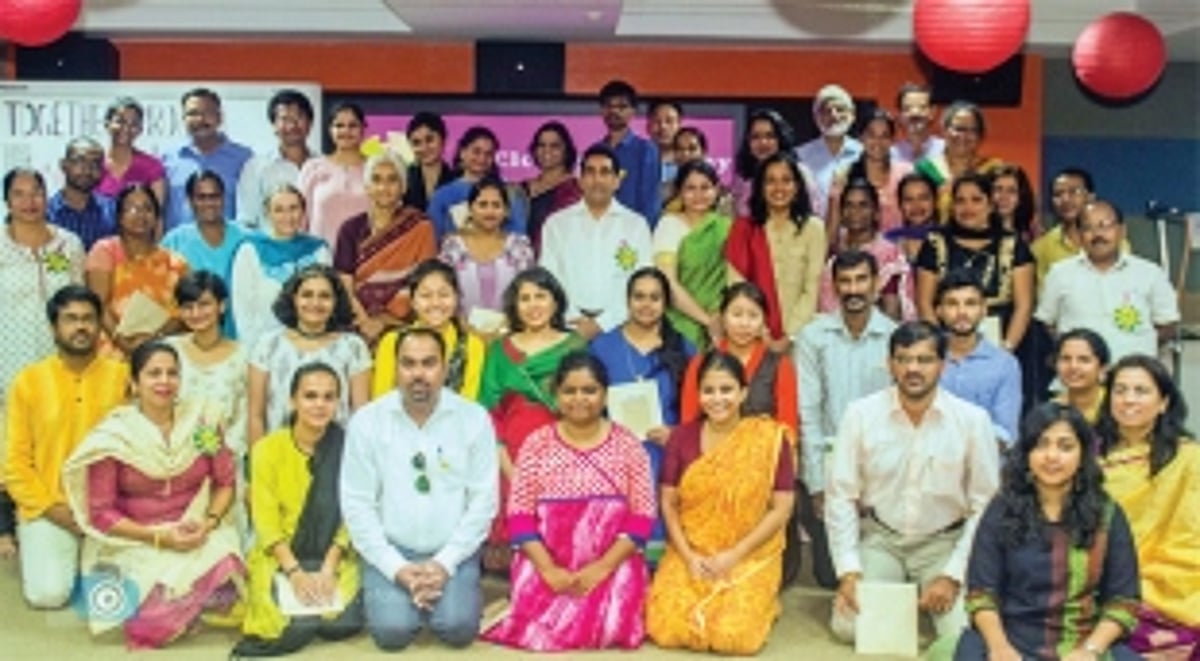
The opening ceremony starting today at 6 pm
will have brief talks by key organisers Jaya Ramchandani,
Shrinivas Ananthanarayan, Shaira Sequeira Shetty, Rahul
Gudipudi and Akshay Roongta about what to expect at
the Story of Space and about the next festival, The Story
of Mind. There will be two live experiences – a video
mapping oriented Migratory Cultures in the foyer by
US based G Craig Hobbs and Robin Lasser. Migratory
Cultures is a global, multidisciplinary, collaborative
art project currently involving students, artists and
professors from San José State University in the Bay
Area, California, and Srishti Institute of Art, Design and
Technology in Bangalore, India. The project explores
topics of migration, diaspora, flow and trace documented
in communities and projected using video mapping
techniques onto urban architecture. Migratory Cultures
has exhibited extensively in the Bay Area and is currently
working in Bangalore, India to connect regional
experiences of immigration with stories from around
the world. Currently, they are collecting, editing and
translating local stories of immigration in Hindi, Kannada
and English in Bangalore, India. Previous projections
have been developed and presented in Watsonville,
Oakland, San José and San Francisco, California.
Imagery includes portraits of immigration stories as told
by people representing 15 unique countries including
India, Mongolia, Russia, Mexico, Bosnia, Pakistan, Japan,
Vietnam, Germany, Ethiopia, Mexico, Latin America,
Yemen, Iran and France.
Another live experience that will take place is Satellite
Sonata,by Robin Meier and Santiago Lusardi Girelli,
curated by Shazeb Sheikh, which is a sound and music
based performance. Launched in 2006, the European
Space Agency’s CoRoT satellite measures the minuscule
variations of the light of the stars. This twinkling of
the stars can be translated into sound through digital
synthesis. Using techniques of spectral composition
and various contemporary notations, these sounds of
the stars are then re-transcribed for brass ensemble.
Through close collaboration, a local Indian brass
ensemble, unfamiliar with contemporary music and
playing styles is going to be trained in the interpretation
of this score. Over two weeks, through recordings,
videos and workshops the musicians learn to play these
new sounds and will collectively elaborate this new
music.
There are plenty of installations and workshops,
most of whom are complex yet extremely interesting
and creatively put together, happening across the 18
venues over the duration of the festival. They say, “The
best things in life don’t come free.” The Story of Space is
an exception as all installations and live experiences will
be open to the public from November 11, 2017 onwards.