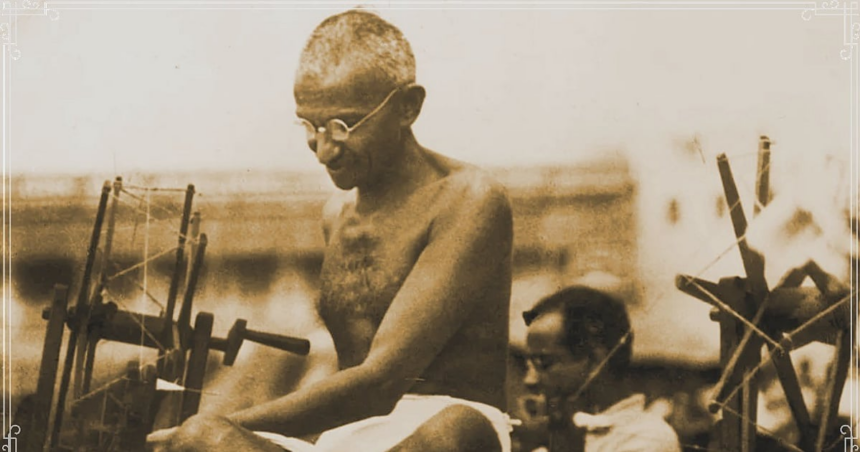
Mahatma Gandhi was an Indian lawyer, politician, social activist, and writer who was born in Porbandar, India, on October 2, 1869, and passed away in Delhi on January 30, 1948. He led the Indian Independence Movement against British rule. He became known as his nation’s father as a result. Gandhi’s philosophy of using nonviolent protest (satyagraha) to advance social and political change has earned him recognition on a global scale. Gandhi was regarded by millions of his fellow Indians as the Mahatma, or “Great Soul.” His tours were a terrible ordeal because of the unquestioning devotion of the enormous crowds that flocked to see him along the way; he could hardly work during the day or sleep at night.
“Only the Mahatmas are aware of the woes of the Mahatmas,” he wrote. During his lifetime, his notoriety grew globally, and it continued to grow after his passing. These days, Mahatma Gandhi’s name is among the most widely known worldwide.
Gandhi was the youngest child born to the fourth wife of his father. Under British suzerainty, his father, Karamchand Gandhi, served as the dewan (chief minister) of Porbandar, the capital of a small principality in western India (in what is now the state of Gujarat). Gandhi had little formal education. But he was also a skillful administrator, able to find his way between the stubborn British political officers at the top and the erratic princes and their long-suffering subjects.

Putlibai, the mother of Gandhi, was totally devoted to her faith, had little taste for finery or jewelry, lived a fasting lifestyle, spent many days and nights caring for her family when someone was ill, and fasted regularly. Mohandas was raised in a household that was deeply rooted in Jainism, a morally strict Indian religion whose central ideas are nonviolence and the notion that everything in the universe is eternal, along with a strong emphasis on Vaishnavism, the worship of the Hindu God Vishnu. As a result, he disregarded concepts like vegetarianism, fasting for self-purification, ahimsa (the non-injury of all living things), and tolerance between followers of different faiths and sects.
Mahatma Gandhi, the founding father of the nation, was a true “patriot and philanthropist,” according to Ex Goa Governor Mridula Sinha. Truth, nonviolence, and feelings of patriotism have become less important in today’s world. Many of the problems facing the materialistic world are a result of people’s self-serving needs and desires, she believes. Jude Álvares from Quepem says that Gandhi worked tirelessly for the unity of people across different religions and communities, promoting harmony and understanding. He championed respect for all individuals, regardless of their background, and fought against discrimination and social inequalities.