Dolcy
D’Cruz
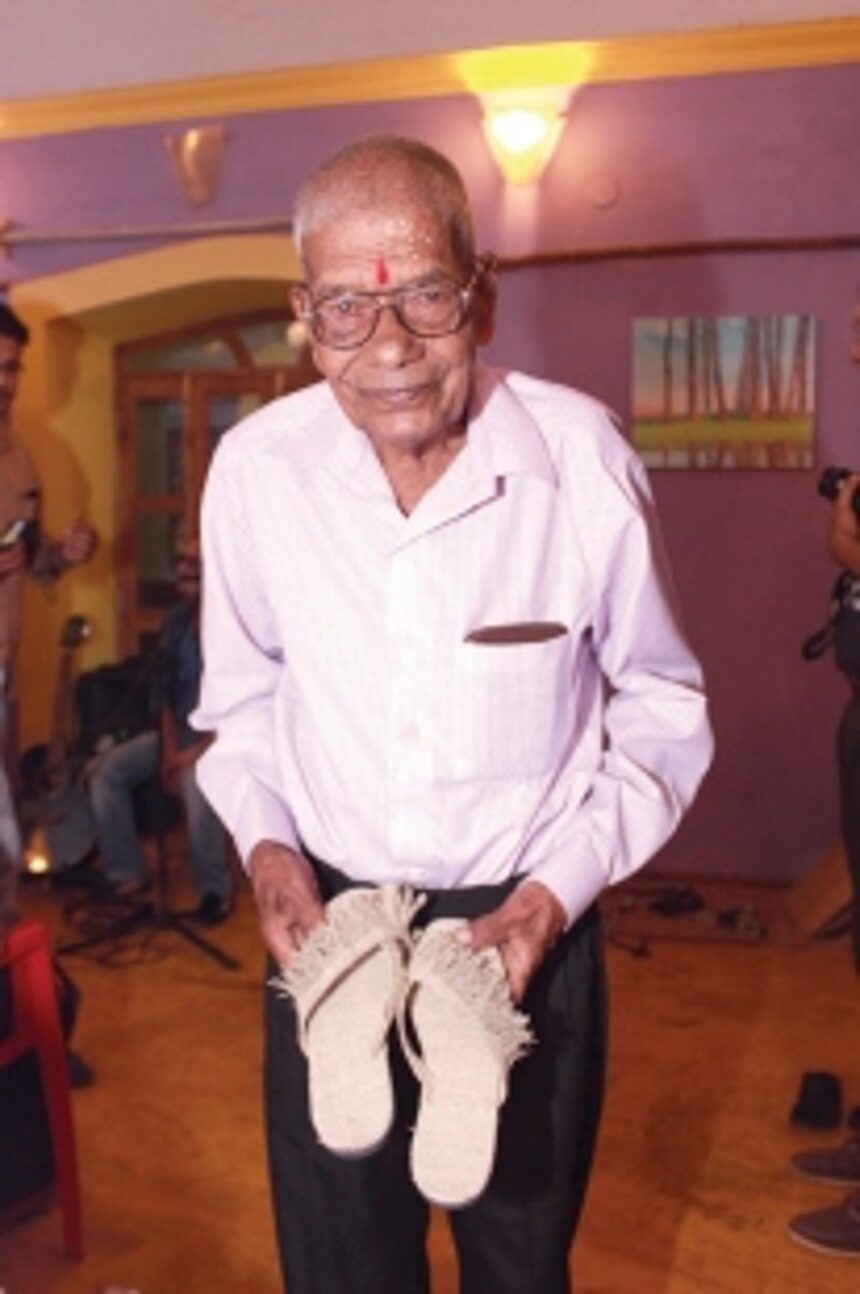
It’s thirty minutes past nine on a rather rainy morning, and here comes Baba, striding into Janota, at Porvorim. It’s his usual
work time and he has a big smile on his face. “I got drenched while coming by bus,” he says, adding, “I am
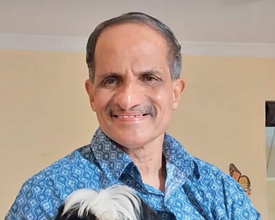
happy though, because you have to get wet at least once in the rain.” A man whose strength is his simplicity, Murari Satardekar, lovingly called Baba,
recently turned 90. A master craftsmen, he is one of the last surviving
generation of original shoemakers from Goa. He has been working for almost 20
years at Janota, a brand created by Edwin Pinto that deals with customised footwear.
“All these
shoes are created by my hands,” says Murari, waving a hand around the store. He was around 10-12 years old when he left home to
start working. Born in Calangute, he first lived near the church in Mapusa and
then moved to Gaunsawado, Mapusa. “My father used to work on ‘chappals’. In those
days, you could buy slippers for 4 to 6 Annas (an old Indian currency that amounted to 1/16th of a Rupee). Some people used
to wear slippers made from ‘chuttio’ (coconut palm), and roam
around to sell their vegetables. They used to make their own slippers with easily available
material,” he reveals. Edwin used to outsource his work
to Murari’s eldest brother before meeting him.
Apart from Goa, Murari has also worked in Mumbai and Kolhapur. In fact, before his 20 years of service at Janota, he worked at a
workshop for 26 years before it closed down.
Murari works with different materials, using different techniques. “During the Portuguese time, the whole shoe was
stitched and they didn’t have solution or glue and hence used beeswax. The
material was less in quantity but the quality was good and the shoes lasted for
over a year, despite wear and tear. There were different types of
soles, with rawhide coming from Kolhapur, which was then wet, levelled, pounded
and then polished to make a shoe pair. Goes, was one of the last Catholic
shoemakers from Curtorim, used to keep the sole of his leg and pound it,” he
says.
Murari
still works with traditional tools and doesn’t use any machinery, except for
the one he
created that has a wooden arm that holds the shoe or boot in place while he stitches its sole.
“Earlier, I used to complete one pair of shoes in two days and now I complete
2-3 pairs a day,” he states.
He lives
with his wife, Rajani, while his son, Avinash, lives in
Pune. Nobody in the family has continued with the traditional trade. “No one chose to learn the trade as it was indicative of caste. Now we are the
last generation of shoemakers in Goa,” he says with a heavy heart. To this, Edwin adds, “It was considered a degrading job and the caste issue was
very strong. Those in this trade never got a good deal and that is
why the trade is almost dead.”
Murari is
known as Mr Cool at Janota as he is never under pressure, even if an
order has to be completed within a stipulated period. “If I have to
work, I keep my mind clear. The more work and
orders we have to complete, the happier I am,” he
explains. Murari’s wife comes by when it is time to
leave as he has to cross the highway to take the bus back home.
Speaking about the bond he shares with Murari, Edwin says, “He is our father. Not much for conversations, he completely shuts the world out once he
starts working. He puts his heart and soul into what he does.”
The latest collection that Edwin and the team at Janota have
been working on are shoes made of
hemp, a new, lasting material made out of a variety of the Cannabis
sativa plant.
To conclude, Murari says, “It doesn’t matter if I have money in my pocket
or not. I do how much I can and just working makes me happy.”