May 15, 2015 truly embodied the term ‘Black Friday’
for the state of Goa. It marked a day in the state’s calendar
when a son was lost. With the Goan network spreading
the news of Emiliano’s death, they shared not just the loss
of a man of great substance, but potential ideas. And as
Hugo Weaving has aptly said, “We are told to remember
the idea, not the man, because 400 years later, an idea
can still change the world.”
One such idea that was held dear by Emiliano was
the art of serenading. He believed it to be a manner in
which ‘the classics’, and all they stood for, could be kept
alive. Yet, while being a form that has been synonymous
with Goa and its music, serenading has been dwindling in
recent years. Emiliano’s protégé and popular Panjimbased
Goan musician, Orlando de Noronha shares his
views on the same. “The biggest issue that is faced by
musicians that try to keep this form of music alive is a
lack of desire by gen-next to excel. The need to push
themselves further is almost non-existent and many
musician are tempted by the concept of shortcuts. Many
one-man bands have thrived on the ability to just rely on
electronic backing and shy away from the effort required
to play live, which is a truly remarkable experience in itself
that borders on the transcendental.”
Curtorim’s musical prodigy and one of the youngest
exponents of this form of music, Victor da Costa agrees
with Orlando’s observations and speaks on how this
can possibly be remedied. “I do believe that the current
generation of musicians is lesser inclined towards working
on the classics that are more melodious and complex to
work on. I also teach music, and a common ‘ailment’ that
I come across is with my younger students, who are more
drawn to the simpler arrangements of today that depend
on 4 chords in its structure. I believe that the need of the
hour to keep this kind of music alive is to nurture young
minds. We need to have a system in place wherein these
kids can learn to appreciate and understand this kind of
music from a very young age. This is the manner in which
I learnt to discover music; listening to and collecting the
work of Emiliano himself.”
However, beyond the ability and the need for
grassroots development lies another facet that needs
looking at. The prospects that are associated with this
art-form aren’t always much to write home about. Selwyn
Menezes is another talent whose prowess when it comes
to serenading is one that has stood out for years. “The
financial side of this trade leaves much to be desired.
Serenaders are dependent on the few hotels that will have
them, with many acts been ousted in favour of one-man
bands or duos. This makes musicians apprehensive about
venturing into this trade. However, those that are in the
employ of such properties are always greatly appreciated.
This is especially true of tourists that often give such acts
much praise and are frank about their preference for
serenaders over smaller acts. Those moments are truly
worth playing for.”
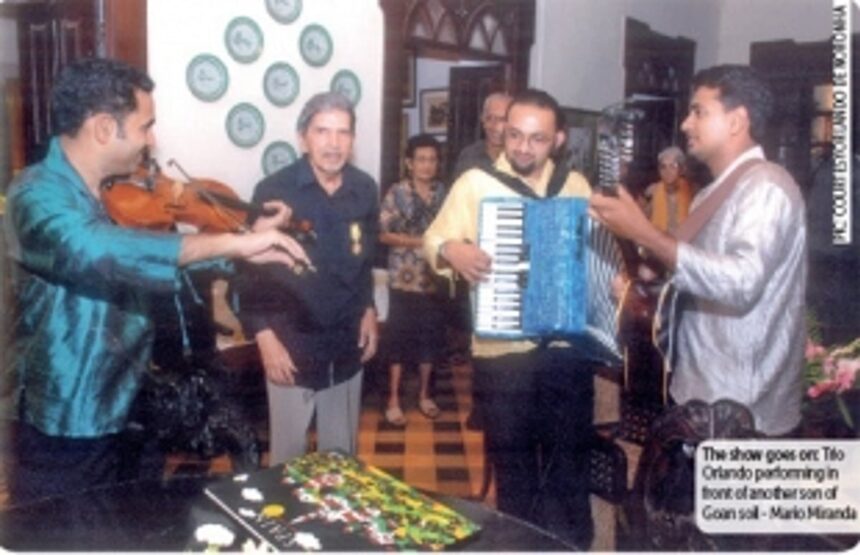
Signing off in anecdotal fashion, Orlando speaks of
his greatest serenade as being that where he performed
for the godfather of Goan serenades himself. “With a few
friends in tow, I headed over to his (Emiliano’s) house
in the dead of the night, having finished my own gig at
midnight. It was a lifelong dream, as he was a man who
had serenaded the world. It was about time that he was
serenaded himself. The most touching moment was when
he deemed our company fit to jam with, in his standardissue
humble nature. I will never forget what was probably
his last performance, ever.”