Industrial disaster or road accident?
Yesterday, the Bhopal Chief Judicial Magistrate Tiwari pronounced his judgment on the Bhopal gas disaster that took place in 1984. He pronounced all seven accused guilty as charged of causing the world’s worst industrial disaster.
On 3 December 1984, a massive quantity of methyl isocyanate (MIC) gas – a highly toxic, sharp-smelling gas used in the production of pesticides – escaped from a storage tank at the Union Carbide factory in Bhopal. Government figures put the immediate death toll at a massive 3,500, but a study by the Indian Council of Medical Research (ICMR) puts the figure at a gargantuan 8,000 and 10,000 for the first three days. ICMR studies, conducted up to 1994, estimated that till then, 25,000 people had died from exposure to the gas, and that totally, 5.78 lakh people were affected.
The top Union Carbide officials at the time – Keshub Mahindra, Vijay Gokhale, S P Rai Choudhary, Kishor Kamdar, J Mukund, K V Shetty and S I Qureshi – have all been sentenced to two years in jail and a fine of Rs1 lakh each under Section 304(a) of the IPC, for causing death by negligence.
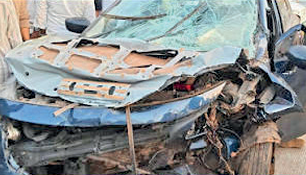
That is the section used most often to convict those who kill others in road accidents.
Section 304 IPC is for culpable homicide not amounting to murder, and carries a sentence of 10 years. That was the charge first imposed on the accused, but it was later substituted with the lesser offence. Nowadays, even drunk drivers who kill people are charged with Section 304, but these seven gentlemen – top industrialists all – have been sentenced to just two years for causing not less than 25,000 deaths by their negligence!
That is not the worst of it. Union Carbide Chairman Warren Anderson, who visited India after the accident and was arrested, was released by the government after it was pressurised by the US. He refused to come back for the trial, and the US would not extradite him.
The Indian government initially demanded $3.3 billion in compensation from Union Carbide, but settled for a paltry $470 million in 1989. Many survivors have received no compensation, as in order to claim it, they had to conclusively prove that their ailments were caused by the toxic gas. And those who could do this, finally received just Rs25,000 to pay for a lifetime of medical care. Relatives of the dead got only Rs1 lakh.
Survivors still suffer from respiratory and kidney problems, hormonal imbalances, mental illness and forms of cancer. To this day, children are born disfigured, with webbed hands and feet, and congenital disorders. Even though over 25 years have passed, the factory remains contaminated; no clean up has been done.
The seven culprits sentenced by the court have already obtained bail. They intend to appeal. The CBI had filed the charge sheet in this case in December 1987, but recording of witness testimony began only in 1997; 178 witnesses deposed and 3,000 documents were tendered. As many as 15 judges heard the case, before we got a verdict. How many more years before the appeal process all the way to the Supreme Court is exhausted?
The victims of the Bhopal gas disaster have not secured justice. Very likely, they will never secure justice. They have suffered horribly, and the government has done little or nothing to help them. It has let them down in the very worst possible way.
Last year, on the 25th anniversary of the disaster, Prime Minister Manmohan Singh described the Bhopal gas disaster as a tragedy that “still gnaws at our collective conscience”. They are fine words, but his government has done little or nothing to justify them in terms of deeds. It is when people are treated like this – denied justice and left with no hope – that they turn to the Maoists. Unless the rule of law is made applicable to all without fear or favour, can India really pride itself on being the ‘world’s greatest democracy’?