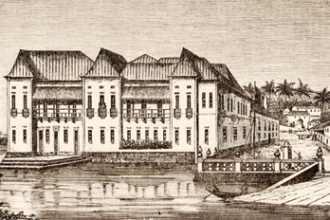
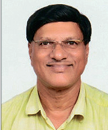
Goa Governor P S Sreedharan Pillai has made it clear that although the Raj Bhavan is a people’s house, it cannot be another centre of power. Which is why he has avoided suggesting anything to the government publicly till now.
The Governor has to keep in mind that although the post of the governor is a major post in the State constitutionally, the Chief Minister’s post is prominent in the publicly appointed government. If one is to take a peek into history, the struggles between the governments and Governors are not new.

However, the recent disputes have taken a different form. When taken a look at some of the recent disputes between the two, one would suspect if the Governor is a representative from the Centre. The statements made by the Governor from the neighbouring State of Maharashtra, Bhagat Singh Koshyari, have brought everyone into trouble. Whether it’s West Bengal, Rajasthan, Telangana or Kerala, the governments of these States have constantly been in disagreement with their respective Governors.
The reason to bring this up is the incident where the Governor of Tamil Nadu chose to walk out of the Assembly instead of reading out the speech prepared by the State government. The behaviour of the Governors has become the talk of the town. The TN Governor R N Ravi made a controversial statement that Tamil Nadu should be referred to as Tamizhagam instead in his customary address. Reacting sharply, DMK MLAs accused Ravi of imposing the ideology of RSS and BJP onto the people of the State.
The Governor is yet to approve the Bill to ban online gambling. There are around 21 major Bills pending with the Governor for approvals, which include bills intending to ban online gambling and rummy. The renowned jurist Nani Palkhivala had once stated that the Governor is expected from the Constitution to see that the government is run in a constitutional manner by maintaining the basic stability of the people of the State. However, with regret, it is not happening in reality. The incidents which backed the statements of Palkhivala are now taking place. The struggle between the Lieutenant Governors of Union Territory of Delhi and the government has never stayed hidden. The behaviour of the Governors is now facing backlash on social media as well. The Governors’ stance goes against the principles laid by the Constitution. Instead of helping to smoothly run the day-to-day work of the Assembly, the Governors seem to be attempting to make trouble for the government.
Avoiding giving consent to the Bills approved by the legislature, delaying signing on the proposals presented by the government, to determining the dates of Assembly sessions himself instead of approving the date decided by the Chief Minister, commenting on the Chief Minister and on the administration of the government, organising meetings of the district level administrations, and trying to stay in the public conversation are some of the behaviours attempted by the Governors which violates the traditions of the democracy.
The Governor seems to have forgotten the fact that he is a constitutional head who cannot run a parallel government of his own. Compared to the Governors of the other States, the mannerisms and behaviour of Goa Governor has been appropriate. He has started utilising the privilege fund for Governors and extended financial aid to patients, organisations, etc. However, he did not paint the picture of avoiding the government while carrying on his community programmes. He respected Pramod Sawant by inviting him wherever required. Not to say that there was not going to be a conflict, but that potential dispute was avoided, courtesy the maturity shown by the Chief Minister. This incident did not come to the surface as it was not made public.
An oath to the newly elected MLAs was due to be administered and the government had suggested Dharbandora MLA Ganesh Gaonkar’s name as a pro-tem speaker of the legislative assembly. Since the then government had resigned just a day prior, only a provisional government was in power. Hence, using the constitutional rights, the Governor appointed his representative to administer oaths to the newly-elected MLAs citing that there was no need for the suggestion made by the provisional government as that arrangement is by the Governor. Indeed, he thought of Gaonkar’s name only as the Speaker but avoided referring to him as a pro-tem speaker. If such maturity is shown elsewhere, a lot of disputes could be easily avoided. Thanks to these recurring struggles between the Governors and the governments, it would not be surprising to think what really is the need of the Governors. And of course, only the Governors would be responsible for that.