AMITA KANEKAR
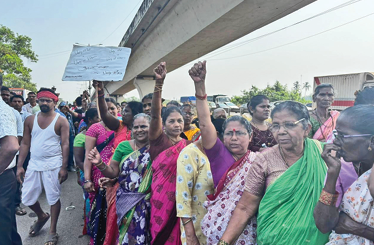
The huge response to the call by Ferdi no Rebello, former Chief Justice of the Alla habad High Court, for a public meeting around the slogan ‘Enough is Enough’, has been described time and again: how the hall was overflowing and late comers could not squeeze in, leaving them to make do with the screen put up in the public park outside. But this was really no sur prise. In fact, it was clearly expected by the organisers, which is why they had the screen put up in advance. The reason why nobody could be surprised is be cause of another meeting held less than two months ago. The sea of people who attended the Goyant Koll so Naka public meeting in Margao in November 2025 was a real eye-opener to public sentiment on the issue of so-called ‘develop ment’. The village commu nities who each went up on stage to speak briefly about the sufferings of their vil lage (from coal pollution, or river dredging, or new flyovers, or real estate de velopment, or other forms of destruction) were a hard-hitting revelation – if anyone needed one – about how many fights are on for survival and sustenance all over Goa. The demands put forth by the meeting were also short and sharp: to stop coal handling in Goa and turn Mormugao Port Authority (MPA) into a green port; to delist all six rivers of Goa from the Na tional Water ways Act, end dredging, and reject new jetty proposals; to halt all coal-related infrastructure projects, including double tracking, highway expan sion, and port dredging; and to ban steel plants in Goa. Given the electrifying power of that November meeting, with its attempt to bring together the many struggles and identify what united them (which hap pens to be coal infrastruc ture expansion); and to explain the many reasons why all Goans need to op pose this coal infrastruc ture expansion, given the catastrophic effects it is going to have on our health and environment and fu ture – not to mention the immediate denials by the Chief Minister the very next day – there seemed little doubt that the Goan people had taken an impor tant step together. It is thus a little puzzling why, when a second big public meeting was being organised, this time in Pan jim, on the issue of stop ping the destruction of Goa, it did not take on board the demands placed before the government by the first one. Surely those demands could have been part of the charter of demands dis cussed at the second meet ing? Otherwise, it is almost like reinventing the wheel. This is not to oppose the charter of 10 demands that were put forth in the Pan jim meeting. Who can op pose the demand for a ban on the sale of agricultural land to non-agricultural ists and non-residents? (It is another matter that this is India where even well known film stars are offi cially accepted as farmers whenever they want to grab land; and that this is also Goa where huge swathes of agricultural land have al ready been converted into non-agricultural.) And who would oppose the demand to remove casinos from the Mandovi river – except to ask, why only the Mando vi? Why not remove them from the whole of Goa? But there were excellent suggestions made at the meeting by others, like the need to uphold the funda mental rights of the most marginalised communities, including the Mahar com munity of Goa, and also migrant labourers working in Goa; and to differentiate between the latter and the rich migrants who are try ing to buy up Goa. All good points which could be in corporated in the list. In his speech, Rebello said that he did not want to challenge the government, or to contest elections, or to take to the streets. And he apparently doesn’t need to, for the very next day, he was able to meet the Chief Minister himself, with the latter then declaring that he would consider the de mands. Really? This Chief Minister, under whose watch there is – according to his own officials – not even one restaurant or club in the tourism belt which follows all the required rules… this Chief Minis ter will now protect Goan land and identity? This CM, whose government cannot shut down illegal estab lishments, not even after 25 people have died in one such lawless space, will consider a ban on corrup tion? Who, with a backlog of thousands, if not lakhs, of trees felled but not re placed, and having just this week announced the felling of another few thousands (along, of course, with the promise that they will be replaced), is now going to consider a ban on cutting trees? I agree that we should not have to take to the streets. In fact, if we had a government that respected the people and the Con stitution, that kept people informed and listened to their objections, Goans would never take to the streets. It is the govern ment’s lawless, dictatorial and anti-people behav iour that is forcing people into public protests, even when they can’t afford to, even when they face the real possibility of police intimidation, beatings, ar rests, and court cases that go on forever. The tragedy is that if Goa has achieved any victories against this destructive onslaught on their lands and livelihoods – including the recent ones against Unity Mall, the Arambol land-grab, the IIT land-grab, and even Wa terman – it is only because people have, in complete desperation, come on the streets. If the learned ex-judge is able to stop the cutting of hills and forests, throw out the casinos, punish the architects, engineers, and bureaucrats responsible for the wholesale flouting of building laws, and even get Special Status for Goa, just by discussing his de mands with the CM (and the PM and President of India, as he proposes), it would be truly wonderful. We sincerely wish him well in this effort. The reality so far, however, seems to be of Goans having to organ ise themselves, whether in court cases, or on the street, or in formal elector al politics, in order to get their voice heard. (Amita Kanekar is an architectural Historian and Novelist)