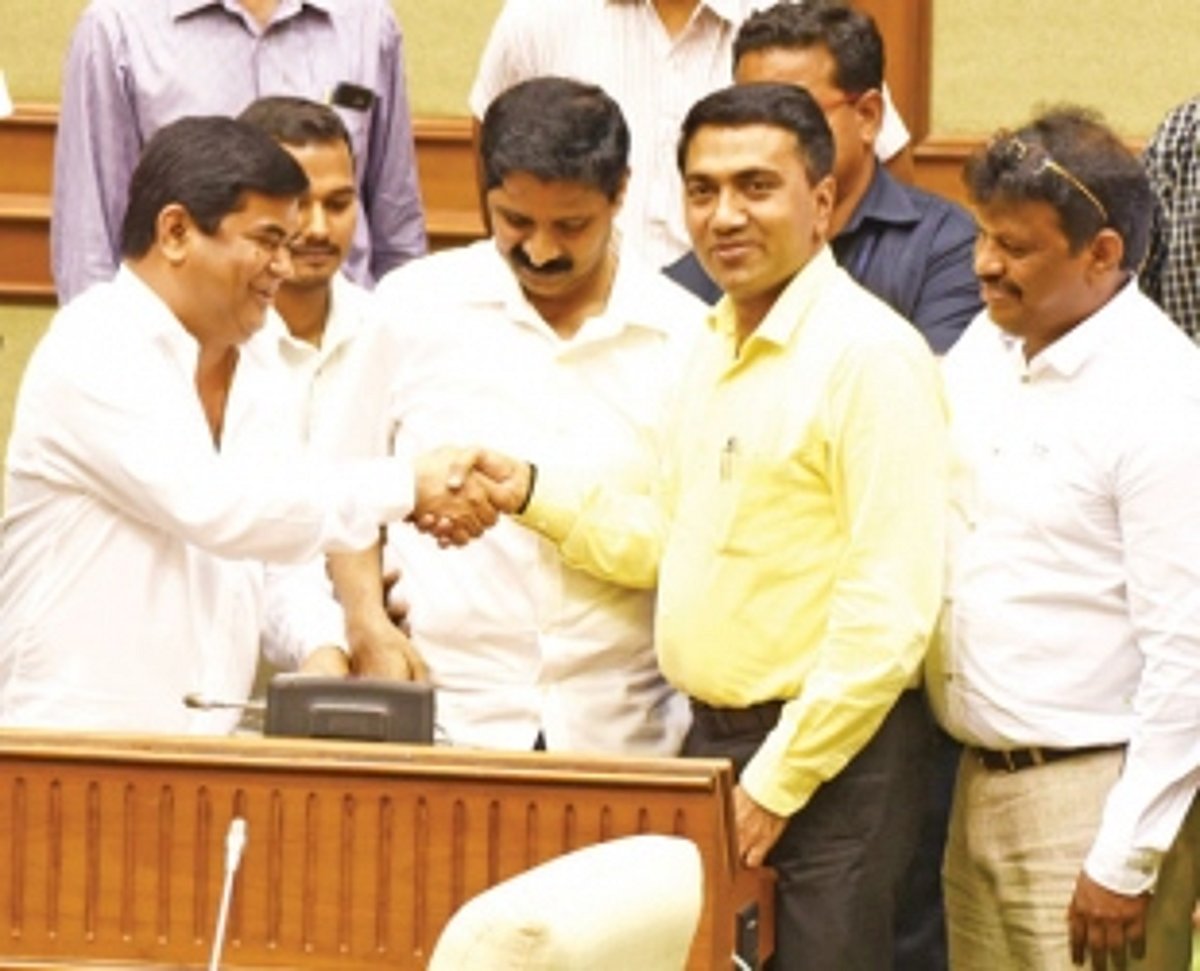
The result was as expected. All the MLAs who had backed the appointment of Pramod Sawant as Chief Minister had given written assurances of their support to the government, so the vote could hardly go another way. This, in fact was the easiest of tests that the Sawant government is to face, for the real test will come in the months ahead. The current code of conduct may stop the government from taking any major decisions and announcing the policies, but this actually could work in favour of the government as it gives Sawant a long two month breather before he has to face the people with the government’s programme for the State. But that’s when this government will come to the hurdles – political, policy making and administrative – that will restrain its ability to work effectively.
The composition of the government is the same as that of the previous one, made up of all the parties and Independent MLAs that had backed Manohar Parrikar in March 2017, but Sawant does not have the unflinching support that the former chief minister had or commanded from the MLAs and the allies. His was not anunanimous choice and there were reservations expressed from the allies and even from a MLA within his own party. That the various groups came together at the eleventh hour – and here is a situation where the expression can be literally and figuratively used – indicates that his ascension to the post of chief minister was not an easy one, and that the road ahead is not smooth but paved with stones and boulders that will take up much of his time and political acumen in clearing.
To many, Sawant was the only choice that the BJP had to offer from its current batch of MLAs. He has been thrust in the seat of power perhaps long before he may have expected to hold it. He was one of the few BJP MLAs that had got re-elected in 2017, many of the senior ones being sent back home by the electorate. It was precisely this lack of leadership in the party that had forced Parrikar to return from New Delhi at that time. But two years later the situation has changed. There are many aspiring chief ministers in the coalition and curbing their desires will possibly take up more time and energy from Sawant than leading the State.
The government has already indicated that it will follow the common minimum programme that had been drafted in 2017 after the Parrikar dispensation had taken office. Very few of the assurances made in that document have been met, with most yet to be attended to. A major assurance is of reservation of jobs for Goans to the tune of 80 per cent and the shifting of casinos from the River Mandovi. Earlier this month itself, the previous cabinet had extended the time limit for the casino vessels to stay in the river by another six months. This is one issue that the new government will have to tackle on a priority basis, as it has lingered on for far too long. But if it wants to connect with the youth, employment creation will have to be given serious thought.
While Goa looks to Sawant to give the State the governance that it has been lacking in recent months, his task, however, will not end there, for in the absence of Parrikar, there is a leadership vacuum in the party that needs to be filled, and as chief minister the BJP karyakartas will be now looking up to him for this guidance. The question is whether he is up to delivering on these twin responsibilities that have been reposed on him.