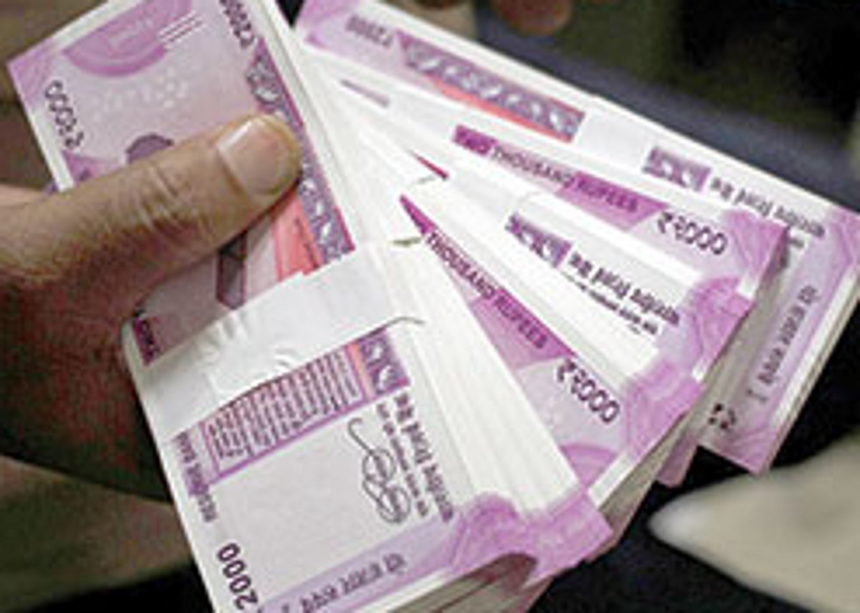
Without doubt, to kick start the ailing economy what is required is a surgical shot in the arm by injecting money in the market and raising demand. If there is no demand there will be no flow of economy and will entail a huge number of job losses and we all are aware that the job market is already in peril.
By the end of this week, India approaches May 3, the timeline set so far for lifting the nationwide lockdown. Whether this will happen nationwide is a billion dollar question as States like Maharashtra, Gujarat, Delhi, West Bengal are not showing very encouraging signs as the spike in number of positive COVID-19 cases continues to grow. On the other hand, the economy cannot afford a lockdown for too long and the employees and employers will want the mill to run so that money can be generated, for not only to protect their livelihood but also to contribute to the country’s revenue.
Striking a perfect balance between health and economy will now be a major issue to dwell. However, top epidemiologists are divided over the future course of COVID-19 management and the strategy to be followed in getting the country back to work sending jitters down the spine of the industry captains.
Many industrialists in Goa are in favour of opening up the economy and especially the macro ones, like mining and tourism, which were one of the mainstays and bread earners for the State. The question that remains to be answered is whether sectors like mining and tourism will get a jumpstart soon after the lifting of the lockdown. As of now, the scenario does not give a very favourable outlook and even it gets rolling, monsoon is not far away to dampen these two sectors movement. The concentration should be on the small and medium enterprises, which employs over 90 per cent of the workforce in the country.
The Union government, through regular updating of advisories has already begun relaxing the strict lockdown restrictions for a gradual resumption of some commercial activity, mainly in the rural sector and farming, which potentially allows for the resumption of 60 per cent of the economy. Many a times these advisories, which could be as long as 15 pages, still need to be clarified through various press conferences. However, the output for the year started April 1 is likely to shrink by 0.4 per cent compared with the growth of 4.6 per cent the previous year.
Availability of labour is a major concern as many of them would like to either stay home or go back to home if they are stuck in a lockdown that in some relaxed form could last for as long as six months. The priorities have changed in the last five to six weeks. Experts in the field of economy are already voicing out that loss of jobs could extend to 40 million before the end of the year. Almost all sectors including manufacturing, trade, transport, aviation, tourism, education, agriculture, healthcare have been hit and the government feels that the virus containment strategy also has a big role to play on the overall impact on the economy.
India which at one point of time was gearing up to raise the economy to five trillion dollars, according to International Monetary Fund (IMF) India’s GDP is expected to fall to 1.9 per cent in the FY21 as against 5.8 per cent estimated in January amid the ongoing lockdown due to the corona virus pandemic. The Indian economy may grow at 4.2 per cent in the FY20 as against five per cent estimated by the statistics department, the International Monetary Fund (IMF) also said in its bi-annual World Economic Outlook. However, India is the only country other than China to register a positive growth rate in 2020, it added.
The report also warns that global growth will see its worst recession this year since the Great Depression in the 1930s, adding that partial recovery is expected in 2021. “A partial recovery is projected for 2021, with above trend growth rates, but the level of GDP will remain below the pre-virus trend, with considerable uncertainty about the strength of the rebound,” Gita Gopinath, the IMF’s chief economist believes.