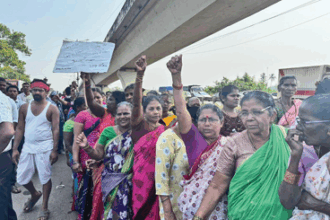
The recent proposal to relocate three district courts from Mapusa to Merces has sparked a heated debate, drawing sharp criticism from the legal fraternity and local communities alike. This decision, ostensibly aimed at alleviating traffic congestion and parking woes in Mapusa, appears to be a shortsighted solution that overlooks the broader implications for access to justice and community convenience. The government’s approach raises several questions about its priorities and the rationale behind such a significant move.
The relocation of the courts from Panjim to Mapusa 15-20 years ago was a strategic decision aimed at improving access to justice for residents across North Goa. By situating the courts in Mapusa, litigants from Pernem, Sattari, Bicholim, Bardez, and parts of Tiswadi were spared the arduous journey to Panjim, thereby reducing travel burdens and case pendency. The courts in Mapusa have since become a vital judicial hub, serving a diverse population with efficiency and accessibility.
Moving the courts to Merces would effectively reverse these gains, imposing significant hardships on litigants from the northern regions. The additional travel time and costs would disproportionately affect those from economically weaker sections, potentially deterring them from pursuing legal recourse. This move could inadvertently create a barrier to justice, undermining the very purpose of a decentralised judicial
system.
The government’s rationale for the relocation — addressing traffic congestion and inadequate parking in Mapusa — seems to be a case of misplaced priorities. While urban congestion is indeed a pressing issue, shifting the courts to a different taluka is not a sustainable solution. Instead, the government should explore alternative strategies to decongest Mapusa without compromising essential services.
One viable approach could be to relocate non-essential government offices and administrative buildings to the periphery of Mapusa. This would not only alleviate congestion in the town centre, but also promote balanced regional development. By decentralizing administrative functions, the government can reduce the strain on Mapusa’s infrastructure while maintaining the accessibility of crucial services like the judiciary.
The proposed relocation also raises concerns about the economic and social impact on Mapusa. The presence of the courts contributes significantly to the local economy, supporting a range of ancillary businesses such as legal offices, stationeries and retail outlets. The departure of the courts could lead to a decline in economic activity, affecting livelihoods and diminishing the vibrancy of the town.
Moreover, the social fabric of Mapusa is closely intertwined with its role as a judicial centre. Their relocation could disrupt these social dynamics, leading to a sense of dislocation and loss among residents.
The government’s decision to prioritize parking and traffic concerns over access to justice and community welfare is perplexing. It raises questions about the criteria used to evaluate the impact of such a move and whether the voices of affected communities have been adequately considered. The lack of transparency and public consultation in the decision-making process further exacerbates these concerns.
Furthermore, the financial implications of the move warrant scrutiny. The current rent for the Mapusa premises is Rs 4 lakh per month, a cost that must be weighed against the potential expenses of moving to Merces. The government must provide a detailed cost-benefit analysis to justify the economic rationale behind the relocation.
In light of these considerations, it is imperative for the government to adopt a more holistic approach to urban planning and infrastructure development. Rather than resorting to piecemeal solutions, a comprehensive strategy that addresses the root causes of congestion while preserving essential services is needed.
The government should engage in meaningful dialogue with stakeholders, including the legal community, local residents, and urban planners, to explore innovative solutions that balance the needs of all parties. By fostering collaboration and inclusivity, the government can develop a sustainable urban development plan that enhances the quality of life for all residents. It must reconsider its approach and prioritise solutions that promote equitable access to essential services while addressing urban challenges in a sustainable manner. Only through a thoughtful and inclusive process can the government ensure that its actions align with the best interests of the people it serves.
Where is the sense in moving Mapusa’s courts?