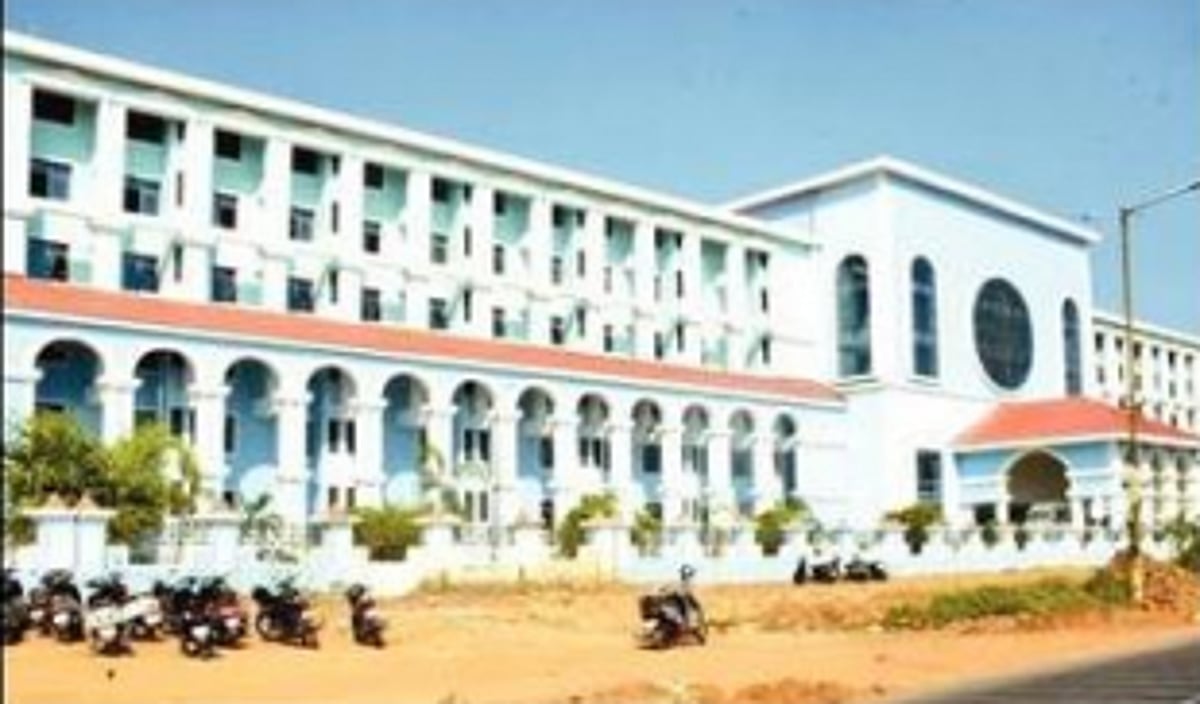
Private clinics need to operate
It is understood that the Indian Medical Association (IMA) Goa branch is providing tele-consultation services free of cost to nearly 4,200 asymptomatic and mildly symptomatic COVID-19 positive patients who have availed the option of home isolation. After the countrywide Unlock 4.0 was announced many of the services have been thrown open. However it is observed that even as some private clinics have started operating, many of the clinics across the state remain to be shut. While the focus in the state is on treating COVID-19 patients, it must be said that citizens also need to visit the doctor for treatment of other illnesses and also for routine check-up. It is but natural for doctors to be apprehensive of contracting the virus.
However the clinics could start operating by taking all necessary precautions which those from the medical profession could be well aware of. Dental clinics and eye clinics could follow some strict Standard Operating Procedures (SOPs). The family doctors could give consultation to their regular patients over the phone. When all the pharmacies are operating, it does not seem appropriate for the private doctors to keep their clinics closed. Patients with other illness could be apprehensive of visiting the hospitals as they could be subject to cross infections. Private clinics could attend to a limited number of patients and with prior appointment.
Adelmo Fernandes, Vasco
Rights of the high risk!
‘WHO’ has identified those at risk of contracting Covid-19 and becoming critically ill. No where do they say these people are bound to die if Covid -19 positive.
Who are these people? Elderly>60 years. (In Goa, we need to include people above 55 years from current evidence) Those with underlying non-communicable diseases such as Hypertension, diabetes, kidney ailments, lung diseases such as Asthma/COPD, cancer, obesity. And smokers.
In Goa, daily we witness at least 6-9 deaths of such people. This is a problem. First, these people have rights as humans to be saved. Society must ensure this. The Govt. and more specifically, the GHRC must ensure this.
The Govt. writes this off as due to the victims seeking medical help late. If look at the sheer number of deaths: then this is not a solution but an excuse.
First off, we need to identify the number of such high-risk people. With online classes we can get information of each home with number of such high-risk people. Each student to be given a code number: 3 letters for school, followed by a number for class, the letter for village and number for siblings younger. They then fill out the number of high-risk people at home with the details. Only the eldest sibling furnishes the information.
Panchayats can then get info from those who do not attend online classes. Correct coding for number of people and risk and also Aadhar card number of such people will give a wealth of data. As per me there will not be more than 15% families with no high risk inmate. Sorting on Aadhar card number, mobile number will give an accurate result. Another method is to use the voters list to get this info. Family doctor must be one of the fields.
An emergency plan to protect these high-risk people can be formulated once this data is collected. Doctors are in contact with every such high-risk individual. They have been actually earning their bread and butter at their cost. The way forward is obvious.
R Fernandes, Margao
Tree felling protest
This has reference to the news ‘Mollem locals protest tree felling for three Central govt projects’ (Herald, September 12). Once again, another protest at yet another site, another location, another state. This time it is the villagers of Mollem in Goa who have risen against destructive policies of the government, wherein trees have been cut for infrastructure projects.
A year back, citizens in Mumbai had to come out to protest against the brutal murder of around 2000 trees in the dead of night, in the Aarey Forest. Why is it that citizens have to keep fighting to save the environment? Why is it that the authorities undertake projects without understanding the impact on the locality? Why must citizens always keep fighting for their right to survival? It’s time we all understand that when Nature strikes, it will strike with all its might, sparing none!
Melville X. D’Souza, Mumbai
All I-T exemptions may be abolished
Presently there are too many exemptions available under Income Tax Act. In case of exemptions of personal nature, already option was given to tax-payers either to opt tax-exemptions or availing increased basic exemption limit of Rs 5 lakhs per annum.
Many of tax-exemptions like on charity and donations are often misused. Even tax-exemption for contribution received and made by or to political parties are often under activism where India has over two thousand registered political parties out of which very few are seriously contesting elections and more than 80 percent of registered political parties even not having contested any election with sole motto of whitening black money. Otherwise also political parties in general are super-rich bodies requiring no tax-exemption in view of their heavily spending on elections.
In present economic requirements developed due to corona-spread, it is time that all Income-Tax exemptions of any kind may be totally abolished. Revenue required for urgent national need is rather more necessary than charity, donation or contribution for political parties.
Since ordinary farmer does not have income above Rs 5 lakhs per annum, provision of tax-free agricultural income may also be abolished which is misused by super-rich celebrities and others to evade tax in name of agricultural income by purchasing some land only for the purpose. Even such agricultural income can be shown through their lavish farm-houses.
However highest income-tax rate may be restored back to 30 percent firstly to avoid tax-evasion and secondly making donors comfortable in charity work with such restricted upper tax-limit.
Subhash Chandra Agrawal, Delhi
Delay in election of Deputy Speaker
It is very neglectful that the constitutional post of Deputy Speaker of the Lok Sabha hasn’t been filled yet, despite fifteen months having passed since the first sitting of the 17th Lok Sabha. Now that the Monsoon Session of the Parliament is set to commence from September 14, it should be one of the top priorities of the union government to make way for election of Deputy Speaker. Amid the uncertainties of prevailing circumstances owing to COVID-19, it would be really perplexing if for some inevitable reasons the Speaker Om Birla has to keep himself away from the proceedings of the House for some time.
It is noteworthy that the Speaker of Lok Sabha is placed on the same rank as the Chief Justice of India in the Indian “Order of Precedence”. His key position as the presiding officer of the Lok Sabha ought to be safeguarded by electing a Deputy Speaker to preside over the House in the absence of the Speaker. This unwarranted neglect and delay in electing the Deputy Speaker seems to have stemmed from the convention of electing an opposition member of the House to the post, which is often not so smooth process.
This is in contrast to the Speaker who ordinarily comes from the party having majority in the House and is therefore elected smoothly. Nevertheless, this shouldn’t hinder the election process setting a wrong precedent.
Shivanshu K. Srivastava, Lucknow