It’s raining numbers! Literally! In a way I’m happy – somebody somewhere still thinks of elections, to get numbers, albeit, a one-in-a-5-year-elections – why? Because without that in any case we see Governments coming and Governments going with palpable impunity all around! So, starting from Uttarakhand, followed by Arunachal, Manipur, Tripura, Goa, Gujarat, Karnataka and the Municipal Corporations in Bengal recently, our grand-children – in case they still read dailies, would really need no further coaching on arithmetic!
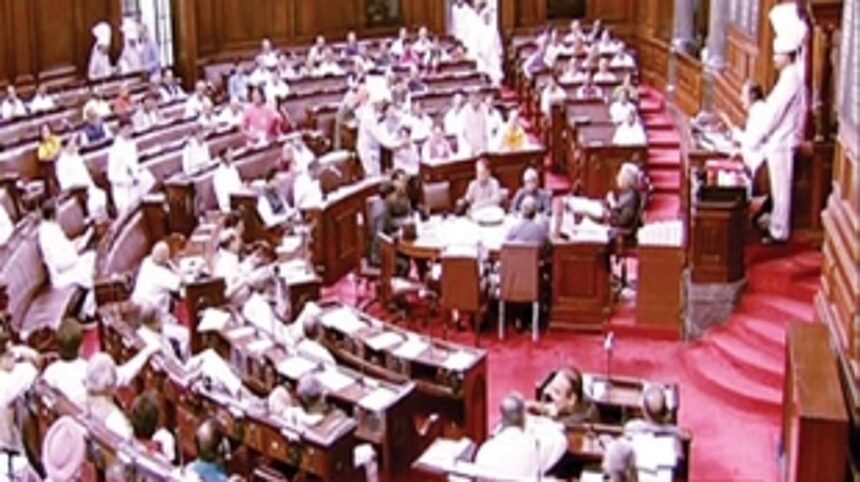
We just saw three “events” of considerable import to our democracy. a) the way the RTI Amendment Bill and the ‘Triple Talaq’ Bill was passed in the Rajya Sabha, b) the “whole-sale” floor crossings of lawmakers in Goa and Karnataka – changing the basic character of the Government in one place and changing the Government itself in the other and c) discussions and setting up of a committee for examining the One-Nation-One-Poll proposal of the ruling side. And the common thread lying in between I saw, was the mystery of arithmetic to the last finishing point! And in my view, it would not be free from great risk both to the nation and to its basic fabric!
I can only recollect Dr Karl Jasper’s “Origin of Goals and History” and he writes … “An ideology is a complex of ideas or notions which represents itself to the thinker as an absolute truth for the interpretation of the world and his situation within it; it leads the thinker to accomplish an act of self-deception for the purpose of justification, obfuscation and evasion in some sense or other to his advantage.”
So it’s important and that’s why, I thought I’ll take a closer look at this set of three mysteries.
My Take: a) The RTI Amendment Bill and the Triple Talaq Bill: I think it’s beyond arguments that a body which ensures and facilitates a major provision of our Constitution (in this case the right to information) should not be deemed to be a “Constitutional Authority” (regardless of whether it’s so explicit). More so, at times when the Opposition have already made themselves scarce and issues at hands are aplenty, like queries on qualifications of functionaries, issues of quantification of black money in foreign banks, employment numbers, etc. Should it be fair then, for the one of the parties themselves to fix terms and remuneration for this authority who by design is shaped to give information on that same party? – But that’s a larger debate, I’m putting off for the moment – my shock was the infamous “walk-out” of the Opposition in the Rajya Sabha and allowing the Bill to pass smoothly – the same Opposition which cried hoarse on information sovereignty in our great country!
The passage of the “Triple Talaq” Bill exposed the fragility of the Opposition even to greater graphic details. Here we saw the spectacle of certain members of larger Opposition parties abstaining without a whip and effectively proxying the Government to sail thru without even a serious pretence of a debate. Although, I may state here that I have nothing at all, against this Bill excepting that I’m not quite sure what real benefits it could afford to Muslim women without a corresponding Polygamy and a Nikaah-e-Halala ban, the more important question which flowed from this is that of the Opposition brazenly abrogating its responsibilities completely in Parliament.
b) The “Whole-Sale” floor crossings in Goa, Bengal Municipal Bodies and Karnataka. The Opposition or rather – major portions of it I think, shamed our Country, our Constitution and our Founding Fathers like never before and reduced the institution of elections, the anti-defection legislations and ideologies to a mockery!
c) And lastly the “One Nation-One Elections” agenda. I thought it worthwhile to examine the subject from angles of governance and financial propriety – particularly the NITI-Aayog’s stated benefits that supposedly accrue: a) saving of substantial costs from frequent elections; b) avoiding disruptions in development programme from operation of frequent Model Code of Conduct; c) extensive arrangement of security forces. I plan to take a look at each of these so-called benefits. The “cost savings”. The Government, the Political Parties and candidates together spent nearly Rs 60,000 crore in 2019 elections, making it twice as expensive as the one in 2014, according to a recent report by the Centre for Media Studies (CMS). Of this, a paltry 15% only came from the Government. So – if an Election is “expensive” – you already know who made it so! Coinciding elections would hardly make a dent – the figures point out! Yes, it will surely curtail number of “disruptions” due to operation of the code of conduct, but I doubt whether it would be easier on the security front at all! And in any case, that’s what “federalism” is about – each State autonomous on people-facing issues and so should they remain! But as I said that’s the greater debate. The immediate concern was again, the role of the Opposition. Why were 20 of the 40 political parties absent for the all-party meeting – is that democracy? Should we not expect the Opposition to put citizens’ points forward for debate?
And in conclusion: I think, it’s a waste of time obfuscating matters trying to create…. “…ideology with complex ideas or notions…” for an eyewash – the Opposition should do its job it is meant to and that’s so wholesome!
(Binayak Datta is a
Finance Professional)