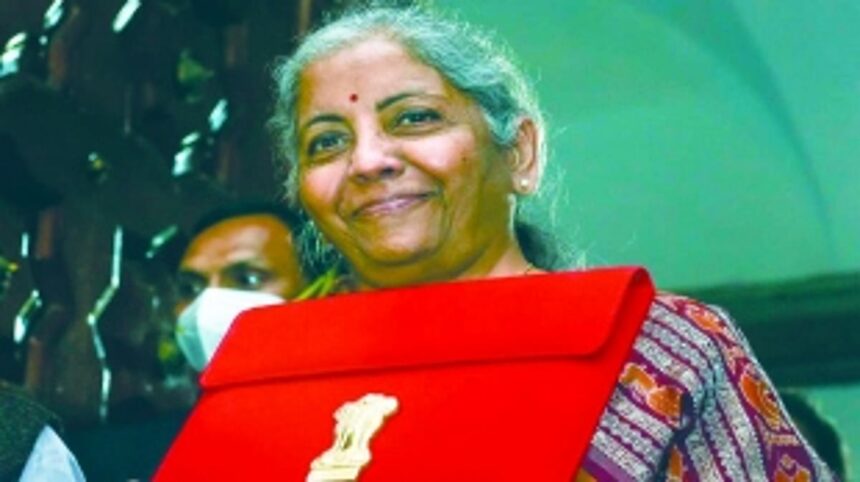
“Sir, do they increase the price?” the petrol-dispensing youngster tossed it to me, on my way back! That’s what the Budget, the mega-event meant for our Rs 130 crore, is. Inside the plush chambers however, everybody was happy, Politicians tired of thumping desks, Industrialists of eminence, falling over each other singing paeans – those who understood spoke how very positive it was, those who didn’t, faithfully stuck to, “Its futuristic”!
I’ll express my views in simple terms on the Economic Survey and the Union Budget examining a) the backdrop this year, b) The Options c) The Hits and the Misses and d) the promises of the last budgets.
a)The Backdrop this Year: The nation reels under the pandemic and its traumatic deaths of near ones, of job-losses, of relocations, of year-losses in school-education, now trying desperately to come to grips with the situation. The economy having shrunk a good 6.6%, with a shaken confidence for private investments The Economic Survey points out additionally, to threats of price pressures due to global inflation and oil prices, sluggish private consumption and supply disruptions in container-availabilities and chips. Life had been particularly difficult for the urban poor, moving from city to city in quest for a living. We have still some distance to cover in vaccinations particularly of youngsters.
Exports fortunately, a key growth driver grew by a whopping 27%.
b)The Options: The problem is complex. Henry Mencken would have gladly reiterated, “Every Complex Problem has a Simple Solution, that Doesn’t Work” (“Treatise on the Right and the Wrong, 1934”). Our problem is, we need income for citizens, to understand better, they need employment, they need to consume, earn more and lead a valued life. The options are a) Mencken’s “simple” but non-sustainable solution: print notes for the deficit of 16 trillion (7% of the economy without the economy going up in value); b) Borrow or Guarantee for funds: Expensive and Rating-unfriendly with a Debt: GDP Ratio of 70% already. c) Facilitate increase in consumption so the demand goes up and economy starts moving. For example, spend more on textiles, on tourism, on infrastructure on man-related industries for creating assets, which will again, in turn generate more and more employment, OR d) Increase taxes and cut unproductive expenditure. Whereas the first one creating assets would have more emphasis on private investments, the Social Sectors will have to be government-led. The ideal and practical one is a combination of option b), c) and d) in my view. Whereas, a good amount of thrust has, in fact been laid on b) and c) in the budgets, practically nothing on taxes and re-engineering of government establishment costs. There was a crying need for an approach to equity in wealth distribution, our Ginis’ Coefficient is highly adverse where the wealthiest 1% carry 43% of the nation wealth.
c)The Hits, Misses and the Questions (Top 5 only): The Hits in my view, are: Capital Expenditure proposed on infrastructure 10.6 trillion over actuals of 8.4. A good boost I think provided of course the assets created are productive. IT and Telecom: Rs 80,000 crores against the current Rs 28,000 cr. The 5G will be essential in Industry 4.0. Education: 1.04 trillion in place of actuals of 88,000. We need to make village and small-town schools fit for the NEP’21 and Transfers to States 8.2 trillion in place of actuals of 7.4. 48,000 crores for 80 lakh houses for rural poor, is an excellent initiative, only implementation and quality has to be ensured.
The Misses: The allocations in the Health Sector, no increase at all at Rs 86,000 crores, non-plussed about the R&D requirements, we still haven’t done 1 full bed per thousand citizens (BRICS average 4, and we are 1.34 doctors per thousand (BRICS average 5). I was expecting a massive thrust on R&D, also health infrastructure in the remote villages where PPP won’t work. We have till now just ONE homegrown-technology-vaccine out.
I missed thrust on textiles and tourism. With the promises of COP26, increasing share of renewable energy by 2030, steep reductions of emissions and Net-Zero by 2070, I would have invested significantly in coal-substitution; we increased allocations just 13% to Rs 49,000 crores. The biggest miss of course is the disinvestments where we had a target of Rs 1.75 trillion and did only Rs 12,000 crores. In fact, we did a reverse dis-investment agreeing for equity in Vodafone. Real confusing!
The Questions: I’m not quite sure how the RBI-Crypto will work: for example, if it’s used for import payments, it’s only natural currency-trading will happen on the block-chain, which will be taxed 48% (30% Income Tax and 18% GST). I’m tired of seeing under-budgeting of subsidies in food, fertilisers and petroleum year-after-year and silently voting supplementaries in January. I’m also not clear on the 50 lakh jobs in 5 years, pursuant to a production-linked-incentive scheme under the Make-In-India. Now, this scheme is hanging for the last 6 years, I’m clue-less on how many jobs we actually provided. I missed a statement on the Rs 27-trillion stimulus last year, I saw Rs 37 trillion Capital +Revenue expenses 2020-21, increase only to Es 42. What happens to the remaining Rs 12 trillion then?
d) Silence on the Last Budgets: Didn’t find anything on the Mission Poshan 2.0, the additional districts, the Vehicle Scrapping Policies and the MITRA (Textile) parks, the National Infra-Pipeline and the NBFID’21.
And in Conclusion, a tough task ahead, a question that has no simple solution of Mencken, only tough solutions and strict implementations.
(Binayak Datta is a Finance professional)