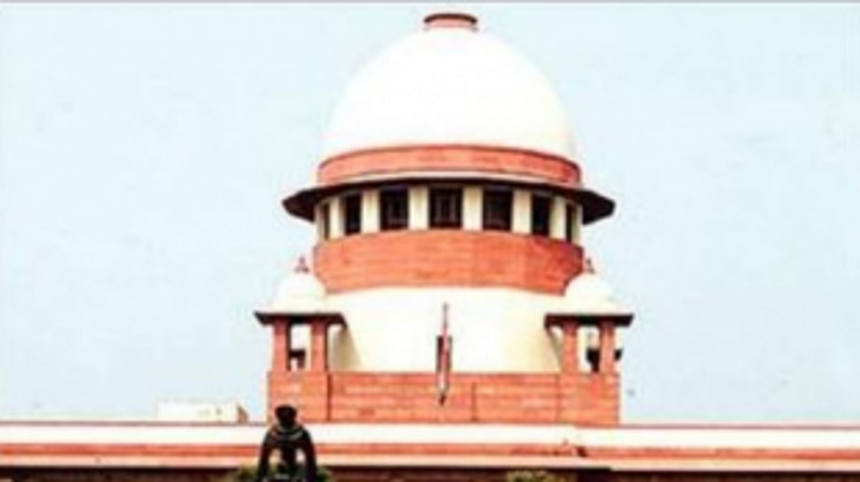
The Supreme Court has at last come down heavily on hate speech which can precipitate violence against targeted religious, ethnic or other social groups. The apex court has ordered the police to crack down on the guilty without waiting for someone to file a complaint. Police officers, the judges said, could be hauled up for contempt of court if they are found slack in their duties.
Sounds very good on first listening.
But who will educate the policemen, and which brave police officer would like to take action on the hate speech from ministers at various levels, top politicians, godmen and godwomen?
Who will ensure it is the hate-monger who is punished, and not the victim, the Dalit, or the minorities. The main victims of hate speech, especially the one which incites targeted violence, are waiting in some trepidation. Would it lower temperatures on the eve of elections? Or would this be a double-edged sword which could strike at religious freedom and civil liberties, including the right to free speech and expression.There have been examples where laws have been twisted, such as Freedom of Religion Acts in over a dozen States which strike hard at Christians and Muslims. These laws have empowered State police forces to arrest youth on the complaint of a neighbour for seducing a Hindu girl, or to lock up a pastor for praying for a sick man.
India has sufficient laws to curb any speech that sows seeds of division, or which creates enmity between religious or social groups by way of deriding personages or insulting deities.
British-era laws codified as Sections 153A (promoting enmity between different groups on grounds of religion, race, place of birth, or residence), 153B (imputations and assertions prejudicial to national integration), and 505(2) (statements creating or promoting enmity, hatred, or ill-will between classes) of the Indian Penal Code have been used to pre-empt communal hate or actual violence. Section 295 deals with injuring or defiling place of worship, or any object held sacred, with intent to insult the religion of any class.
They have inevitably been perverted in practice.
In Pakistan, these are known as Anti-Blasphemy Laws and have been used against Hindus, Sikhs and Christians. Several men and women have been sentenced to death on charges of insulting Allah or the Holy Quran. Mercifully no one has been executed so far, but a Pakistani senior politician was assassinated by security guards because he had spoken in defence of Christians who were prosecuted for blasphemy.
In some States, praying for a sick man, saying God is Great [Allah-o-Akbar] as in a muezzin’s azaan, praying in a hospital compound, or indeed asserting that Jesus is the only way to salvation can land a man in the police station. Jesus Saves is a popular car sticker.
No one, especially members of the minority communities, will disagree that targeted hate has become the norm since the 2014 general elections campaign. One community is now routinely called “termites”, and another “anti-nationals”, by politicians. Ministers in election mode have asserted the only “fit punishment for such elements is the bullet’. And godmen and women in conclaves in pilgrim towns have called for genocide of certain communities.
The SC has more than expressed concern at the way hate speech is becoming commonplace. Religious groups, activists and human rights lawyers have asked for some action to contain hate speech. That it does incite violence has been proved more amply in the over 50 cases of mob lynching on innocent persons in several States in the last five or six years.
Mainline Television networks, part of the media empires of the richest men, have in their debates raised communal passions to fever pitch. Participants of such “debates” have come to blows or have said things which have provoked other groups to call for their death.
These were perhaps the tilting point which prompted the apex court of the lands to speak out so harshly against hate speech, and in September this year, call for stricter mechanisms and harsher punishments so that television debates can be regulated. Coming down heavily on TV news channels that allow hate speech in their debates, the bench of Justices KM Joseph and Hrishikesh Roy asked the Centre as to why it remained a mute spectator in this scenario. “Freedom of the Press is important for a nation, and we should know where to draw a line,” the bench remarked.
And on October 21, the court said it is “tragic what we have reduced religion to” in the 21st century and a “climate of hate prevails in the country”. The bench directed the police and civil authorities to immediately suo motu register cases against hate speech makers without waiting for a complaint to be filed.
Hate speech attacks individual dignity, threatens national unity, the judges said.
“We feel that this court is charged with the duty to protect these fundamental rights and also protect and preserve the constitutional values, in particular the rule of law and secular and democratic character of the nation,” Justice Joseph read out from the order.
It is not just the police whose actions will be watched. The Election Commission has been deaf to complaints by political parties that the ruling political dispensation has used divisive slogans and speeches to polarise the electorate. The laxity by the Commission has emboldened politicians to go to extreme lengths to rouse their followers.
Religious communities, Dalit and other marginalised groups and social activists would be watching to see if the police follow the court directives, both in letter and in spirit, instead of buckling down under political pressure and target the victimised sections of society.
(John Dayal is an author, Editor, occasional documentary film maker and activist. He lives in New Delhi.)