The pandemic has plunged the world into unprecedented chaos, affecting every sphere of human life. How do we tackle this pandemic? Quarantine and isolation are the norm, but does safe distancing make sense in Dharavi, or at the recently opened liquor shops? Is total lockdown the way to go? And if so for how long and with what objective? What is the exit strategy?
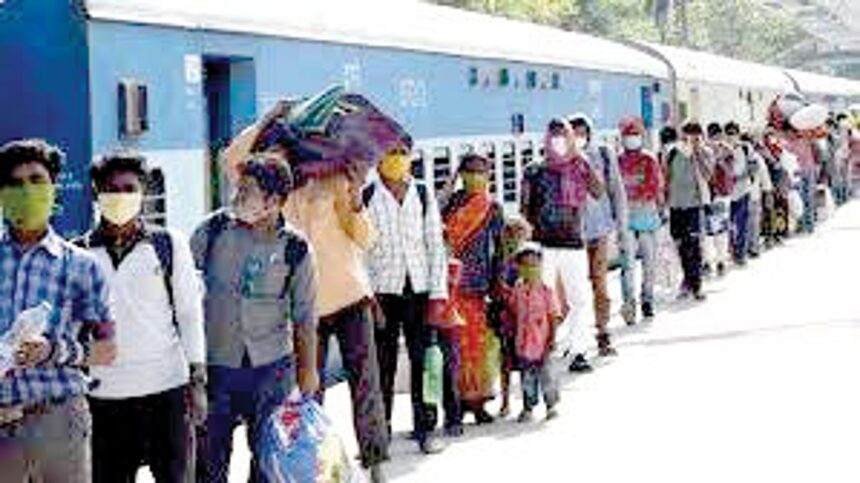
Is the Swedish model of self-discipline (with or without chicken manure) and herd immunity more appropriate? Even the pathophysiology stimulates spirited debate. Is it an auto-immune reaction, or Disseminated Intra-vascular Coagulation (DIC) requiring anti-inflammatory medication and heparin rather than ventilatory support? Does health or the economy merit priority? Experts are debating the best therapeutic approach. Hydroxy chloroquine ranges from being a wonder drug to an outright poison; Trump’s foot-in-mouth contributions aside. Even with short-circuited testing protocols, it will be at least a year before we have the ultimate solution, a vaccine. (We still don’t have one for dengue or HIV). Three symptoms were described as typical of infection; now there are seven, including loss of smell and inflamed toes. Testing was the holy grail, till the Chinese kits were found so faulty that the ICMR stopped them. Migrant workers continue to be devastated; reminiscent of partition days. Even the courts and laws which should have provided stability and direction, appear to be dithering.
A noted neurosurgeon from Chennai succumbed to COVID-19 and his mortal remains were being taken for burial. The ambulance carrying his body was attacked, the drivers and accompanying friends beaten up and the family chased away. Why? Because the locals felt that burying him in their locality would expose them to the danger of infection. His friend managed to take the body to an alternative site and buried him with the help of the ambulance drivers. Doctors have been threatened with eviction by landlords because they treat infected patients. They have been assaulted and pelted with stones, in hospitals and whilst conducting surveys. The IMA, sufficiently moved by the Chennai incident, called for a candle-light demonstration and the wearing of black badges in protest. A meeting with the Home Minister and Health Minister was held and a demand for a Central Act to deal with violence against doctors placed before them. What emerged eventually was an eyewash ordinance against violence against doctors, promulgated as an amendment act to the Epidemic Diseases’ Act (EDA) of 1897. The obvious implication being that when the declaration of a pandemic is eventually withdrawn, this amendment would cease to be operative. “No pandemic-No protection”. It was a shameful sleight of pen to defuse the situation at a critical juncture. The demand for a central act to prevent violence against doctors was vetoed by Amit Shah in December 2019, on the grounds that “no central legislation can be brought to protect the practitioners of one specific profession”. In fact, Harsh Vardhan had to cancel plans for a cabinet discussion, in spite of law department approval. The devious face-saving exit route of an EDA-linked ordinance by the Home Ministry prevailed.
There is more. The SC ruled that “The tests relating to COVID-19 whether in approved Government Laboratories or approved private Laboratories shall be free of cost.” An uproar followed with the possibility of all testing being halted by the private sector; which the government couldn’t afford. The SC had to backtrack. “We further clarify that the order never intended to make testing free for those who can afford payment of testing fee fixed by the ICMR for COVID-19. Free testing for COVID-19 shall be available to persons eligible under Ayushman Bharat Pradhan Mantri Jan Aarogya Yojana and other categories of economically weaker sections as notified by the Government”. The explanation for the U-turn? “The concerned judges did not get enough time to consult among themselves prior to the delivery of the judgment.” Would any court of law tolerate a doctor arguing that he made a wrong diagnosis, and prescribed wrong treatment because he could not find adequate time to deliberate and consult fellow doctors? The unfortunate aam admi has to swallow such SC statements and move on. Goa’s borders were sealed, but visitors were permitted to enter for medical reasons and emergencies. No protocol was prescribed for private doctors dealing with such patients. The whole concept of testing was soured when it was declared that no hospital could insist on testing for COVID (as is often done for HIV) before admitting or operating on patients. Yet the district judge from the Rajkot HC found it appropriate to issue an order whereby every arrested accused must be tested for COVID virus and only when tested negative could he be produced in court. There really should be more to life than clapping hands and banging utensils in public.
Standard safeguards for healthcare workers, quite rightly, are PPE; masks, face shields, gowns, gloves, goggles etcetera. These obviously impair the doctor’s ability to communicate, palpate, auscultate or visualize minutely. Lumbered with all this gear the doctor is still expected to meticulously “maintain records contemporaneously” under the DMA. Inevitably there will be errors of assessment or procedure. The EDA (section 4) and the DMA (Section 73) both provide for “Protection to persons acting under Act. No suit or other legal proceeding shall lie against any person for anything done or in good faith intended to be done under this Act”. But should an error of judgment occur, the doctor can still be slapped with negligence charges under the CPA, CEA, civil or even criminal courts; if he is lucky enough not to get his skull fractured before that.
Is it any wonder that after invoking the EDA and DMA, there have been around 500 notifications with over 105 related to health? With such uncertainties, one thing is sure; life, post-pandemic, will never be the same again.
(The writer is a founder
member of the VHAG)