Goa has a new policy for the promotion of tourism. Already under fire, it is obvious the document has certain lacunae to the extent that it is sought to be withdrawn. The plan proclaims a vision to “make Goa the most preferred destination around the year for high-spending tourists in India by 2024, and a world-class international tourism destination by 2030”. The document that is found in website of tourism department is an undated 25-page plan, with an obscure title, and without any authors. It appears like a casual report done without a proper thought, and needless to say, devoid of any scientific inputs.
One of the seven cornerstone principles is sustainability. It proposes to “develop and promote tourism infrastructure in an environmentally and ecologically sustainable manner through appropriate plans, programs and policies”. Similarly, one of the five objectives is to “create a more environmentally and socially sustainable tourism destination, where territorial development is more balanced between the coast and the hinterland”. But a major issue that defies logic is the lack of concern in situations where tourism and related activities impinge on natural ecosystems. It is well established that tourism is a major contributor towards degradation of natural coastal ecosystems, wherein the beach – dune systems in particular, are found severely degraded, and have borne the maximum brunt of human actions.
A few topics directly related to degradation of sandy ecosystems due to coastal tourism need to be considered:
(1) Impact of constructions on sand dune fields: Uncontrolled growth and heavy construction activity and associated infrastructure requirements of the tourism industry have led to a chaotic and haphazard growth of many coastal stretches. Of all coastal geomorphic features, sand dunes have suffered the most from indiscriminate tourism activities. High dunes have been razed, levelled, flattened or simply removed so as to make place for hotels, resorts or other structures. Large dune areas are thus found obliterated and damaged due to human intervention. Many of the coastal stretches bear little resemblance to the primitive shore that existed before. (2) Impact of roads on dunes: Coast-perpendicular access roads over the dune belts have led to obliteration of dune topography, removal of sand, leveling of dunes and destruction of dune vegetation, all of which generate loose and free sand resulting in its excessive mobility. Such roads are covered, sometimes in totality, by a layer of sand, a phenomenon evident wherever roads occupy former dune fields.
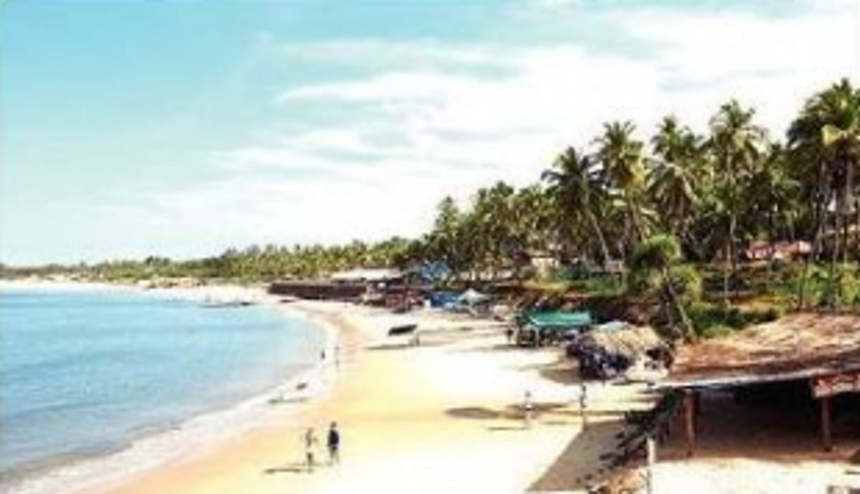
(3) Impact of beach shacks: National coastal regulations have specific guidelines for such temporary structures. A major problem is their number which is on the rise. Although shacks are bound to occupy only the upper part of beaches, many of them have gone beyond and invaded the adjacent sand dunes.
This is where ecological degradation takes place as dune vegetation is uprooted and cleared to make place for them, an environmental damage that can be significant and sometimes irreversible, and a major cause of coastal degradation. (4) Influence of recreation on dunes: Activities of pleasure seekers and picnickers can be observed almost along the entire dune coast. Although these recreational activities may not be termed as harmful to the dune environment, it does create ecological degradation in areas which are most sought and frequented. Parking of vehicles on sandy bodies, driving on the beach as often noticed flatten dunes and renders the sand mobile. Excessive footfalls induce shifting of sand, thus affecting the stability of dunes.
(5) Impact on dune vegetation: Sand dunes owe their existence to the vegetal cover, as vegetation plays a crucial role as effective sand binders that promote the stability of dunes.
(2) Our observations have revealed that sand dune vegetation is in various stages of degradation in different parts of coastal stretches. Innumerable factors are responsible for the destruction of dune vegetation: real estate owners who prepare plots for buildings, hotels or resorts clear all dune vegetation; roads are laid over leveled dunes thus eliminating the vegetal cover; beach shacks and various other recreational activities have shown similar effects as dunes are rendered bare.
(6) Litter on beaches: With the ever increasing pressures of people on the coasts, hind dunes are used to dump all types of waste that gets mixed with sand and finds its way in the oceans. Litter is subsequently thrown back on the beach as can be observed along most beaches during the post monsoon period. Therefore, irresponsible disposal of garbage and sewage in the coastal zone has resulted in a progressive build-up of hazardous waste in our coasts. (7) Salt water ingress: A large number of shallow bore wells have been found along the coast, none of which have approvals. Pumping of ground water in coastal areas is a prohibited activity in the 200 metre zone.
Excessive pumping of ground water by the hotel industry and private parties by using heavy duty pumps results in a rapid depletion of fresh water.
In summary, (a) ecosystem services that comprise assorted benefits provided by natural healthy ecosystems are ignored; (b) the importance of floral and faunal diversity, essential for stability of coasts, is flouted; (c) the concept of conservation of natural vegetated landforms and restoration of degraded ecosystems is lacking; (d) the role of prevailing coastal regulations is not respected.
T(Dr Antonio Mascarenhas is a former Scientist, NIO, Goa)