A hundred years ago, Somerset Maugham wrote (perhaps prophetically) in his “The Moon and Six Pence”, and you heard Strickland saying, “…Perhaps it is this sense of strangeness that sends men far and wide in the search for something permanent, to which they may attach themselves”. Perhaps some deep-rooted atavism urges the wanderer back to lands which his ancestors left in the dim beginnings of history. And yes, what followed the will to achieve (ironically, the other end of atavism) is the great pride for this great Country to be amongst the Big-4 Moon-Club last week, with the Chandrayaan-3 making the first soft-landing near the South Pole of the Moon. Although I’m not a scientist, I needn’t be one I reasoned, as a senior, reasonably well-informed stakeholder to make a few lay-citizens’ remarks on this great act. I thought it could be interesting to look at this feat through the eyes of a common man, of our country and of the world, one who must be thinking, the Chandrayaan-3 is great – what’s there in it for me? Let me try and comment on five simple questions in this regard, as I (a common man) sees them!
Q1: Why Chandrayaan-3 (not 1..not 2..what are the other 2 doing at this moment)? Q2: What was so special in the whole “Utsav”? Q3: How much money did we spend, Q4: What’s there in it for me? And lastly, Q5: How the world sees us for all of this?
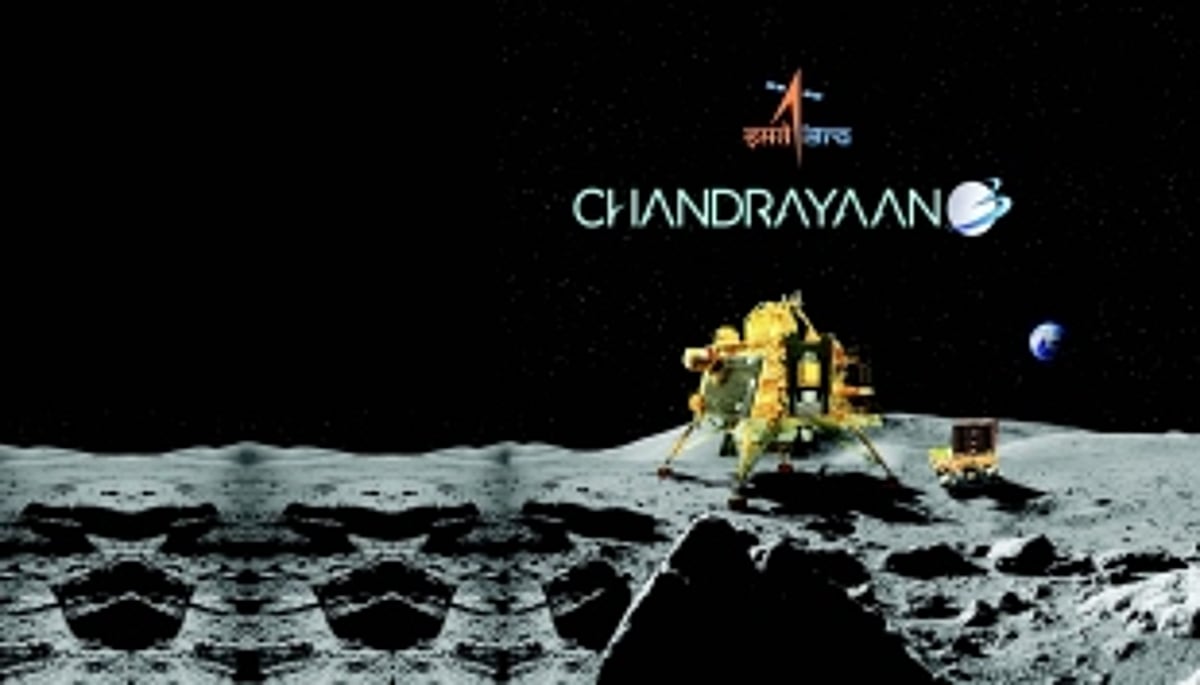
Q1: This was not the first Chandrayaan. The first went in October 2008. Chandrayaan-1 succeeded in almost all of its mission goals and objectives, including detecting evidence of water on the lunar surface for the first time. But ISRO lost contact with the spacecraft after 312 days of its intended two-year mission. Nonetheless, Chandrayaan-1 is rated as a phenomenal success, having achieved awards from the National Space Society and the American Institute of Aeronautics and Astronautics. On September 2019, India again attempted to reach the Moon with the Vikram lander carrying the Pragyan rover as part of the Chandrayaan-2 mission. However, 2.1km above the Moon surface, contact with the lander was lost, confirmed later that it crashed during the final braking phase of its descent. Issues with onboard software and autonomous landing sequences have also resulted in the failure of two other countries’ attempts to land on the Moon in the past three years.
Q2: What actually were the specialities in this Chandrayaan (in lay terms)? a) India entered the Moon-Club of 4; The first was the USSR (1966); followed by the US (1969) and followed by China (2019); b)It, in a way energizes the Artemis Accord for building a permanent Moon Base-Station for research and a permanent data-lab with the US – thoughtfully entered into by the Indian Government, just a month ago, and c) It’s the first soft-landing on the South Pole, (the dark hemisphere), and scientists were of the view this would yield significant new scientific knowledge and data. In particular, ISRO mentions assessments of water-ice reserves, future lunar based potentials and facilitation of newer astronomical studies and leadership thereof.
Q3: We spent around
Rs 2,000 crore altogether for the three Chandrayaans-1, 2 & 3: inclusive of launch and propulsion. In my ratings, it is an extremely cost-effective programme. Just for an order of the magnitude of importance laid on space programme, a leading International firm report, with an increasing demand for global data of satellite imaging, positioning and navigation, multiple reports indicate the world is already in an exponential growth phase of the space economy. A report by them highlights, how since 2013, over USD 272 billion has been raised by private equity into 1,791 companies. In their annual report, the Space Foundation noted the global space economy has already reached a value of USD 546 billion in the second quarter of 2023. This represents a 91 percent increase in value over the past decade.
India’s space economy is expected to be worth USD 13 billion by 2025. By comparison, the Australian Civil Space Strategy 2019-2028 aims to triple the sector’s contribution to GDP to AUD 12 billion and create an additional 20,000 jobs by 2030.
Q4: What’s there in it for me (apart from the succulent social media posts and fake materials buzzing all around)?: No, this initiative is a longer-term benefits programme. Eg – don’t expect oil prices to reduce tomorrow or better agri prospects immediately, but certainly expect this country to become a seat of greater technological power, better scope for large private sector enterprise and their smaller ancillaries and future jobs, but not jobs of the type today, eg a ledger keeper, look at newer possibilities requiring newer skills! The wide-scale participation of the private sector in the ancillary segments ensuring spin-off benefits and knowledge and consequent investors’ confidence in Indian market. This again means opportunities for the common man. But I think, the biggest thing we learnt is “learning from failures” (of say the Chandrayaan-2 and the Israeli and UAE initiatives which couldn’t make it to success, in between! That’s the change of mind-set, mind! – the most important enabler!
Q5: How the world sees us for all of this? The battle is won! The war is on! Actions from the Moon-stations for two years now; the rover Pragyan is seen crossing trenches and craters in ISRO’s pictures. It’s already found traces of expensive metals and sulphur on the Moon surface, more (like Hydrogen, Oxygen and Silicon) must be coming. It’s actions now! The utsav is over! And, all of these great achievements would have to be convincingly seen by the world-community as coming from a country, equitable in approach, a country that facilitates peace, non-divisiveness, non-politicisation, a human-rights protector, all of which we state we are, the importance lies in the world-community perceptions.
And before I part, how right I think, Strickland was; wasn’t it. He said “definitely a sense of strangeness that sends men far and wide in the search for something permanent, to which they may attach themselves” for a better tomorrow?
(Binayak Datta is a finance professional)