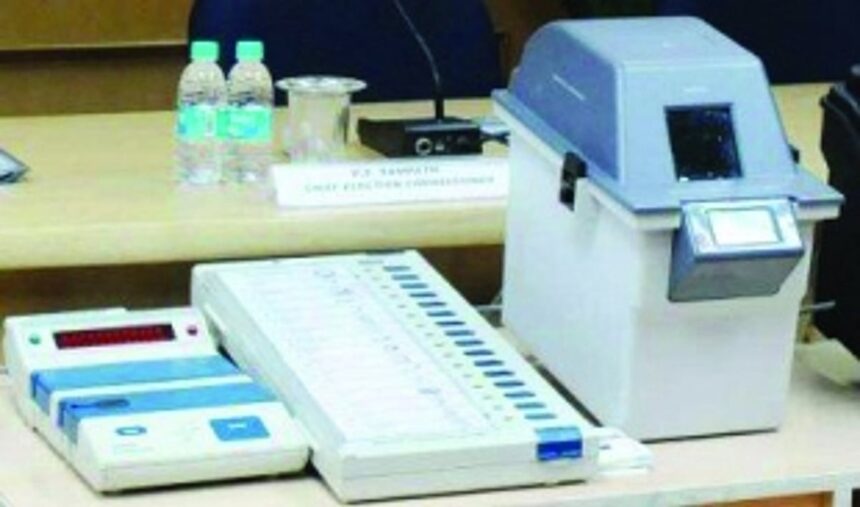
I wonder if the EC was making a point in scheduling the elections for Valentines’ Day. Did he want us to express our love for our dear politicians with our votes? I doubt it. Surveys have shown that 68% of India (Hindus, Muslims and Christians included) do not approve of Valentines’ Day. Santas’ visit would have been more appropriate, bringing goodies for the voter as well as the candidates. Be that as it may, till the time of writing this article, the complete list of candidates had not yet been declared by all the parties in Goa. Hence it is difficult to assign any degree of love (or otherwise) to any particular candidate. Till then we have to go by the grim situation as it prevails. 11 of the current crop of MLAs’ have criminal cases against them, 2 with multiple cases and 23% with serious to very serious cases. It is highly commendable that the EC has now made it mandatory for political parties to upload details of criminal records of their candidates on their web sites, and to state why they had to pick him/her over others with clean records, under a caption “Candidates with Criminal Records”, within 48 hours of announcing the selection. There is more; candidates have to publish details of such cases in local newspapers, three times during the course of the campaign. My own reaction is “Three Cheers.” Let’s now hope for strict implementation.
Of 11 MLAs with criminal records, 7 belong to the BJP, the ‘party with a difference’, but tainted with the same old sex scams, job scams and land scams. The Ayodhya land scam is matched by our own Old Goa property scam and the scam at Sancoale; there are many others. Unfortunately, both these directly or indirectly have communal undertones. Speaking of communal undertones, the tsunami of hate speeches emanating from the “Dharam Sansad” between 17th to 19th December 2020 was truly unbelievable. Speaker after speaker advocated a “final solution”, of genocide of Muslims in India, by ‘throwing away books and taking up arms’ against them. Not that these thugs spared Christians. Churches and religious institutions across the country were vandalized and ransacked allegedly for conducting conversions in the name of Santa Claus! Temples were to be rebuilt where churches stood. Even the Missionaries of Charity were not spared. The reason for drawing attention to these incidents, is to point out that neither the PM nor a single politician in Goa, of any shade expressed the remotest semblance of outrage at any of these incidents. They were too busy behaving like frogs on steroids, leaping from one party to another; a unique display of truly fascinating agility.
A politician associates with a particular party based on that party’s ideology, programs and manifesto. Can ones’ views change so suddenly and dramatically to justify such a magnetic attraction to the ideology of the opposition? Or are there other considerations? How may Tories, Laborites’, Democrats or Republicans have we heard of who have indulged in such leap-frogging?
Though the cap on election expenditure has been increased, this remains largely meaningless, because money changes hands off the books. The 2019 election expenditure was estimated to cross $10 billion, outdoing the US Presidential elections ($6.5 billion). It is the largest investment lottery held once every five years, fueled by an unparalleled “risk appetite” of political leaders. But the funds have to come from somewhere. Party membership fees can never cover the massive expenses of an election; the shortfall is covered by corporate houses, and the euphemistically titled “electoral bonds”. These were introduced under the Electoral Bonds Scheme 2018, and permitted a party registered under the Representation of People’s Act, 1951 to receive such bonds. Electoral Bonds may be purchased only by citizens of India, including NRIs either as individuals or as a group. The name of the donor does not appear on the bond and may be known only to the bank which issues the bond. The party may well be aware of the identity of the donor, but the general public has no way of finding out who the donor is. Nor is it able to make any connection between a donor and a recipient party. The lack of transparency and the anonymity of the donor is absolute. Para 7(4) of the notification reads “Confidentiality of the information furnished by the buyer shall not be disclosed to any authority for any purpose”.
Transparency is the corner stone of a true democracy, and to legislate against transparency by suggesting that such a measure will further the cause of democracy is the ultimate canard. CJI Ranjan Gogoi contested the theory that the anonymous scheme ensured that all money which went into poll funding was white. “If the identity of the donor is unknown, your entire exercise to eliminate black money becomes a futile exercise. Black money only becomes white,” he observed.
In any event, the elections are upon us, and dismal as the situation is, we must register our opinions in the form of our vote. Whether we do it for Rs 5000 (the reported going rate) and a bag of rations, or with a determination to set the system right is a choice we have to make.
Happy voting on Valentines’ Day!
(The author is a founder member of VHAG)