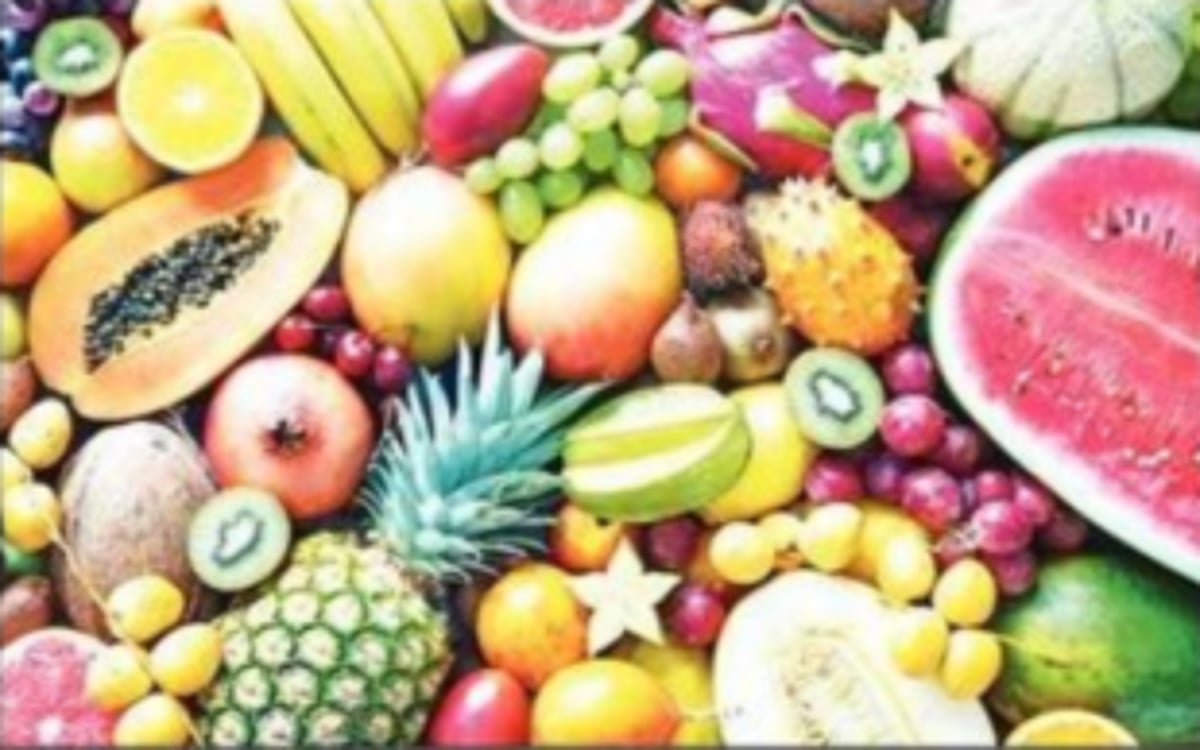
After 6 years of living in India and before that a long diaspora in Europe, I was surprised by the large and varied production of fruit and vegetables (and, in general, agricultural products) visible in every corner of cities and villages, to make life easier for the buyer. Varied fruit that was very rare in old times, today are in abundance, diverse and good prices.
There has been a long apprenticeship, at the pace of the great transformations originated either by the green revolution or by the flood operation, focusing, the first, on the careful selection of plant varieties in irrigated areas, more resistant to weather inclemency and more productive, and the second, in the good organisation of the village milk cooperatives, centring on the interests of the co-operators, paying them the best possible, on delivery, and all the milk brought.
Echoes continue to be heard of difficulties of farmers, in paying their loans to banks, due to price fluctuations with the quantities produced, leading in many cases to despair in the face of the commitments already assumed. This aspect deserves special attention, with recourse to insurance of harvest and for price stability, as well as practising interests on the loans adjusted to agricultural activity.
Agriculture is a highly sensitive sector to fluctuations in production: if the year’s production is expected to be a little more, prices fall abruptly. If production is a little below, prices skyrocket and it will be certain that many farmers will produce more in the next season, to earn something. They resort to loans, along with other farmers, and that takes in an excess of production which makes them lose!
One of the effective ways of improving farmers’ incomes will be to encourage the consumption of their products in the whole country. These are good food but maybe due to their cost, have taken a long time to be widely consumed, especially by the poorest strata.
I did not find in the eating habits of India a particular attraction for fruits in the different meals of the day. Today it can be opportune to try pulling again, with attractive publicity for the medium/low-income families to eat the fruits in every meal.
It occurred to me that farmers’ organisations should move towards a well-organised campaign to eat more fruit at breakfast, as dessert for lunch, for mid-afternoon and as dessert for dinner. In a family of 5 members, this would improve the daily consumption of 20 pieces of fruits. In the country, all this incremental consumption will suppose a substantial improvement in earnings for the farmer.
Farmers’ organisations should rely on the “media” to spread the nutritional value of fruit, insisting on its consumption. All the entities that provide meals to school children should be made aware of this, always sending a piece of fruit to each child.
Some organisations could also have a “regulating attitude towards the products” offered for sale at the marketplace, to keep an important part of the production in refrigerated chambers, when there is excess production. Later releasing stocks when the market needs more products. Farmers’ organisations must remember the caloric, vitaminic and proteic contents of fruits, suggesting a daily combination of them so that bananas don’t always “pay the bill”.
When the Portuguese, at the time of colonisation, strolled calmly from the Atlantic to the Indian Ocean, they had a good concern for taking saplings of plants from one country to the other, from Brazil to Africa and India, and vice-versa, to see how they behave in the new countries where the Portuguese made long stopovers. In a way, mango, cashew, jackfruit, banana, pineapple, papaya, etc, made their journeys and did so well in the new countries.
The GCMMF, with the AMUL brand, had prepared the launch of 100 new products during Covid. Many new products were out of dairy. And the logic was simple: to help the co-operators to double their incomes, by supplying the co-operative with their other products, such as bee’s honey, mushrooms and assorted fruit, which the co-operative treated, packaged and sold with their brand at thousands of points of sale.
The co-operative exports a lot to countries with a strong Indian diaspora (typical Indian sweets, cheese, ghee, srikhand, ice-creams, etc.), such as in the USA, UK, Gulf countries, etc. and where, together with the diaspora, the local population has the opportunity to taste and end up becoming a customer, as it happens with Indian mango.
I used to conduct management classes in an African country, which had a large banana production. At the hotel, at breakfast, I had to “fight” to have bananas on the buffet. There was a widespread conviction that bananas in that country were the food of the poor and they only had imported products. After insistence, good bananas appeared that all tourists appreciated.
There is need to consume local products first, usually much cheaper and well-adapted to the health needs of the population and helping the farmers. Only after that go for import of what the rich population wants.
It is good to discover new fruits, perhaps with little presence in the city markets, and not known to the public, but which the country can produce and be a source of livelihood for many in the areas where such fruit can grow. Much is said today about the consumption of “avocados”, blueberries, and others.
We can’t just stand by and watch…For example, “The Sahyadri Farms Post Harvest Care, Ltd”, based in Nashik, with over 15,500 farmers associated, exports huge quantities of grapes, without seeds, to Europe, during a long period when there are no grapes in Europe. There must be many niches to discover and explore.
(The Author is Professor at AESE-Business School (Lisbon), at I.I.M.Rohtak (India), author of The Rise of India)