The one good thing about this New Year is, you don’t really have to wish a “Happy New Year”! In any case the New Year couldn’t possibly be more sorrowful and distressful than the one that just went by!
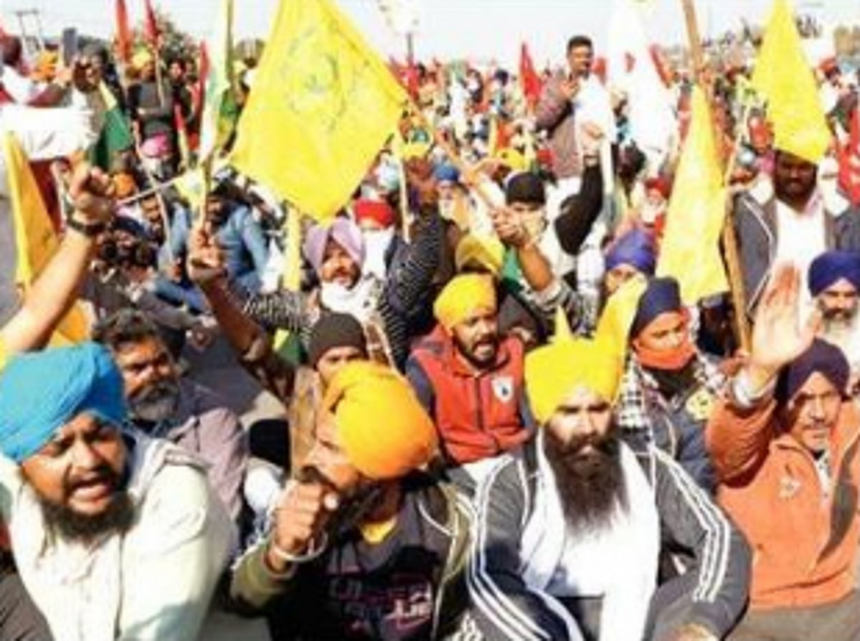
We started the Year with mass agitations at Shaheen Bagh in freezing nights in Delhi and ended the Year with yet another mass agitation in the freezing nights in Delhi (this time farmers), with the traumatic and continuing devil of the Coronavirus in between.
I thought it appropriate to discuss the farm stress here, that’s the big agenda we closed the year with.
But first a little background: On 3% of the World’s cropped land, our farmers feed 17% of World Population. Our yield per hectare in paddy is 68% of that in Indonesia and in maize, just 38%. Nearly 70% of our population depend upon agriculture (just 18% of our GDP) and 70% of them own lands (if they do), less than 2.5 acres. For a quintal of paddy, the comprehensive cost (C2) is 1767/- and the MSP is Rs 1868, a return of just 12% (CACP). That’s the snapshot!
Two new laws and an amendment to the essential commodities act were done. The farmer will now be free to sell his produce outside Agricultural Produce Marketing Committees (the APMCs-mandated-mandis). Farmers will be free to negotiate prices with buyers, they will be free to enter into long term sale contracts with large corporate retailers also into futures or forward contracts at specific prices. The Essential Commodity Act will exclude Cereals, Pulses, Potatoes, Onions and edible oils from regulatory limits – so stocking is allowed and the price meant to reflect open market forces.
I would agree with these reforms, because I believe our farmers deserve a much better deal than what they get today (look at the numbers I gave). Yes, there ARE risks, mitigations are key!
The moot point is if the farmer and his family have to repay loans, enjoy basic amenities, health and education – first his business has to have a decent debt servicing capability! Ultimately, Farming should be viewed as an attractive business!
But no – farmers have grave apprehensions and rightly so! They fear, under the garb of “Contract Farming” they would slowly have to yield to large corporates with enormous financial prowess, prices being free – they would be under threat of disposing their produce at minimum prices, inventories cornered, buying cartelled between biggies – (they site the example of Bihar where APMCs were dismantled and their farmers are now in Punjab as farm labour), they apprehend mass “Quality-Related” rejects, they fear the regulated APMCs and the MSPs will slowly disappear exposing themselves directly to great market risks leading them to even lose their land. The amended essential commodities act could allow these big players to stock and control timing and prices – cash and forwards. The recourse unfortunately, is only the Subdivisional Magistrate.
So, they want all three laws withdrawn and higher guaranteed MSPs (based on the C2, comprehensive costs), BOTH from Government and Private Corporates. The Government has yesterday, ceded the other two demands dropping punitive actions for stubble burning and scrapping the amended Electricity Bill.
My take: From my long years in the agri-industry, all of this unfortunately seems quite like an Uncle Fred in PG Wodehouse’s “Uncle Fred in Springtime” and his snigger at Alaric “It’s not that I don’t trust you, Dunstable, it’s simply that I don’t trust you.” I think the first thing that the Government should be doing is to rebuild the trust which seems to have eroded considerably with MSPs based on A2+FLCosts and loan non-waivers in some States. Come to think of it – we consistently enact laws first and then we come for discussions. In federal democracy, I think it should be just the opposite – discussions, consensus and then legislations. That would solve a great deal of misgivings over any reform (as long as intentions are honest). The misgivings mostly are unfounded, for example nobody takes over nobody’s land, APMCs are going nowhere – they would still be around unless they die a normal death, MSPs are going nowhere – only enabling options are being given.
Looking at Goa, the scenario is quite bleak. Goa has about 28000 HA of land under paddy cultivation, the main crop under MSP regime. Production is declining – last year it declined by around Rs 80 crores. In terms of volumes, we fell 10%. Our yields are 2700 per HA (against 3000 country-wide and 4300 of Indonesia). I think it has a major concern.
But YES, we do need a strong regulatory structure in place. For example, demand for vegetables and value-added crops have increased, (the Economic Survey in fact says the share of cereals in per-capita expenses in both rural and urban house-holds are down by around 30% over the last 7 years), the production has to be synced then, it can’t be left totally to profit-targets of a few rich corporate retailers. This regulatory body and would oversee, audit and report to Parliament. Inventories must be reported and audited. Benchmarks for productivity be laid down by this body and independently audited. An appropriate Tribunal be formed to adjudicate on grievances, particularly on forward contracts – disputes can’t simply be left to levels of a sub-divisional magistrate. A revised export policy be formed before these reforms are installed.
As I said protection of farmers has to be built into the reforms.
And in conclusion: Unfortunately – we as a people are not most known to take lessons from the past. Consensus, rather than surprises should be the order, THAT builds trust and Uncle Fred’s sniggers wouldn’t really trigger, I say.
(Binayak Datta is a Finance Professional)